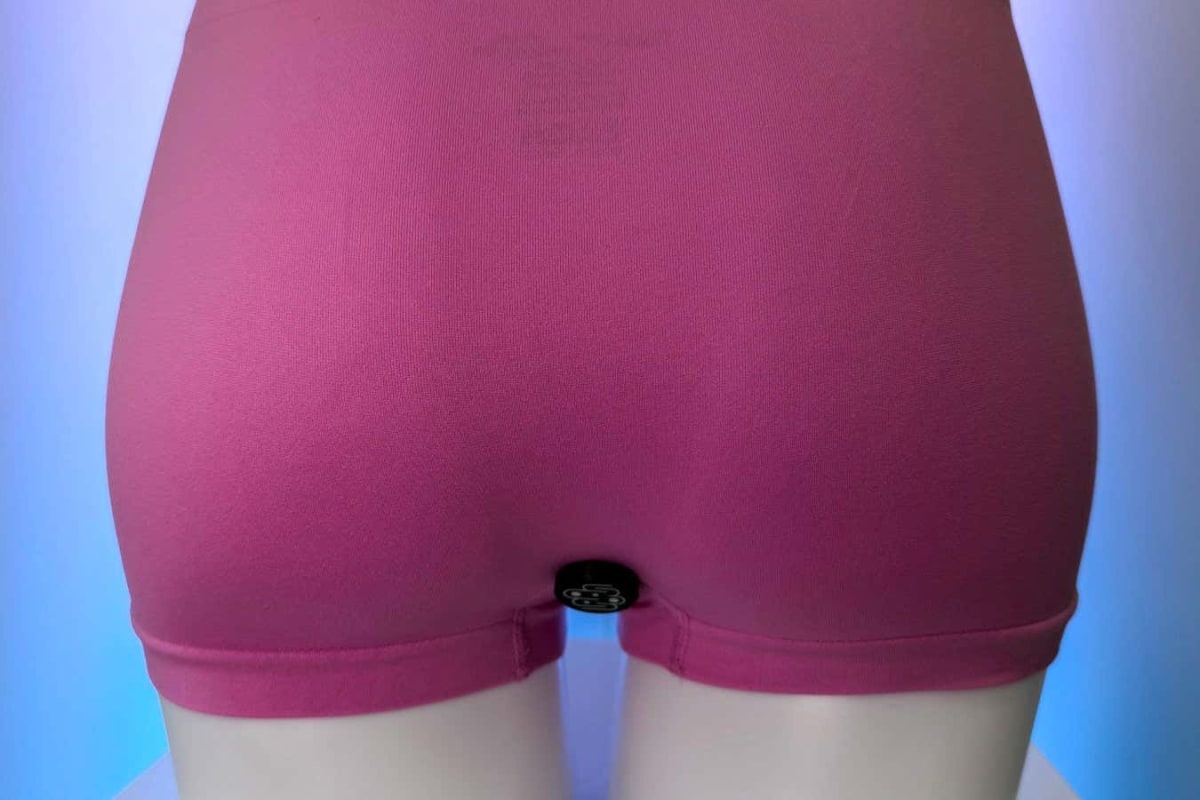
Smart Underwear Detects Lactose Intolerance via Farts
A coin-sized device clips onto underwear to track hydrogen in flatulence, helping diagnose lactose intolerance and gut conditions people don't even know they have. The smart sensor revealed people are terrible at knowing when they're actually gassy.
Millions of people live with undiagnosed lactose intolerance because they don't realize how often they're actually farting. Now, a tiny device smaller than a nickel is making gut health tracking as simple as getting dressed.
Researchers at the University of Maryland created a hydrogen-detecting sensor that clips onto underwear and measures flatulence in real time. The device sits near the perineum and tracks gas releases throughout the day, providing objective data about what's happening inside your digestive system.
Brantley Hall and his team tested the smart underwear on 37 people over four days. After establishing a baseline on a low-fiber diet, participants consumed either lactose or sucrose on different mornings without knowing which they received.
The results were eye-opening. Twenty-four people showed lactose sensitivity, farting over 1.5 times more than their baseline after consuming dairy sugar. The device correctly identified which day caused more gas in 22 of those people.
Here's the surprising part: when asked to guess which day they felt gassier, the same participants were right only 50 percent of the time. "It's literally like a coin flip," Hall says. "People aren't reliable narrators about their flatulence patterns."
This matters because about one-third of people with lactose intolerance don't report symptoms. Sometimes they genuinely don't notice the extra gas their bodies produce. That means countless people suffer from bloating and digestive issues without understanding the cause.
The device works by detecting hydrogen, which gut microbes produce when they ferment undigested lactose. When your body lacks the lactase enzyme to break down dairy sugar, bacteria do the job instead, creating excess gas in the process.
The Ripple Effect
Beyond lactose intolerance, this technology could transform how doctors diagnose and treat irritable bowel syndrome and other gastrointestinal disorders. The objective measurements could also help researchers test whether new drugs actually reduce intestinal gas production.
Previous research from Hall's team found that healthy adults fart between 4 and 59 times daily, with an average of 32. But he suspects that number will drop as they collect more data from people across the digestive health spectrum.
The underwear sensor received high marks for acceptability from participants. Tom van Gils at University of Gothenburg in Sweden notes that while subjective feelings about flatulence matter as symptoms, objective measures teach us more about the actual body changes involved in gastrointestinal disorders.
Hall envisions a future where people can simply wear the device at home and share the data with their doctors, eliminating the guesswork from gut health diagnosis. What seems like a quirky invention could become a powerful tool for the millions who struggle with undiagnosed digestive conditions.
Sometimes the most dignified solutions come in unexpected packages.
More Images




Based on reporting by New Scientist
This story was written by BrightWire based on verified news reports.
Spread the positivity!
Share this good news with someone who needs it