Snow Blankets One of Earth's Driest Places in Rare Event
Rare August snowstorms transformed Chile's famously bone-dry Atacama Desert into a winter wonderland, stunning scientists and locals alike. The extraordinary weather brought moisture to a region that normally sees almost none, creating breathtaking scenes captured by NASA satellites. #
Imagine a place so dry that some weather stations have never recorded rain. Now picture it blanketed in fresh white snow.
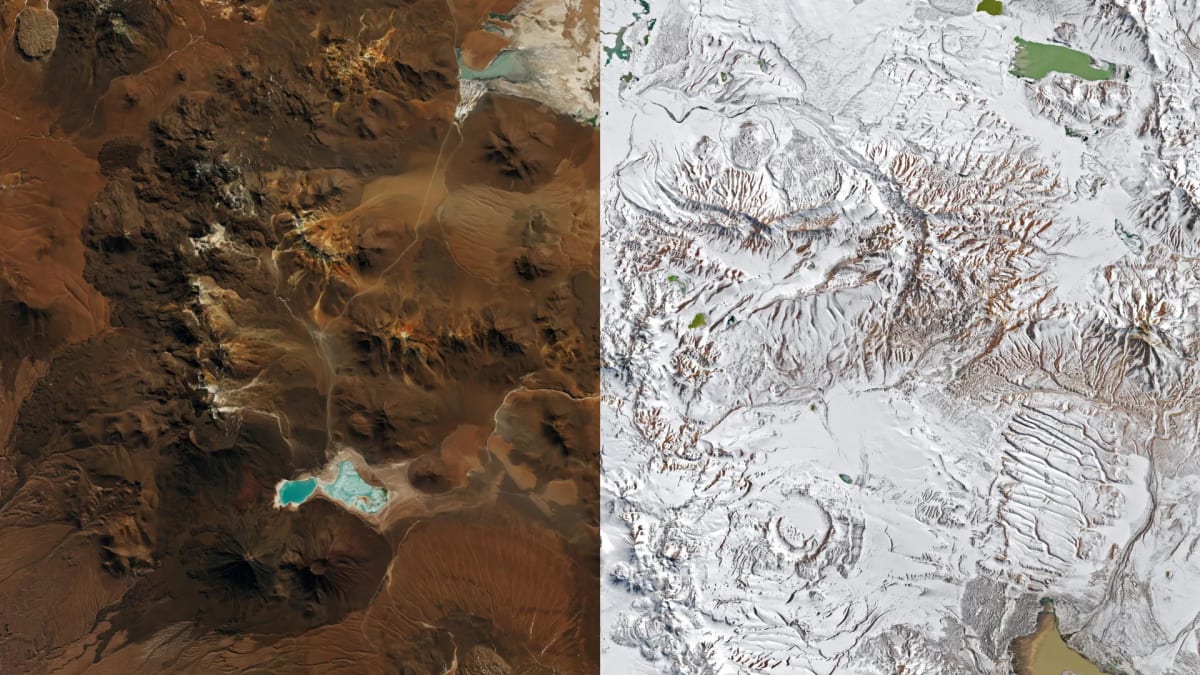
That's exactly what happened in Chile's Atacama Desert this August, when winter storms swept across one of Earth's most extreme landscapes. NASA satellites captured the stunning transformation, showing snow spreading from the Andes Mountains westward across the desert floor, nearly reaching the Pacific Ocean.
The snow reached the Chajnantor plateau, home to ALMA, one of the world's most powerful radio telescopes. Observatory staff placed the massive antennas into protective mode as heavy snow and strong winds moved through the high-altitude research site.
But the most remarkable storm arrived on August 19, spreading snow across an even broader area. The white covering stretched from mountain peaks, through the hyperarid desert heart, all the way to coastal regions near the port city of Antofagasta.
The precipitation didn't fall as snow everywhere. Coastal areas received intense rainfall instead, with the town of Taltal recording nearly 40 millimeters in just three days. That's roughly 10 times what the city normally receives in an entire year.
René Garreaud, an atmospheric scientist at the University of Chile, explained the unusual setup. A massive weather pattern stretched across the Southern Hemisphere, breaking away from the jet stream and pulling moisture into normally parched regions. "We see these kinds of events only a few times, if any, per decade," he said.
The rare weather happened against the backdrop of a strengthening El Niño, which shifts storm tracks closer to the equator. This makes it easier for powerful weather systems to reach areas of Chile that typically stay dry year-round.
The Bright Side
While the storms caused flooding and disrupted thousands of lives, they also brought unexpected gifts to the desert. The moisture will likely trigger a rare bloom of wildflowers in coming months, a phenomenon that transforms the barren landscape into carpets of color. These "blooming desert" events draw visitors from around the world and provide crucial resources for local wildlife that have adapted to survive on the tiniest amounts of water.
The dramatic satellite images also reminded scientists just how much Earth's climate systems are interconnected. What happens in the tropical Pacific during El Niño can transform landscapes thousands of miles away, creating rare moments of beauty in the world's harshest environments.
Similar snowfall events occurred in 2025 and 2011, but this storm's reach across such a vast area made it particularly special.
Nature continues to surprise us with its ability to bring water even to the driest corners of our planet.
#
Based on reporting by Science Daily
This story was written by BrightWire based on verified news reports.
Spread the positivity!
Share this good news with someone who needs it