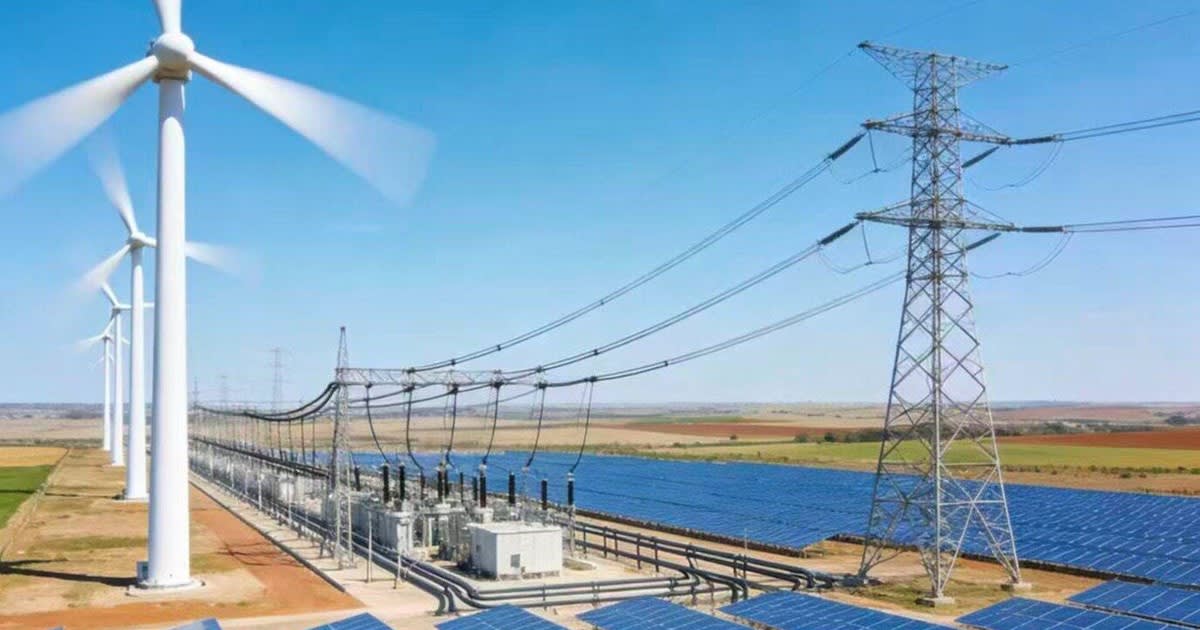
Solar and Wind Beat Carbon Capture in Climate Study
New research shows renewable energy delivers far more climate benefit per dollar than carbon capture technology in nearly every U.S. region through 2050. The finding could reshape where billions in climate funding go next.
A new study is flipping the script on one of climate tech's hottest investments, and the results could save both money and lives.
Researchers at PSE Healthy Energy, Boston University, and Harvard compared direct air capture technology against solar and wind power in a way no one had before. Instead of asking whether carbon capture works, they asked what the same money could buy if spent on renewables instead.
The answer was clear. Wind and solar delivered several times more climate and health benefits per dollar across 22 U.S. grid regions from 2020 through 2050.
Lead researcher Yannai Kashtan put it simply: "Being carbon negative isn't enough to make direct air capture a good investment."
The team tested four scenarios for direct air capture, from today's commercial performance all the way to an extreme breakthrough where costs drop to $100 per ton and energy use plummets. Even in the ambitious middle scenario, where the technology improves dramatically beyond anything achieved so far, renewables still won nationally.
Under current real-world conditions, the news was even more striking. Grid-connected carbon capture actually produced more greenhouse gases and air pollution through 2050 than it removed.
Why This Inspires
This research stands out because it counts something usually invisible in climate calculations: the health of people living near power plants.
When carbon capture pulls electricity from grids still running on fossil fuels, it creates new demand that fires up more coal and gas plants. Those plants release sulfur dioxide, nitrogen oxides, and fine particles that concentrate in nearby communities.
Renewable energy works the opposite way. Every solar panel and wind turbine displaces fossil fuel generation, creating health benefits in every region the team studied.
Senior author Dr. Jonathan Buonocore calls it cost-effectiveness analysis with real teeth. "Capital invested in climate mitigation should have the most bang for the buck for the climate, while having the fewest side effects," he said.
The researchers aren't calling for scrapping carbon capture entirely. The technology may play a valuable role later this century when most emissions have stopped and the challenge becomes removing legacy CO2 already in the atmosphere.
But right now, spending heavily on carbon capture while cheaper and more effective options exist carries a steep opportunity cost. Money that could reduce emissions and improve health today gets redirected to technology that might make things marginally worse under current conditions.
Kashtan used a memorable analogy: "If your sink is overflowing, turn off the tap before you begin mopping the floor."
The study appears in Communications Sustainability at a moment when governments and investors are deciding where to direct billions in climate funding. Now they have clearer evidence about what works best.
Based on reporting by Google News - Climate Solution
This story was written by BrightWire based on verified news reports.
Spread the positivity!
Share this good news with someone who needs it