Solar Cells Hit 28% Efficiency With New Stabilizer
Scientists in China just cracked a major problem holding back solar power, creating panels that work better and last longer. The breakthrough could make solar energy cheaper and more reliable for millions of homes.
Solar panels just got a massive upgrade that brings clean energy closer to powering the world.
Researchers at the Chinese Academy of Sciences developed a new type of solar cell that converts 28% of sunlight into electricity. That's one of the highest efficiency rates ever achieved, and the panels stay stable for much longer than previous designs.
The secret lies in a smart chemical additive called TDB that solves a persistent problem with mixed-halide solar cells. These cells have struggled because their materials tend to separate when exposed to sunlight, like oil and water pulling apart.
TDB works in two clever stages. First, it helps the materials mix evenly when the solar cell forms. Then, under sunlight, it transforms into a new compound that locks everything in place and prevents degradation.
The team tested their creation for 625 hours under intense light, and it still retained 90% of its original power output. Traditional solar cells often lose efficiency much faster, which has been a major obstacle to widespread adoption.
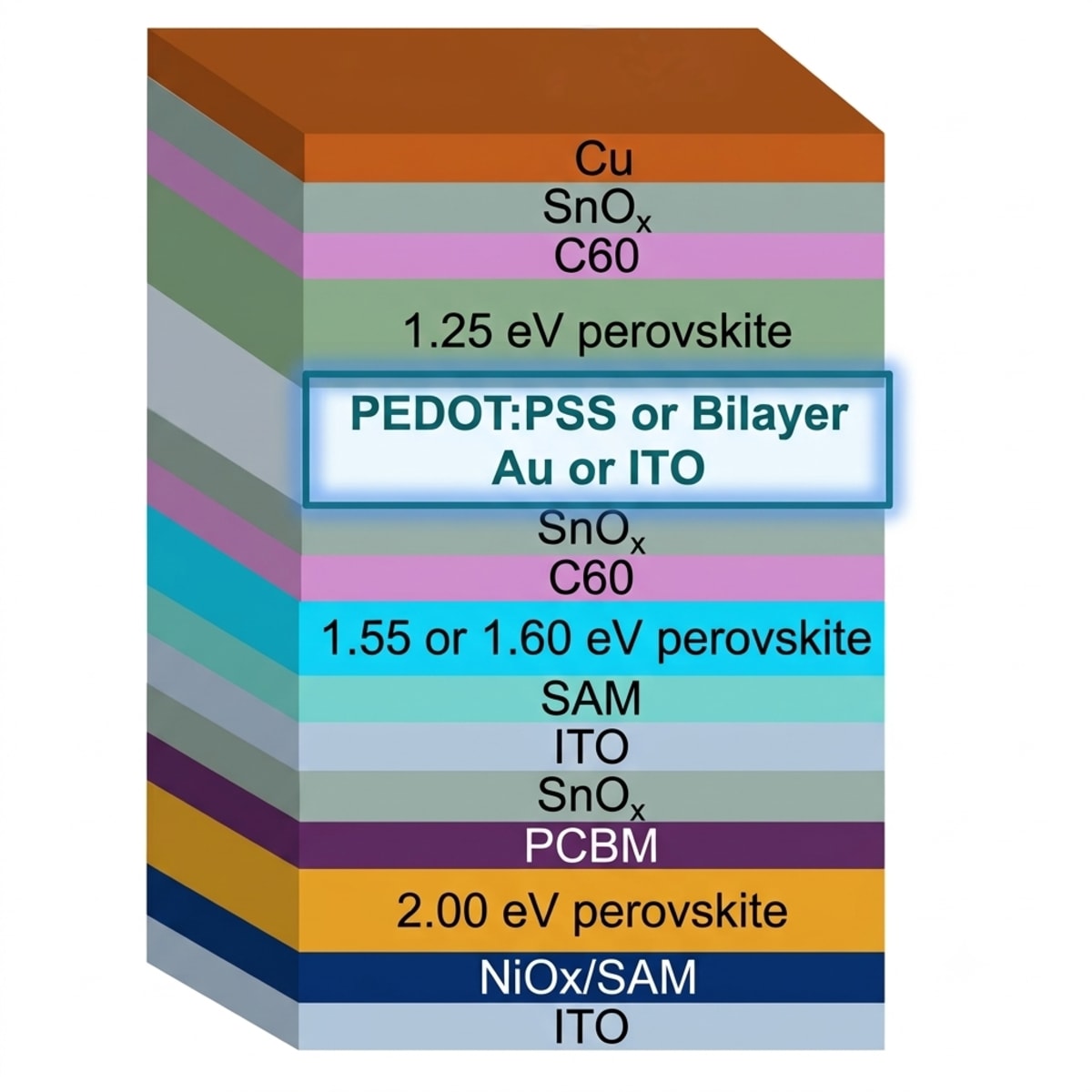
The individual front cell alone achieved 20% efficiency with an impressive voltage of 1.42 volts. When combined with an organic layer underneath, the tandem design reached the certified 28.04% efficiency that could reshape the solar industry.
The Bright Side
This breakthrough tackles one of solar energy's biggest headaches: durability. Better stability means panels last longer, require less maintenance, and deliver more consistent power over their lifetime.
The advancement also makes solar technology more practical for everyday use. When panels maintain their performance year after year, the return on investment improves dramatically for homeowners and utility companies alike.
China's solar industry already leads global production, and innovations like this could accelerate the shift away from fossil fuels. More efficient panels mean more clean energy from the same amount of space.
The research team published their findings in Nature, making the discovery available to scientists worldwide who can build on this progress.
Why This Matters
Solar energy has always promised a cleaner future, but technical limitations have slowed its takeover. Each efficiency gain makes solar more competitive with traditional power sources without subsidies or incentives.
The photo-transformable stabilizer approach could apply to other renewable technologies facing similar material challenges. What works for solar cells might inspire solutions for batteries, fuel cells, and other green energy systems.
As manufacturing scales up, these high-efficiency panels could become the new standard, replacing older models on rooftops and solar farms everywhere.
The future just got a little brighter, one percentage point at a time.
Based on reporting by Nature News
This story was written by BrightWire based on verified news reports.
Spread the positivity!
Share this good news with someone who needs it