Solar Hydrogen Breakthrough Runs 100 Hours Without Corrosion
Scientists in South Korea just solved a major problem holding back clean hydrogen production from sunlight. Their new solar cells can now split water into hydrogen fuel for days without breaking down.
Imagine powering your home with fuel made from nothing but sunlight and water. A research team in South Korea just brought that dream much closer to reality by solving a stubborn problem that's plagued solar hydrogen technology for years.
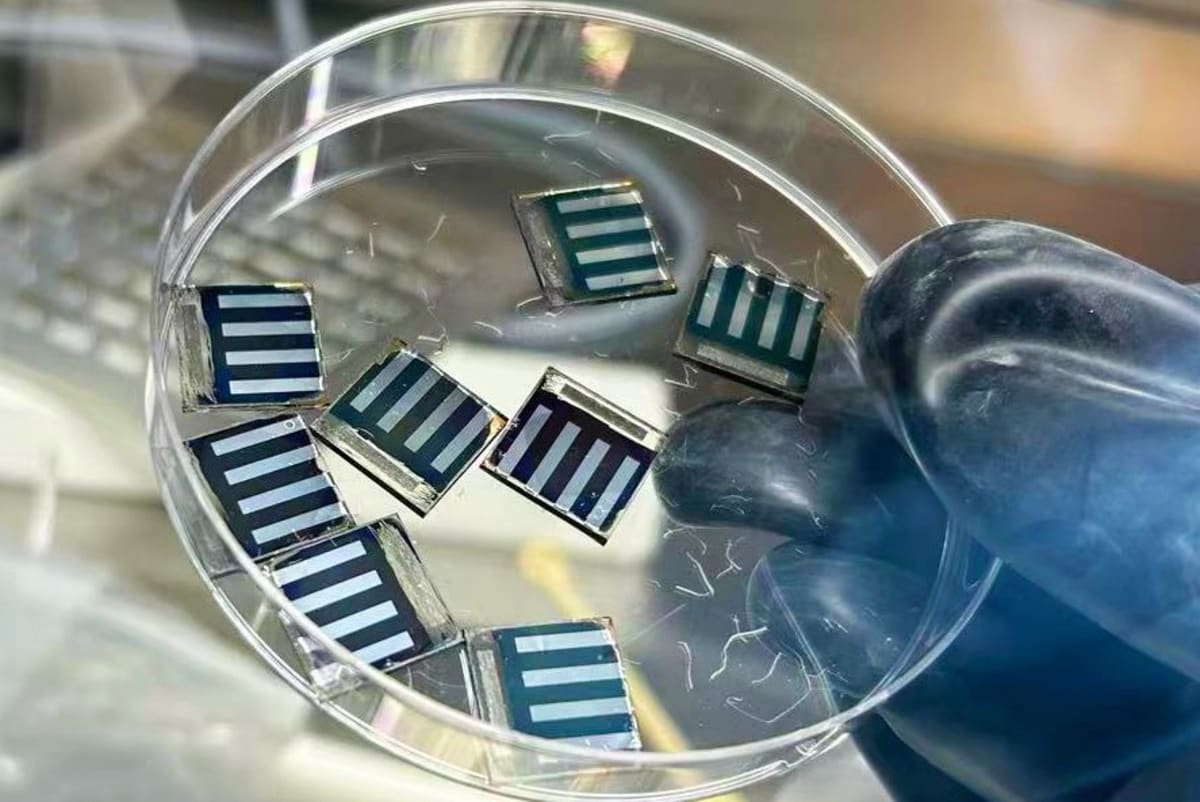
Scientists at UNIST developed a new type of solar cell that produces hydrogen by splitting water molecules using only sunlight. The breakthrough addresses a critical weakness: these cells used to corrode and fail within hours when submerged in water.
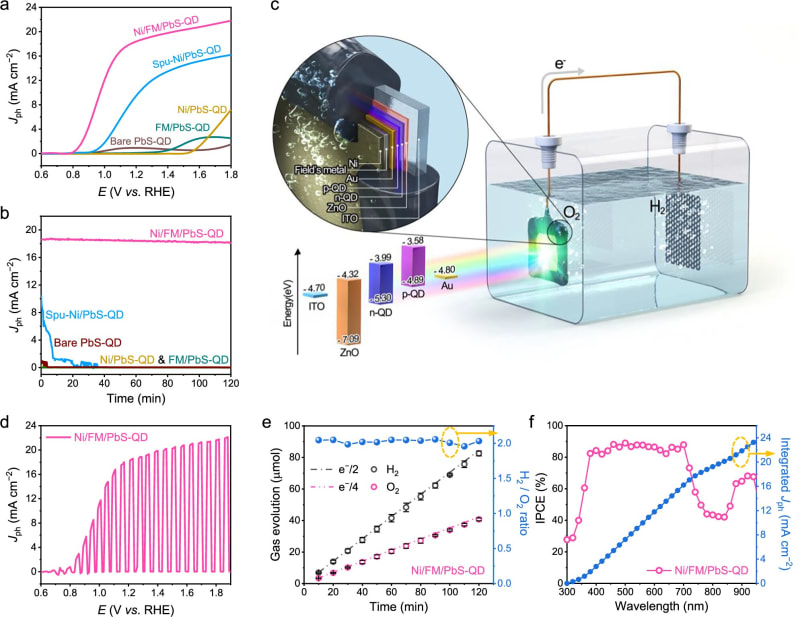
The team, led by Professors Ji-Wook Jang and Sung-Yeon Jang, wrapped tiny quantum dots made of lead sulfide in protective metal layers. Think of it like waterproofing your phone, but at the molecular level. They used nickel foil as a shield and Field's metal to seal every gap where moisture could sneak in.
Here's where it gets clever. The researchers discovered that ultraviolet light was sneaking through and damaging the internal components. So they flipped the design upside down, creating a structure that absorbs UV rays in the outer layer before they can cause harm inside.
The results speak for themselves. The new photoelectrode achieved a record photocurrent density of 18.6 milliamps per square centimeter. More importantly, it kept running at 90% efficiency after 24 hours of continuous operation. The UV-protected version ran for over 100 hours without losing performance.
Previous versions required expensive chemical additives called sacrificial agents to prevent corrosion. These chemicals weren't sustainable or cost-effective for commercial use. The new design eliminates them entirely while actually performing better.
The Ripple Effect
This advance matters because hydrogen is one of the cleanest fuels we have. When you burn it, the only byproduct is water. But most hydrogen today comes from natural gas, which defeats the purpose. Solar water splitting creates truly clean hydrogen with zero emissions.
The technology could eventually power everything from cars to factories without adding greenhouse gases to the atmosphere. Japan and South Korea are already building hydrogen economies, and Europe plans to invest billions in hydrogen infrastructure over the next decade.
Making these systems durable enough to run for months or years without maintenance brings commercial viability within reach. Professor Jang notes they're now closer than ever to practical solar hydrogen production that could scale up affordably.
The morning sun might soon do more than brighten your day. It could fill your tank too.
More Images



Based on reporting by Phys.org
This story was written by BrightWire based on verified news reports.
Spread the positivity!
Share this good news with someone who needs it