Solar Panel Breaks Record, Captures 93% More Free Energy
A Chinese company just smashed the world record for solar panels that generate power from both sides, unlocking thousands of dollars in extra clean energy for free. The breakthrough could make solar farms significantly more profitable while producing more renewable electricity.
Solar energy just got a major upgrade that could make renewable power cheaper and more efficient than ever before.
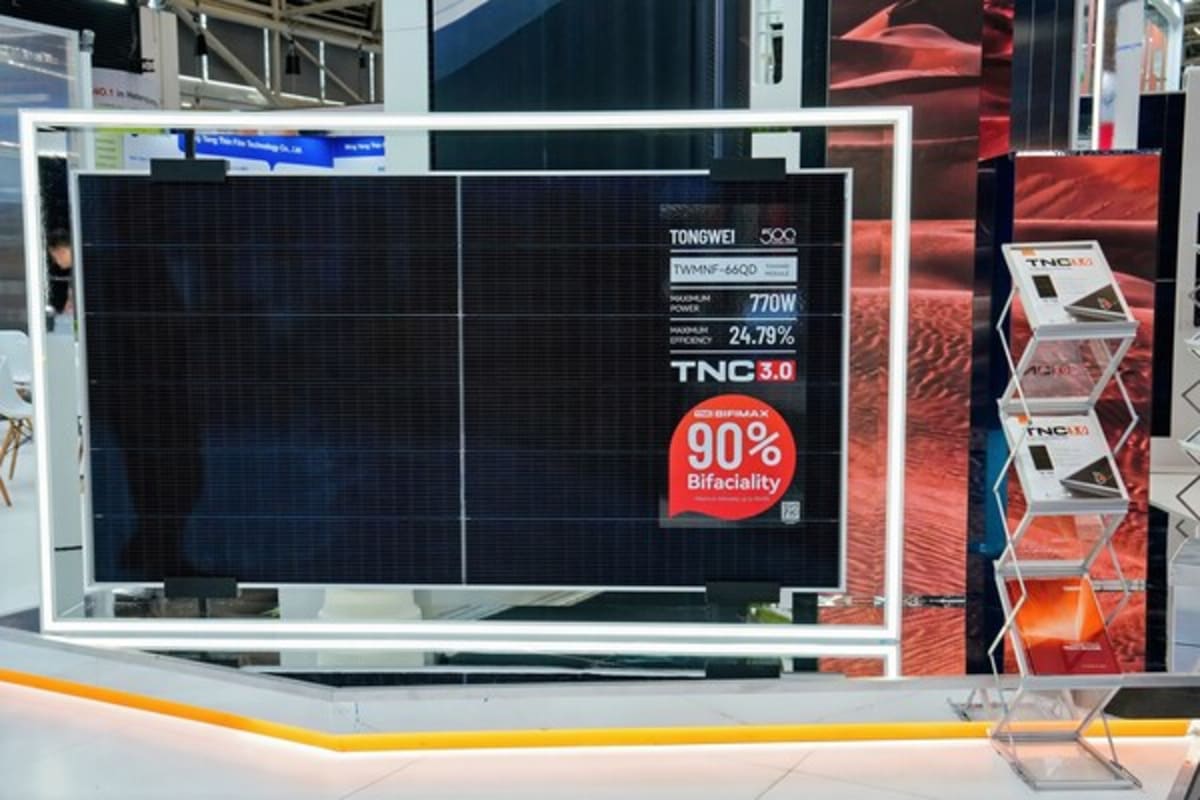
Chinese manufacturer Tongwei announced it achieved a 93.08% bifaciality factor in its new 770-watt solar module, a verified world record. Bifaciality measures how well a solar panel captures sunlight from its rear side compared to its front, turning reflected light into bonus electricity at no extra cost.
The technology works like getting two solar panels for the price of one. While traditional panels only capture direct sunlight on their front surface, these advanced modules also harvest light bouncing off the ground, nearby surfaces, and even clouds from underneath.
German certification body TÜV Rheinland verified the results, confirming this represents the highest bifaciality factor ever achieved in commercial solar technology. The module also boasts a 24.8% power conversion efficiency, meaning it transforms nearly a quarter of captured sunlight into usable electricity.
The real-world impact is substantial. Tongwei calculated that a 100-megawatt solar plant in Hamburg, Germany using these modules would generate an extra $205,844 in revenue annually compared to standard panels. Over the system's lifetime, that translates to an additional 81.62 million kilowatt-hours of clean electricity, enough to power thousands of homes.
The breakthrough came from two clever innovations in cell design. Engineers developed a "selective sunken pyramid structure" that optimizes how the rear surface captures light, plus a "zebra-crossing passivation contact" that improves how electricity flows through the panel's backside connections.
Just eight months ago, Tongwei held the previous record at 91.7% bifaciality. The company believes reaching 95% at the cell level and 90% at the module level in mass production is achievable within two years, promising even greater efficiency gains ahead.
The Ripple Effect
This advancement arrives as solar energy reaches a tipping point worldwide. Every percentage point of improved efficiency makes renewable energy more competitive with fossil fuels, accelerating the transition to clean power. For solar farm operators, the extra revenue from bifacial technology can shorten payback periods and fund additional renewable projects.
The technology particularly shines in locations with reflective surfaces like snow, sand, or water nearby, and in higher latitudes where diffuse light is common. This means regions previously considered less ideal for solar power can now generate significantly more clean electricity from the same infrastructure investment.
As manufacturing scales up, these high-efficiency bifacial modules could become the new standard, making every future solar installation more productive without requiring additional land or materials.
The future of solar just got brighter, capturing free energy that used to simply bounce away unused.
More Images


Based on reporting by PV Magazine
This story was written by BrightWire based on verified news reports.
Spread the positivity!
Share this good news with someone who needs it