Solar Panels on Pig Farm Waste Cut Emissions and Power Costs
A Spanish engineering firm is floating solar panels on manure lagoons at pig farms, turning a pollution problem into clean energy. The system blocks harmful ammonia emissions while generating enough electricity to cut energy bills by more than half.
Pig farms are solving two problems at once with an innovation that sounds unusual but delivers real results.
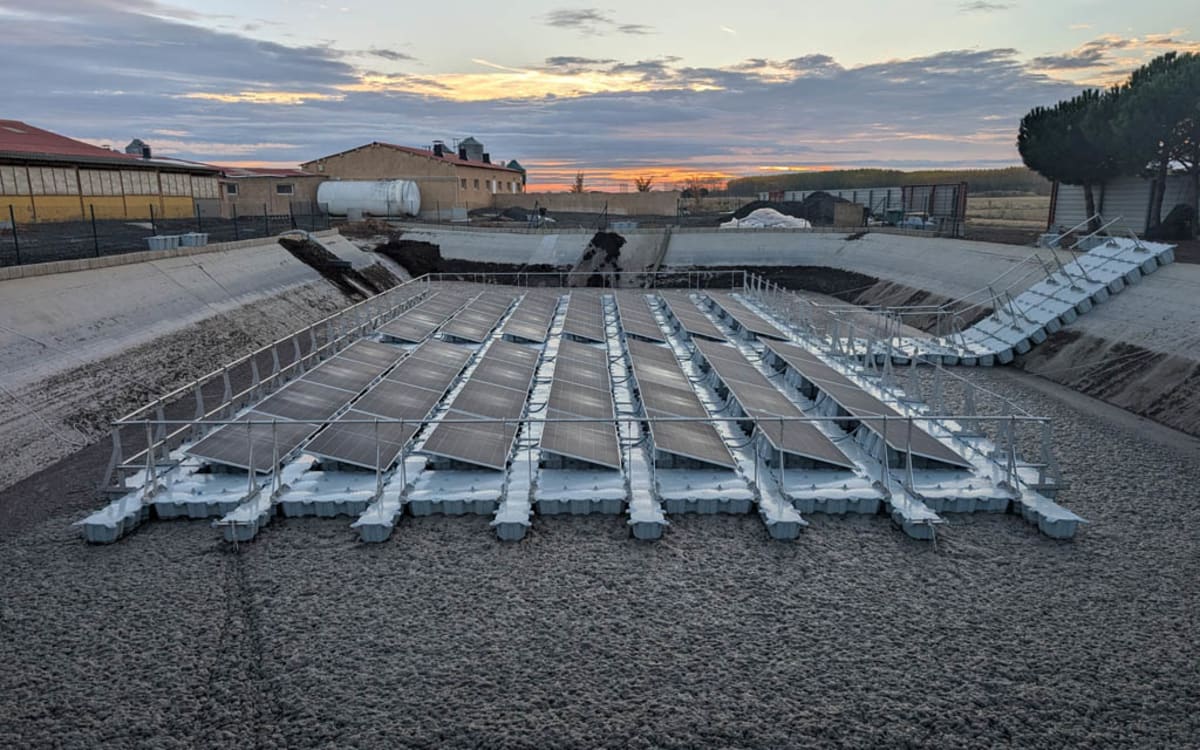
Engineering firm Intergia is testing floating solar panel systems on manure lagoons at Spanish pig farms. The panels cover the waste ponds, blocking ammonia emissions that normally escape into the air, while generating clean electricity for the farms below.
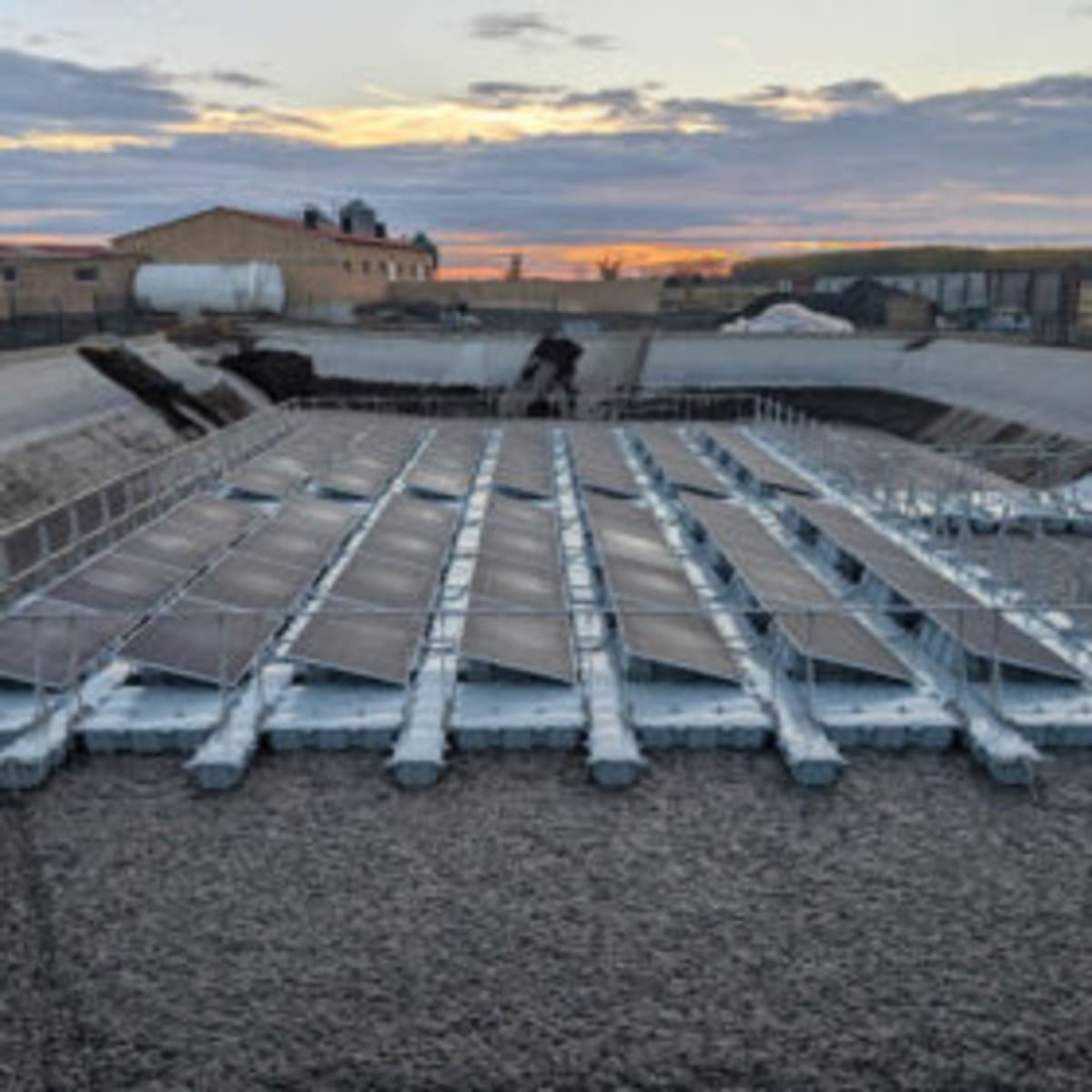
The company installed two different prototypes to see which works best. The first sits on a sow farm in Calzada de Tera, Zamora, where 56 solar panels now cover 20% of the lagoon surface. Plans call for expanding coverage to 90%. The system already generates enough power to cut the farm's electricity bill by 22%.
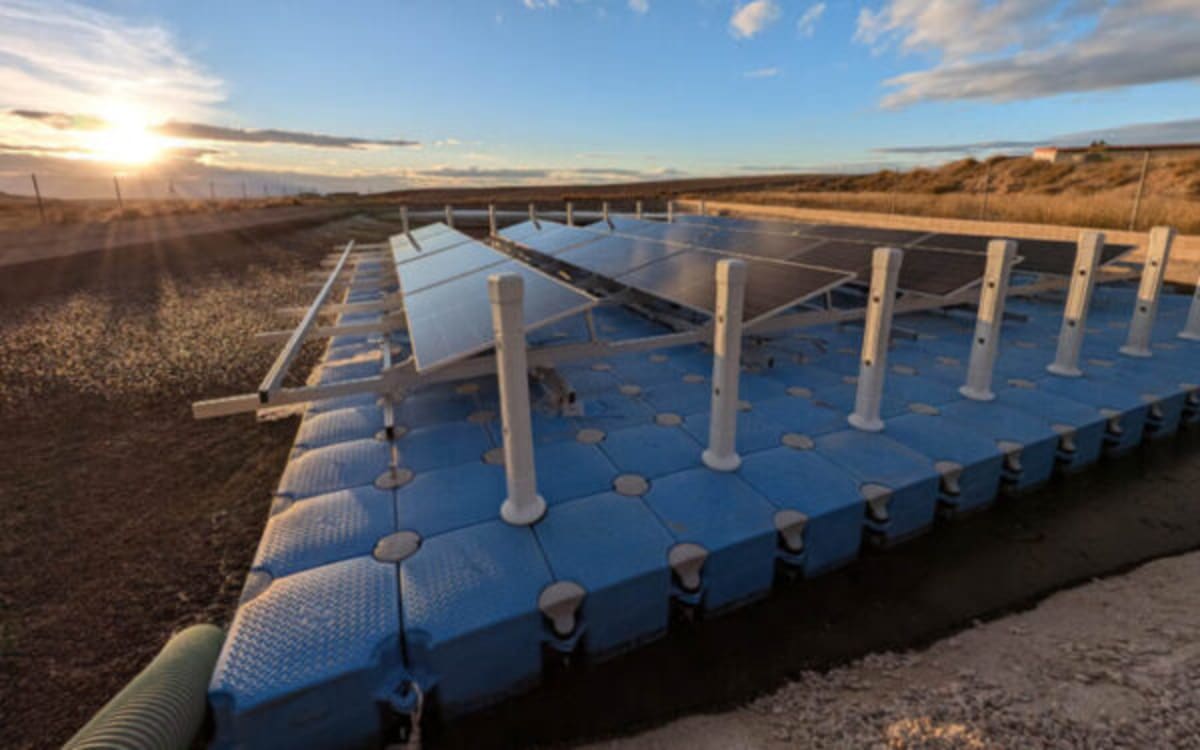
The second prototype went up at a fattening farm in Tauste, Zaragoza, that raises 6,000 pigs. This farm previously ran on a diesel generator with a small solar setup. The new floating system spans 1,100 square meters and uses specially designed pontoons that minimize open water exposure, further reducing emissions.
The Tauste installation uses 16 solar panels built to withstand the harsh ammonia environment. Every component is aluminum or stainless steel to prevent corrosion. The platform floats freely, rising and falling with the lagoon level, and generates enough electricity to supply 53% of the farm's power needs.
The timing matters because manure lagoons create real environmental problems. Satellite imagery shows elevated ammonia concentrations in areas with dense pig farming operations. Excess nutrients from manure, especially nitrates, leak into soil and water supplies. Covering the lagoons stops much of this pollution while creating something useful.
The Ripple Effect
This project, funded through the EU's NextGenerationEU program, runs through 2027 and could transform how livestock farms operate across Europe. Researchers are measuring ammonia and methane emissions using sensors and floating chambers to prove the environmental benefits. They're also tracking energy generation and cost savings to build an economic case.
The data will determine which design works best for emissions reduction, corrosion resistance, energy efficiency, and return on investment. Success means a scalable solution that other pig farms can adopt, turning thousands of waste lagoons into dual-purpose systems that protect the environment and generate income.
Regions with intensive livestock farming face mounting pressure to reduce their environmental footprint. This approach gives farmers a practical path forward that improves their bottom line instead of just adding costs.
The best solutions work because they make sense for everyone involved, and floating solar on manure lagoons checks every box.
More Images
Based on reporting by PV Magazine
This story was written by BrightWire based on verified news reports.
Spread the positivity!
Share this good news with someone who needs it