Solar Panels Over Crops Cool Soil by 20°C in Italy
Farmers in southern Italy are discovering that solar panels installed above their crops can drop soil temperatures by more than 20°C while still growing food. The breakthrough could help Mediterranean regions fight rising heat and drought.
Imagine soil so scorching hot it burns your feet, suddenly cooling by 20 degrees Celsius just by adding solar panels overhead. That's exactly what researchers in southern Italy are witnessing as they test a farming method that could reshape how we grow food in a warming world.
Professor Giuseppe Ferrara and his team at the University of Bari are measuring real-time results at two pilot farms in Puglia and Calabria. They're growing figs, olives, lemons, and lavender beneath solar panels, and the numbers are remarkable.
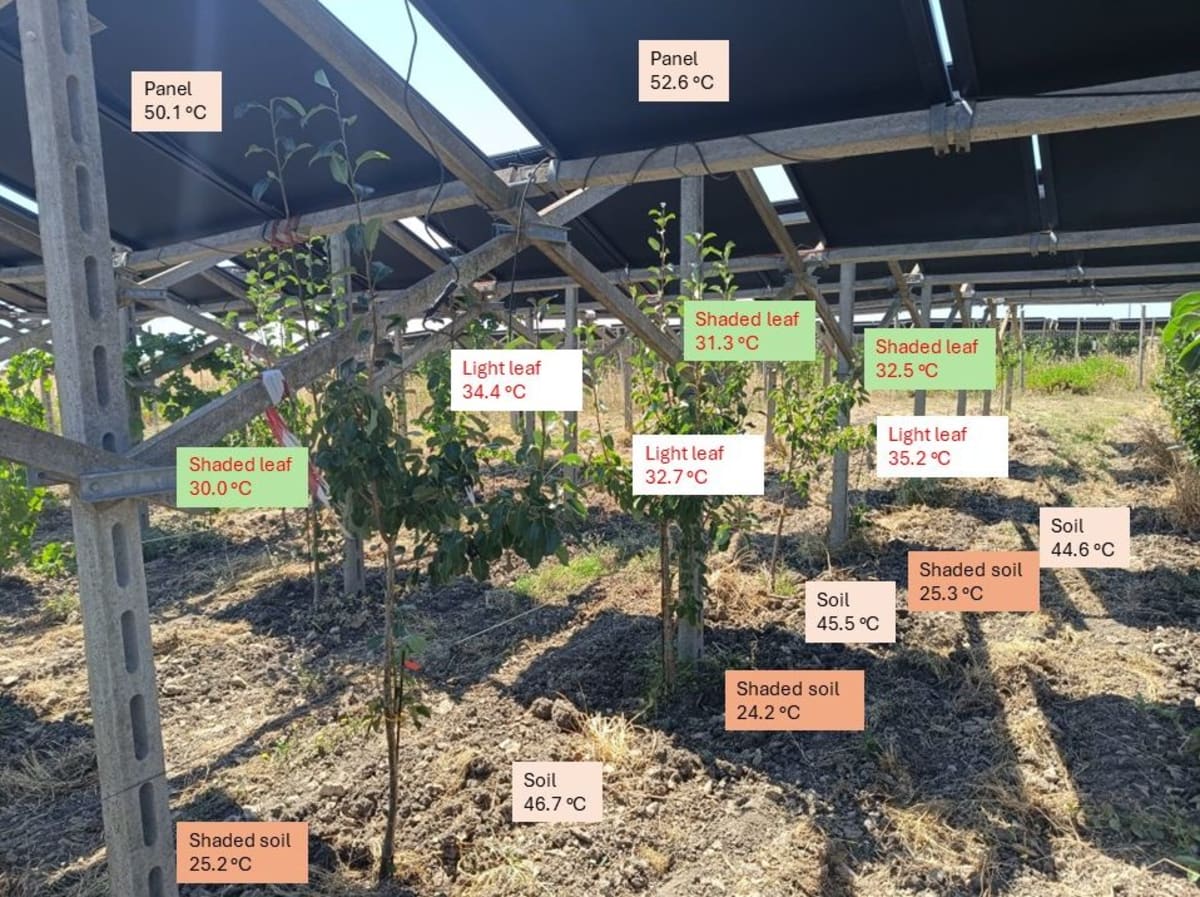
At 11 a.m. on particularly hot days, soil shaded by the solar arrays measured more than 20 degrees Celsius cooler than soil baking in direct sunlight. While that specific number came during extreme heat, the consistent cooling effect could be a game-changer for regions struggling with drought and scorching temperatures.
The technology, called agrivoltaics, lets farmers harvest two crops from the same land: electricity and food. But finding the right balance is tricky.
Too much shade can limit the light plants need for photosynthesis, potentially reducing how much food they produce. That's why Ferrara's team is testing different panel heights, tracking systems that follow the sun, and fixed installations to see what works best for each crop.
Some plants handle shade better than others. The researchers are carefully documenting which crops thrive under panels and which struggle, because not every plant is suited for this dual-use approach.
The two pilot sites were chosen strategically. Different crops, different climates, and different panel configurations mean more data to help farmers make informed decisions rather than costly guesses.
The Ripple Effect
This research matters far beyond two farms in Italy. Mediterranean regions worldwide face the same brutal combination of intense sun, high temperatures, and limited water. Agrivoltaics could offer a path forward that addresses multiple challenges at once.
Cooler soil means less water evaporation. Solar panels mean clean energy. And if crop yields stay strong, farmers get income from both electricity and agriculture on land that might otherwise become too hot to farm productively.
Ferrara emphasizes his team isn't selling a miracle solution. They're collecting honest data about what works and what doesn't, because farmers and policymakers need facts, not marketing hype.
The movement of sunlight throughout the day, combined in some cases with panels that track the sun, helps distribute light more evenly. This gives plants enough exposure to photosynthesize while still providing crucial shade during the hottest hours.
Darker soils absorb more radiation and heat up faster, so soil color matters too. Every variable counts when you're trying to optimize a system that serves two purposes.
Agriculture is changing whether we're ready or not, Ferrara notes, particularly as drought becomes more common. Agrivoltaics represents one possible adaptation, at least in certain climates and with the right crop choices.
The data flowing in from Laterza and Scalea will help determine where this technology makes sense and how systems should be designed to balance energy production with food security.
More Images


Based on reporting by PV Magazine
This story was written by BrightWire based on verified news reports.
Spread the positivity!
Share this good news with someone who needs it