Solar-Powered Boat Stops 143K Pounds of Trash From Ocean
A tennis court-sized barge in Los Angeles has intercepted over 143,000 pounds of plastic waste before it could reach the Pacific Ocean. The solar-powered invention is now being deployed in 10 countries to stop pollution at its source.
A floating robot is eating trash before it can reach the ocean, and it's already keeping beaches cleaner across Southern California.
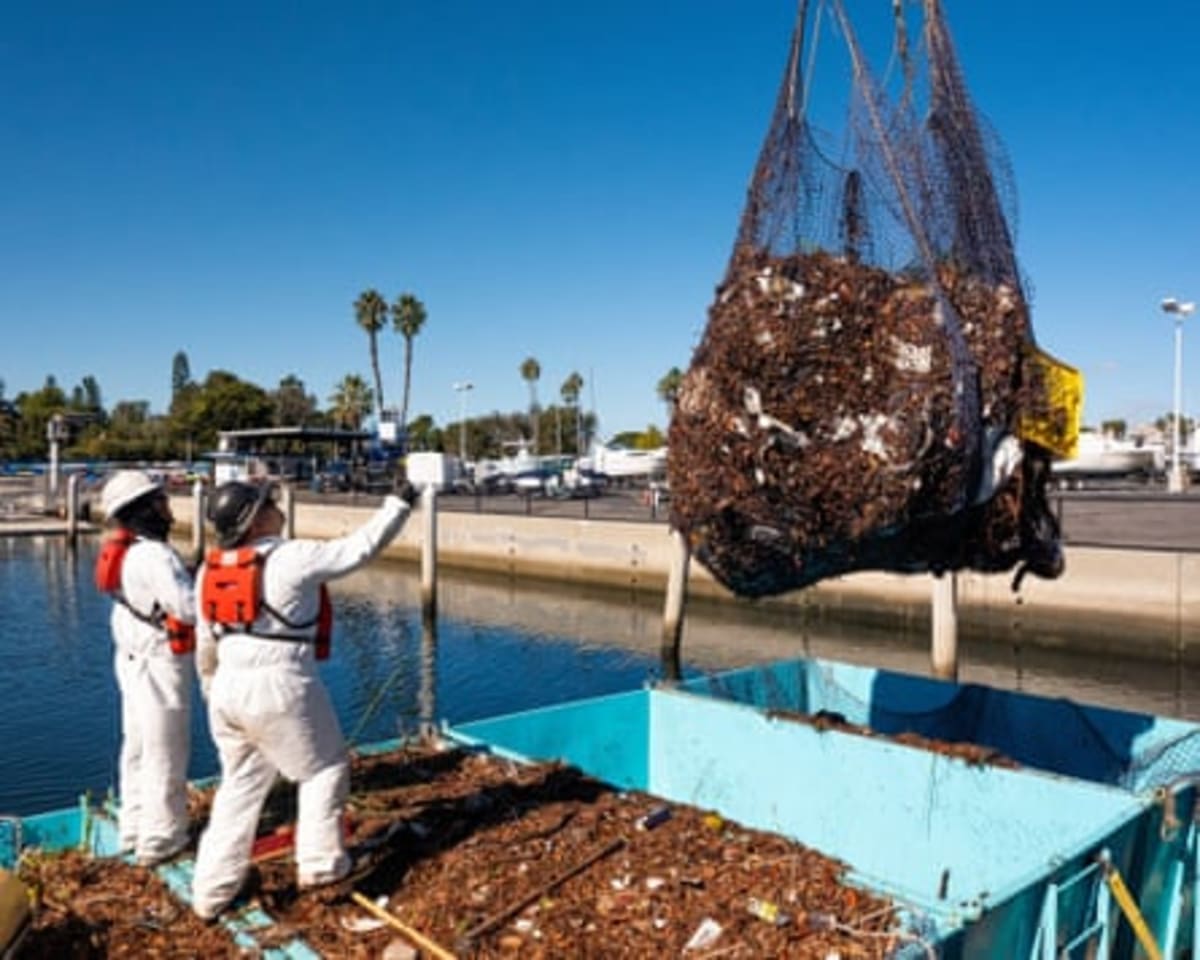
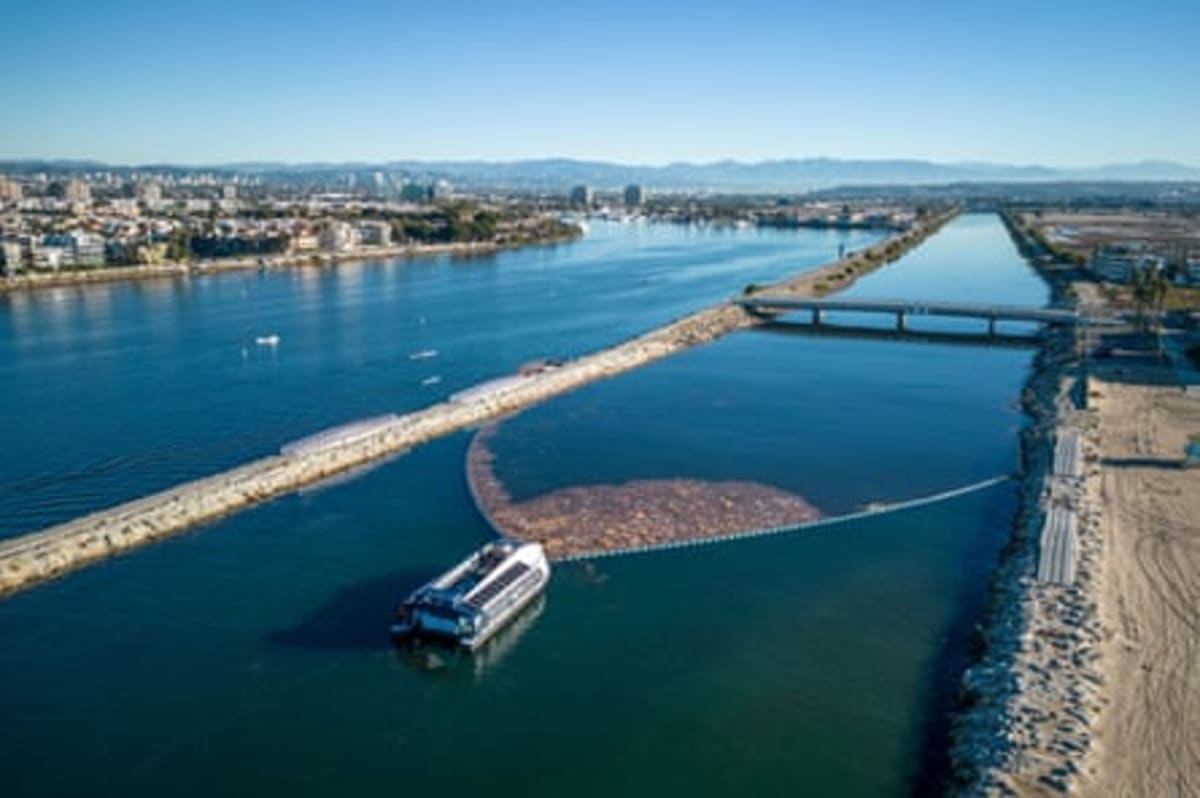
The Interceptor looks like two barges nestled together at the mouth of Ballona Creek in Los Angeles. Solar panels form its roof, and a conveyor belt slowly scoops plastic bottles, takeaway containers, and other debris from the water before it flows into Santa Monica Bay.
The system is beautifully simple. Floating barriers guide trash toward the barge, where a conveyor belt catches it and distributes waste into six giant bins. When full, it alerts crews to come empty it. The whole thing runs on solar power and can hold 20,000 pounds of garbage.
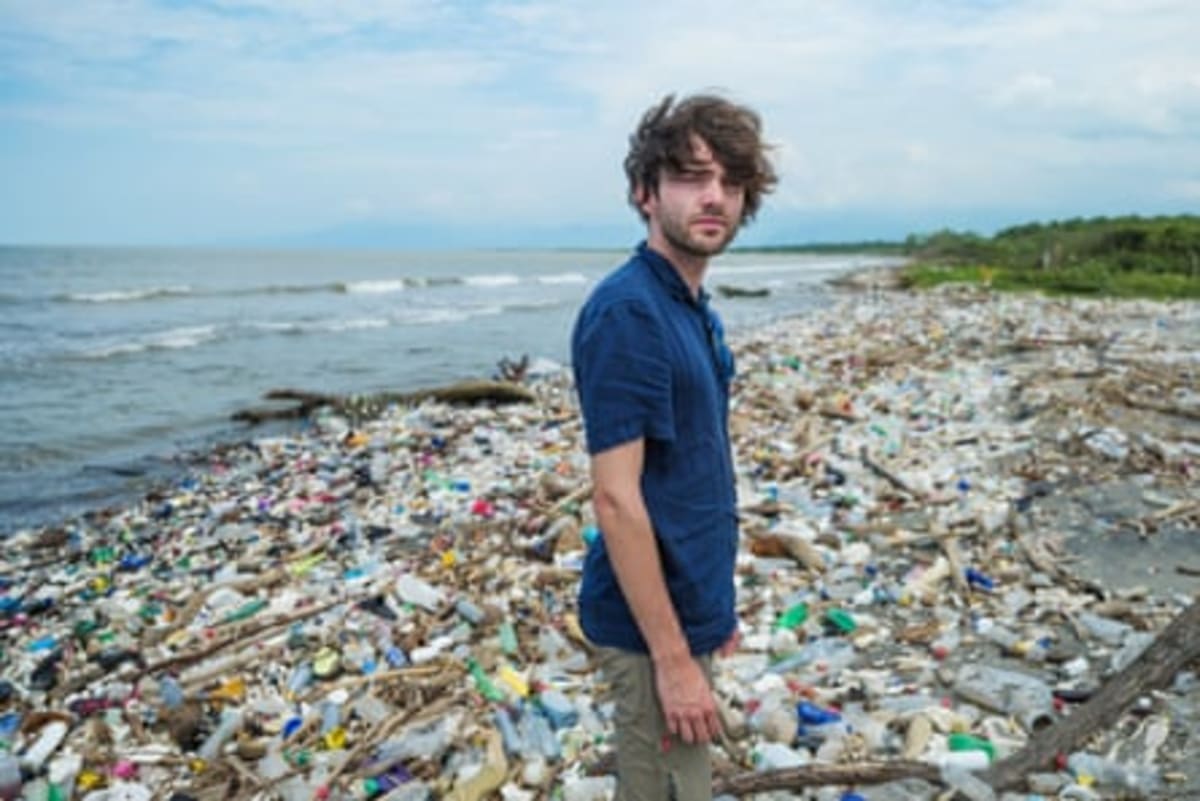
Ocean Cleanup, the nonprofit behind the invention, designed the Interceptor to tackle pollution where it starts. Research shows that just 1,000 rivers worldwide are responsible for nearly 80% of plastic flowing into our oceans.
"Before you can clean out the Great Pacific Garbage Patch, you really need to turn off the source," says James Patterson, operations manager at Ocean Cleanup. The organization operates 21 of these systems across Malaysia, Indonesia, Vietnam, Guatemala, Jamaica, the Dominican Republic, and the United States.
In Los Angeles alone, this single barge stopped 143,710 pounds of trash from entering the Pacific in 2025. Two more boats will launch soon in the San Gabriel River and Los Angeles River.
The Ripple Effect
Beach cities south of the Ballona Creek project have already lowered their beach cleaning budgets. There's simply less trash washing up on the sand now that the Interceptor is catching it upstream.
Ocean Cleanup aims to deploy these systems in the 30 most polluted cities by 2030. Each river needs a custom approach based on local conditions, government regulations, and the unique challenges each waterway presents.
The project in LA cost $1.3 million to design and permit, plus another $1.5 million to secure the boat in place. Annual maintenance runs $650,000, but Ocean Cleanup is providing it to LA County completely free.
Dutch inventor Boyan Slat founded Ocean Cleanup after witnessing the Great Pacific Garbage Patch firsthand. His team initially focused on ocean cleanup but pivoted to rivers after realizing that stopping trash at its source would have far greater impact.
The system isn't perfect—the occasional plastic cup slips past the barriers. "When something like that escapes, it hurts," Patterson admits. But those moments are rare compared to the tons of waste the Interceptor catches every day.
One floating barge is proving that the fight against ocean plastic doesn't have to happen in the ocean at all.
More Images

Based on reporting by Google News - Ocean Cleanup
This story was written by BrightWire based on verified news reports.
Spread the positivity!
Share this good news with someone who needs it