Solar Storm May Bring Northern Lights to US and UK This Week
A powerful solar flare erupted from the sun on May 10, sending a burst of charged particles toward Earth that could create stunning aurora displays across northern states and the UK by May 13. Space weather forecasters say the glancing blow could trigger minor geomagnetic storm conditions.
The sun just gave aurora chasers something to get excited about this week.
A powerful M5.7 solar flare burst from the sun on May 10, launching a massive cloud of solar material called a coronal mass ejection (CME) into space. While most of the eruption will miss Earth, part of it could brush past our planet around May 13, potentially lighting up the night sky with dancing northern lights.
The flare peaked at 9:39 a.m. EDT from sunspot region AR4436, which is now rotating into the perfect position to aim directly at Earth. Scientists at NOAA's Space Weather Prediction Center and the UK Met Office say the glancing blow could trigger minor G1 geomagnetic storm conditions.
That means people across the northern United States and the United Kingdom might catch a glimpse of the aurora borealis later this week. The colorful displays happen when charged particles from the sun interact with gases in Earth's atmosphere, creating waves of green, purple, and red light.
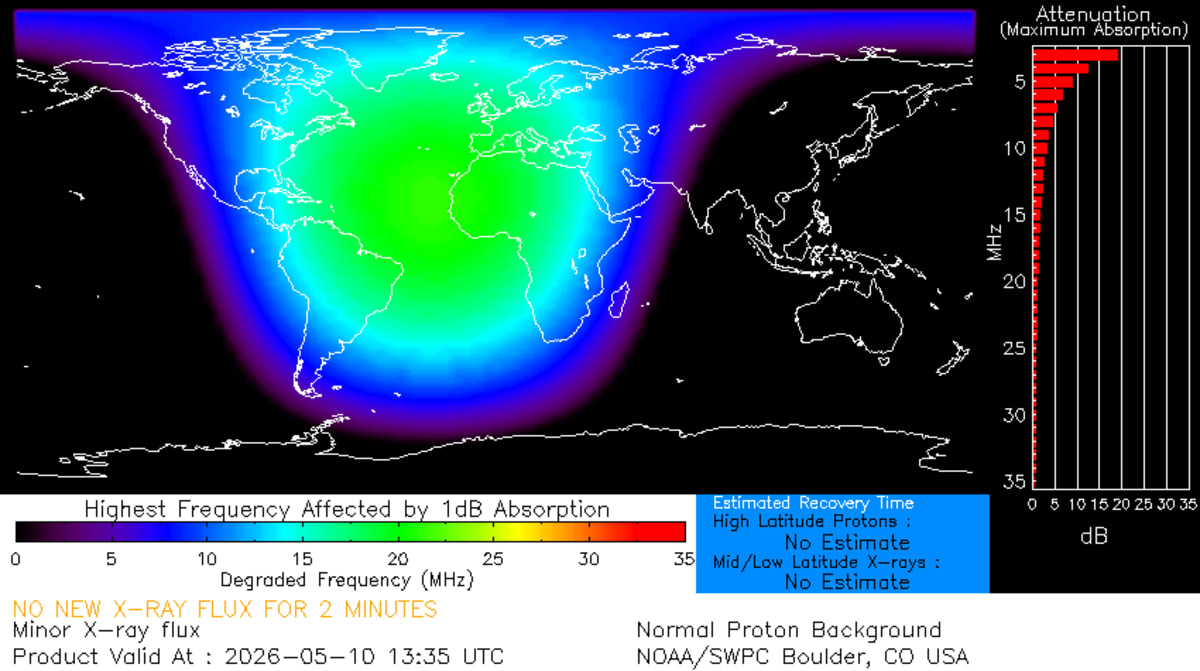
Solar flares are ranked on a scale from weakest to strongest: A, B, C, M, and X. Each level represents ten times more energy than the one before it. The May 10 event reached M5.7 strength, powerful enough to temporarily disrupt radio communications over the Atlantic Ocean at the time of eruption.
Why This Inspires
The timing holds special meaning for space weather enthusiasts. Exactly two years ago on May 10, 2024, Earth experienced its strongest geomagnetic storm in more than 20 years. That extreme G5 storm painted the sky with auroras visible as far south as Florida and Mexico, giving millions of people a rare chance to witness the phenomenon.
While this week's event won't match that spectacular show, it reminds us that we live on a dynamic planet connected to an active sun. The solar cycle is approaching its peak, meaning more opportunities to witness these natural light shows are coming. Both NOAA and the UK Met Office are watching two active sunspot regions that could produce even stronger flares in the coming days.
The event also showcases how far space weather forecasting has come. Scientists can now predict when solar eruptions might reach Earth and warn people days in advance, giving aurora chasers time to prepare their cameras and find dark skies.
Keep your eyes on the northern horizon this week and check aurora forecasts for your area.
More Images



Based on reporting by Google News - Science
This story was written by BrightWire based on verified news reports.
Spread the positivity!
Share this good news with someone who needs it