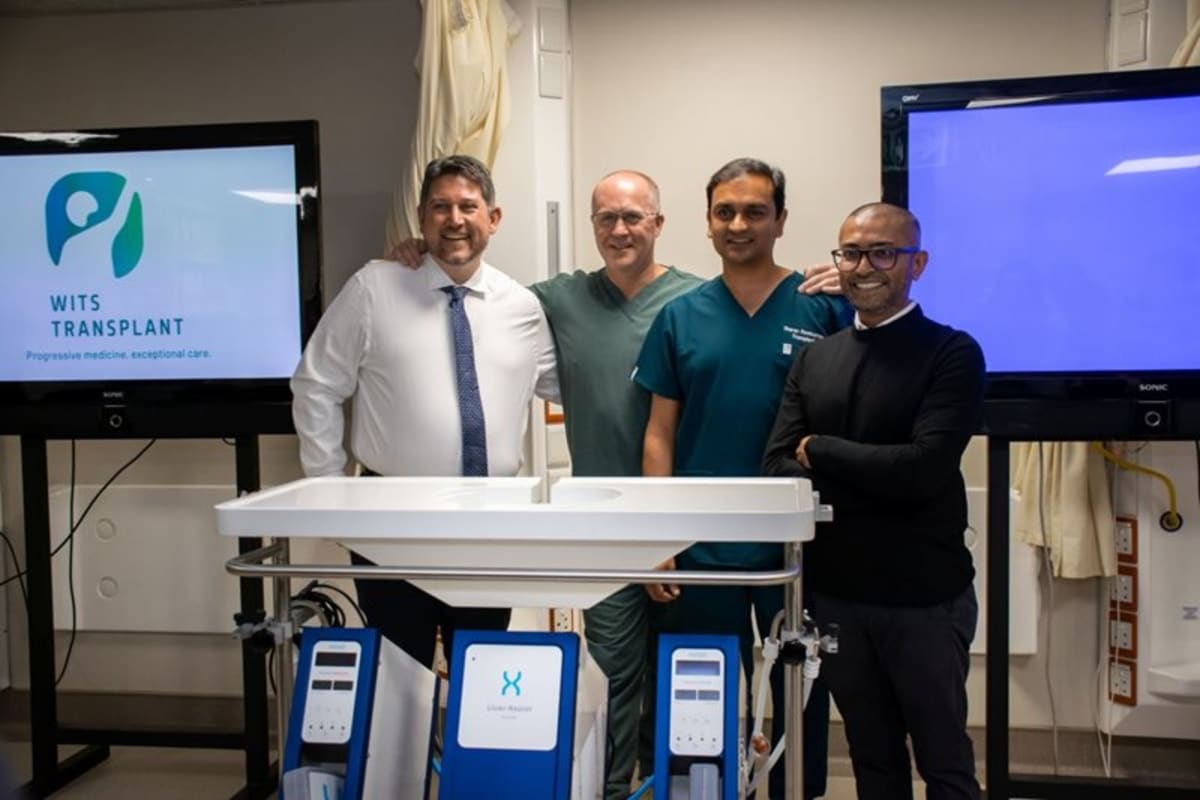
South Africa Gets First Liver Perfusion Machine in Africa
A Johannesburg hospital just became the first in Africa to use a groundbreaking machine that keeps donor livers alive outside the body, potentially saving countless patients who might otherwise die waiting for a transplant. In a country facing severe organ shortages, this technology could transform how many lives get saved.
For patients waiting for a liver transplant in South Africa, the surgery isn't the hardest part. It's wondering if an organ will arrive in time to save their life.
The Wits Donald Gordon Medical Centre in Johannesburg just changed those odds. The hospital became the first transplant center on the entire African continent to implement liver perfusion technology, a machine that keeps donor livers viable outside the human body while doctors assess and improve their condition.
The technology works like life support for organs. Instead of the traditional method of preserving livers on ice with limited assessment options, the machine delivers oxygen to liver cells and creates an optimal environment outside the body. Doctors can monitor how the organ functions in real time before making the critical decision to transplant.
"This technology changes the level of information we have available before transplantation," says Dr. Sharan Rambarran, a transplant surgeon at the hospital. The machine doesn't just preserve organs better. It can actually resuscitate damaged livers, potentially turning previously unusable organs into lifesaving transplants.
The timing couldn't be more critical. South Africa faces severe organ shortages, forcing transplant teams to make difficult decisions under immense pressure. Every viable organ that goes unused represents a lost opportunity to save a life.
The hospital's transplant program has already performed over 1,000 liver transplants and earned international recognition for specialized care and surgical training. Now, through partnership with Surgeons for Little Lives and corporate sponsor Weelee, they're pushing the boundaries even further.
The Ripple Effect
Beyond saving individual lives, this technology promises to reshape transplant outcomes across the region. Doctors expect reduced post-operative complications, shorter hospital stays, and improved recovery for patients. More organs accepted means more families spared the agony of losing loved ones to end-stage liver disease.
"Too many patients in South Africa deteriorate while waiting for a transplant because there are simply not enough donor organs available," says Dr. Bilal Bobat, a transplant hepatologist at the hospital. The machine helps safely expand which organs can be used, directly impacting survival rates and quality of life.
Professor Jerome Loveland, Head of Solid Organ Transplantation, puts it simply: "In a country where every donor organ matters, this will have a significant impact on organ utility and patient outcomes."
South Africa's transplant programs already achieve strong outcomes despite operating in a severely resource-constrained environment. This breakthrough gives them a powerful new tool to do even more with limited resources, turning medical innovation into real hope for patients and families facing impossible waits.
Based on reporting by Regional: south africa breakthrough (ZA)
This story was written by BrightWire based on verified news reports.
Spread the positivity!
Share this good news with someone who needs it
.jpg)