%2Ffile%2Fattachments%2Forphans%2FVIEW1_130836.jpg)
South Africa Helps Track Artemis II Moon Mission
When NASA's Artemis II crew flew closer to the Moon than any humans in 54 years, a team of South African engineers was there to catch their signal. The mission shows how global teamwork, including expertise from Africa, makes space exploration possible. #
When NASA's Artemis II crew flew closer to the Moon than any humans in 54 years, a team of South African engineers was there to catch their signal. At the South African National Space Agency's ground station in Hartebeesthoek, experts tracked every moment of the historic journey.
The four astronauts broke distance records as they traveled 406,771 kilometers from Earth during their lunar flyby. They passed just 6,545 kilometers above the Moon's surface, closer than any human has ventured since Apollo 17 in 1972.
Back on Earth, Raoul Hodges and his team at Sansa used two powerful antennas to monitor the spacecraft's health and location. One antenna dates back to 1963, the other to 1988, but both have been carefully updated over the decades to handle cutting-edge missions.
"The module with the four astronauts needs its health monitored constantly," Hodges explained. His team captured vital telemetric data, tracking the capsule's position, distance, and systems whenever it appeared in their view as Earth rotated.
The work required precise timing and flawless execution. As Orion passed behind the Moon during a 40-minute blackout period, the South African station stood ready to reacquire the signal the moment it emerged.
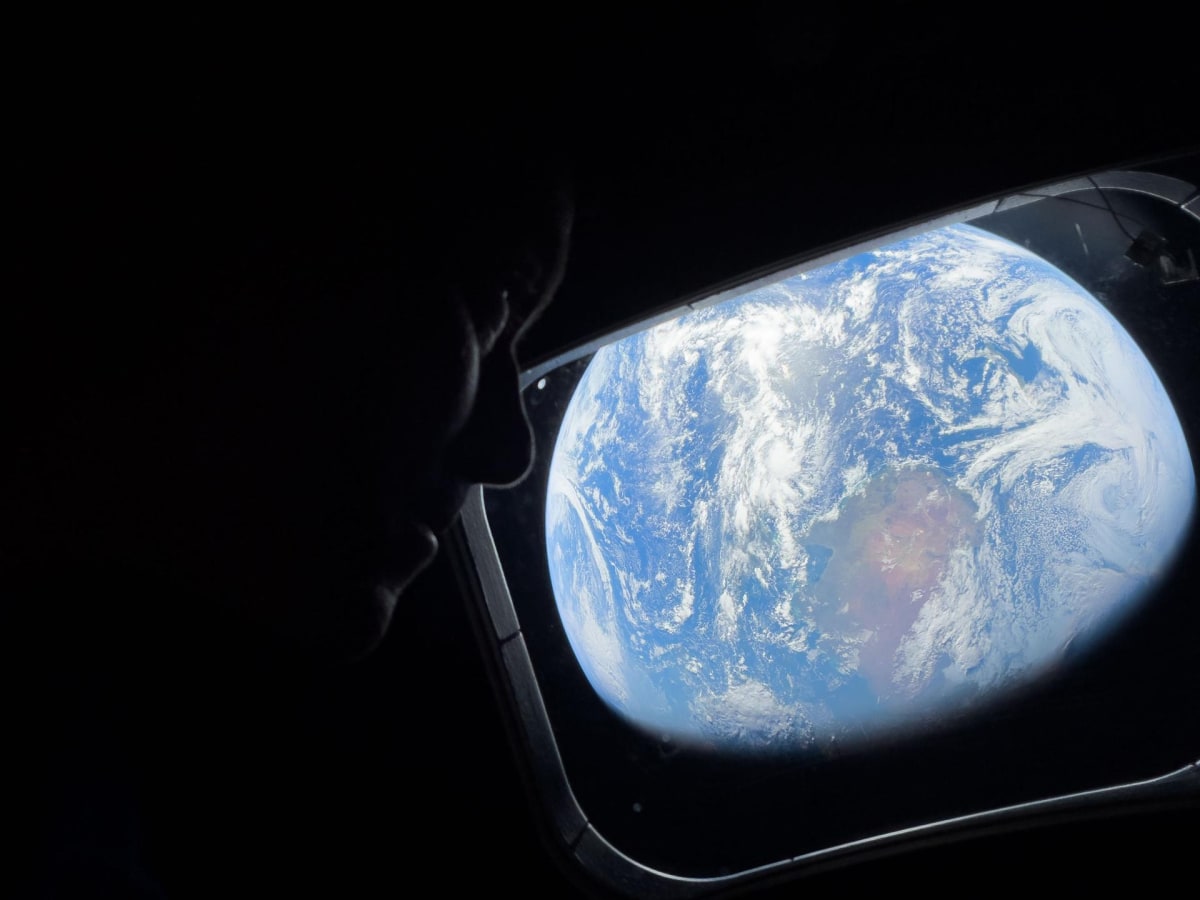
During their flyby, the crew witnessed phenomena no human has seen in half a century. They watched Earth set and rise over the lunar horizon, photographed ancient lava flows and impact craters, and even spotted six meteoroids slamming into the Moon's surface during a solar eclipse.
"We saw sights that no human has ever seen," said Commander Reid Wiseman. Mission specialist Christina Koch added that there were "no adjectives" to describe what they observed.
The Ripple Effect
While Sansa describes itself as "a small fish in this pond," their contribution represents something bigger. The southern hemisphere's largest ground station proved essential to keeping astronauts safe during humanity's return to deep space.
The collaboration shows how space exploration has evolved beyond superpower competition into genuine global partnership. Engineers in South Africa work alongside teams worldwide, each playing their part in historic achievements.
"It is wonderful to be part of a historic event," Hodges said. "It is a huge team effort to get the spacecraft into space and to get the astronauts back safely."
The Artemis II crew is scheduled to splash down off San Diego on Friday, completing their journey home. Their successful mission opens the door for future lunar exploration, built on partnerships that span continents and hemispheres.
#
More Images
%2Ffile%2Fattachments%2Forphans%2FView3_772578.jpg)
%2Ffile%2Fattachments%2Forphans%2FView2_440216.jpg)

Based on reporting by Daily Maverick
This story was written by BrightWire based on verified news reports.
Spread the positivity!
Share this good news with someone who needs it