%2Ffile%2Fattachments%2Forphans%2FED_592438_587622.jpg)
South African School Hits 100% Pass Rate in Six Years
A high school in South Africa jumped from a 40% pass rate to 100% in just six years by partnering with a nonprofit to transform how it supports students. The success shows how collaboration between schools and community organizations can tackle basic challenges while preparing kids for the future.
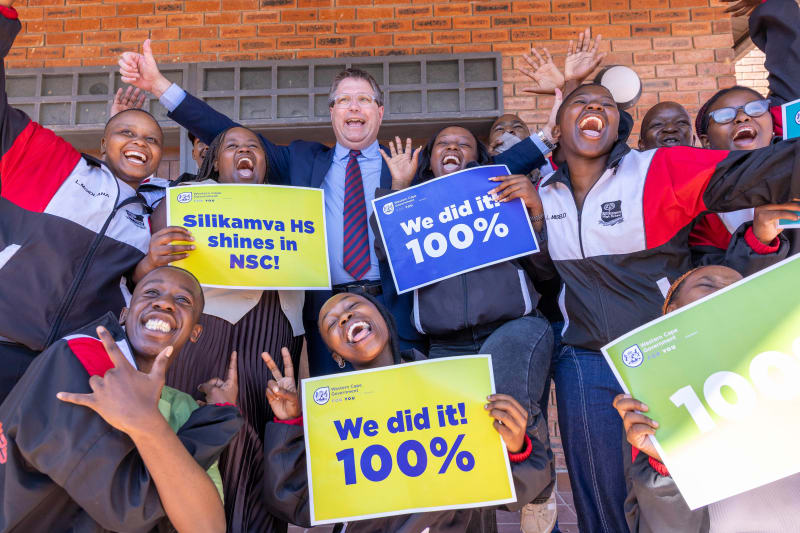
Six years ago, only 40% of students at Silikamva High School in Hout Bay, South Africa, passed their final exams. This January, every single graduating senior passed, and three-quarters earned scores high enough for university admission.
The turnaround happened through a Collaboration School model, where public schools partner with nonprofit organizations to improve student outcomes. At Silikamva, the school worked with Common Good, a nonprofit that brought stronger management practices and educational enrichment while teachers and parents stayed deeply involved.
The results speak for themselves. Two other schools in the Western Cape using this model, Apex Eersteriver and Kraaifontein, achieved 98% and 89% pass rates respectively. Kraaifontein's rate jumped 32 percentage points in just two years.
What makes this approach different is that schools don't game the numbers by pushing out struggling students before exams. Instead, they believe every child has worth and deserves a full educational experience. The nonprofit partners and school communities share equal representation on governing boards, and the education department allows more flexibility in hiring teachers and spending funds in exchange for stronger results.
Critics worry these partnerships undermine parental control or open doors to profiteering. But parents vote on whether to join the program, and all partner organizations are nonprofits serving no-fee public schools that accept all local children.
The success matters beyond test scores. Education worldwide is shifting from memorizing facts to teaching students how to think critically. As artificial intelligence makes information instantly available, schools need to teach kids how to evaluate sources, solve problems creatively, and connect learning to real-world challenges.
The Ripple Effect
The Collaboration School model shows how communities can harness wider resources for education without sacrificing local control. Wealthier schools are already adapting to this new learning landscape, while children in poorer communities often get left behind. These partnerships prove that with smart management and community support, schools can fix basic problems and embrace innovative teaching at the same time.
The approach could reshape how public education works, turning schools from isolated institutions into community hubs connected to global knowledge networks. Students gain access to entrepreneurs, problem-solvers, and future employers while staying grounded in safe, nurturing environments.
For the families celebrating at Silikamva High this January, the model already changed everything. Their children now have opportunities that seemed impossible just six years ago, proving that public schools can evolve to meet both today's needs and tomorrow's challenges.
More Images

%2Ffile%2Fdailymaverick%2Fwp-content%2Fuploads%2F2025%2F10%2Flabel-Op-Ed.jpg)
%2Ffile%2Fattachments%2Forphans%2FED_592405_628305.jpg)
Based on reporting by Daily Maverick
This story was written by BrightWire based on verified news reports.
Spread the positivity!
Share this good news with someone who needs it