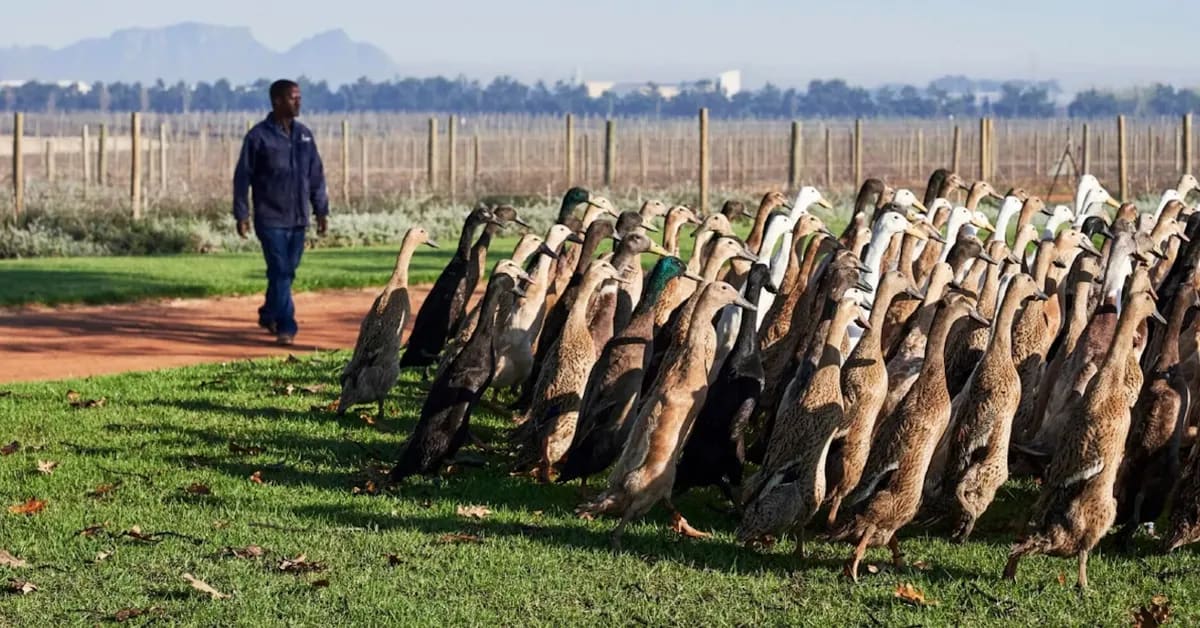
South African Vineyard Swaps Pesticides for 1,000 Ducks
A wine estate in South Africa has spent 40 years proving that a thousand ducks can do what chemicals never could: protect crops while healing the soil. Now ten neighboring farms are following their lead.
When a South African vineyard stopped spraying pesticides in 1984, they unleashed something far more effective: an army of long-necked ducks.
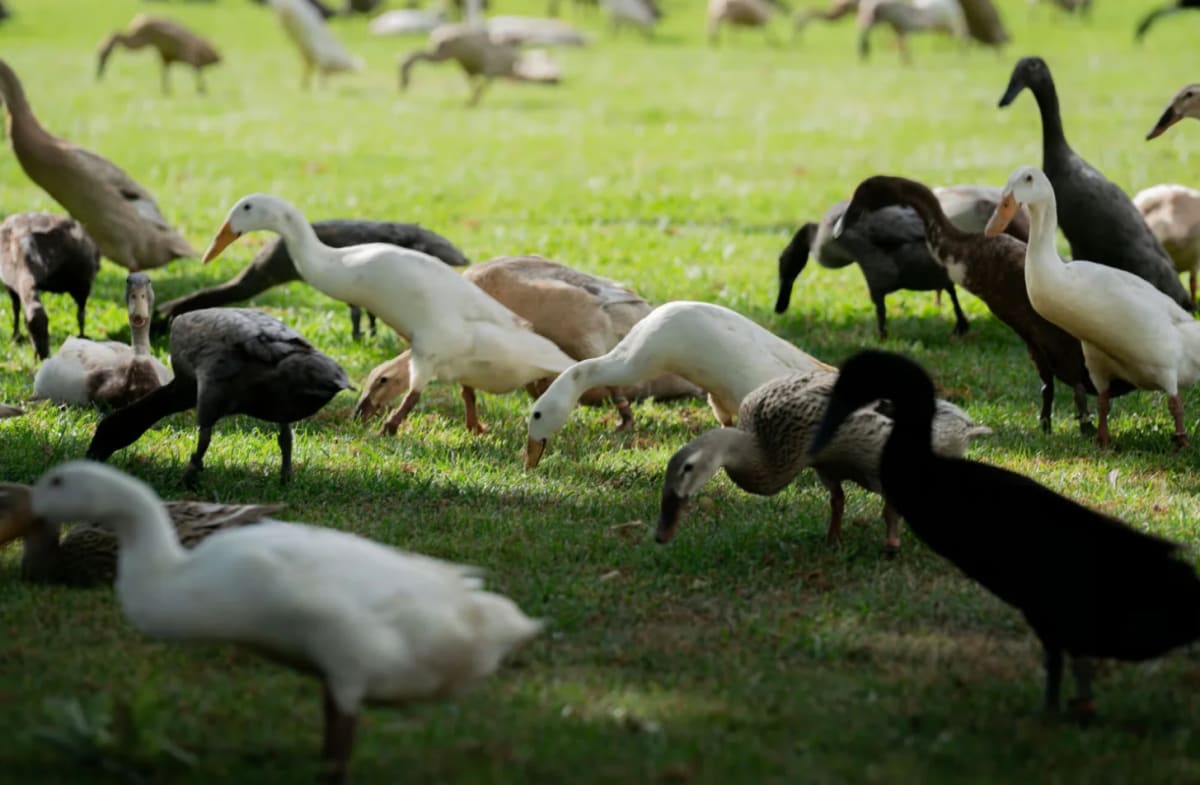
The Vergenoegd Löw Wine Estate in Stellenbosch now relies on roughly 1,000 Indian Runner ducks to gobble up vineyard pests like snails, slugs, and weeds. Their droppings naturally fertilize the soil, creating a chemical-free cycle that produces better wine and healthier land.
"The more pesticides and artificial fertilizers you put onto your soil, eventually your soil will degenerate," explains Milan Germishuizen, the estate's ecology ranger. "By using natural methods, we are really looking after our soils, which eventually does give us a much better product."
The idea came from Indonesia, where farmers have used Indian Runner ducks in rice paddies for over 2,000 years. Former owner John Faure introduced the practice after realizing that chemical farming depletes soil, stunts plant growth, and kills beneficial insects.
The system works year-round with careful choreography. When grapes ripen on the vines, farmers gently herd the ducks toward irrigation dams, where their waste enriches the water. The ducks also help break down manure from the farm's sheep and cattle, cycling nutrients back into the vineyard.
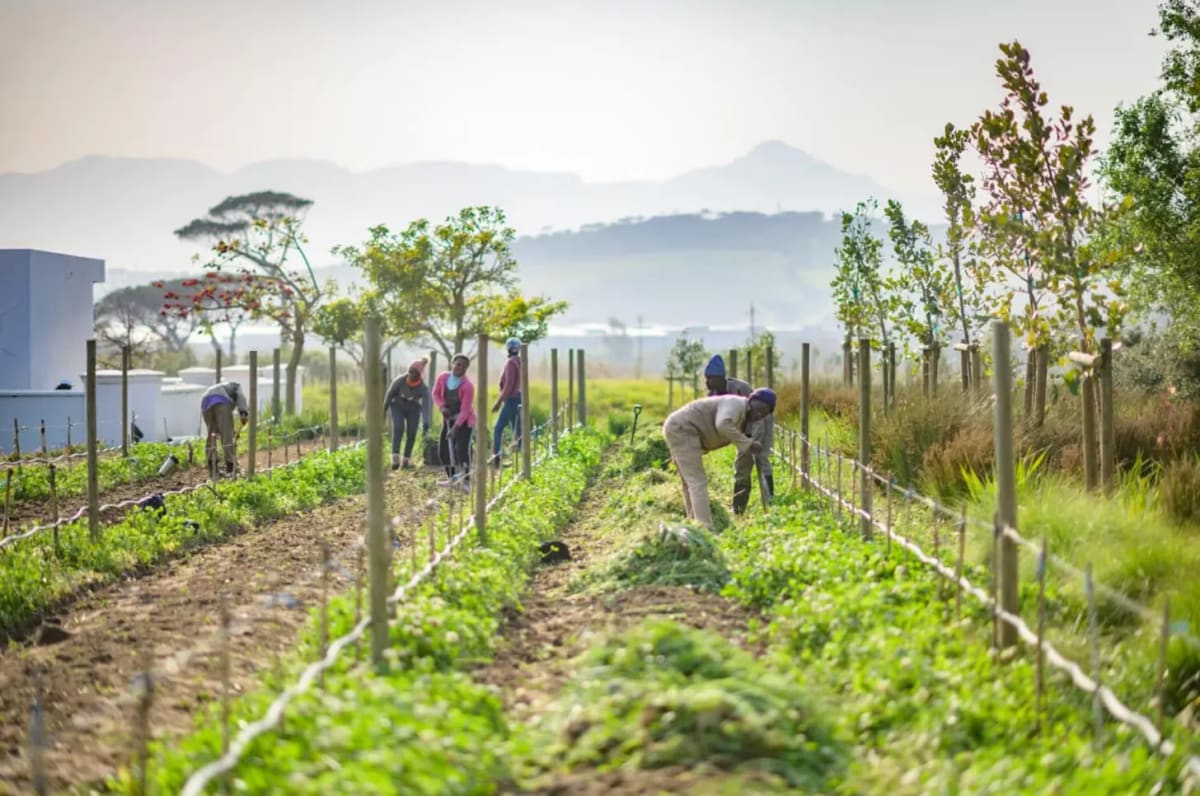
Farm manager Christiaan Cloete says the chemical-free approach creates a more biodiverse ecology. "When you use chemicals, you sometimes kill a lot of beneficial insects," he told local news. The ducks target only pests while leaving pollinators and other helpful species alone.
The Ripple Effect
The vineyard now breeds its own ducks and sells them to ten surrounding farms that have adopted the same practice. As of August, they had 890 ducks on the property with 400 ducklings expected by October. Half will go to neighboring farmers while the rest replace retiring ducks.
"A lot of our neighbors have gotten on board with regenerative farming," says Tessa Kleynhans, the estate's commercial manager. "We're trying to set the precedent that, if you invest the capital in the beginning, even though it's a long, tedious process, it is worth it in the end."
Four decades later, their experiment has become a blueprint for farming that works with nature instead of against it.
More Images

Based on reporting by Good Good Good
This story was written by BrightWire based on verified news reports.
Spread the positivity!
Share this good news with someone who needs it