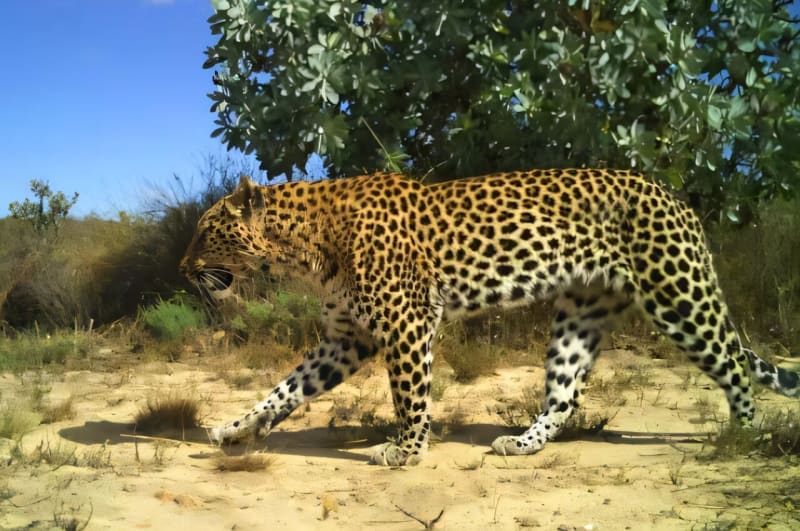
South Africa's Cape Leopards Are Genetically Unique
Scientists discovered that fewer than 1,000 leopards living in South Africa's Cape region evolved into their own distinct genetic group after 20,000 years of isolation. The small cats are thriving today thanks to conservation efforts that began in the 1960s.
A tiny population of leopards in South Africa has quietly rewritten the rules of evolution, and scientists just figured out how they did it.
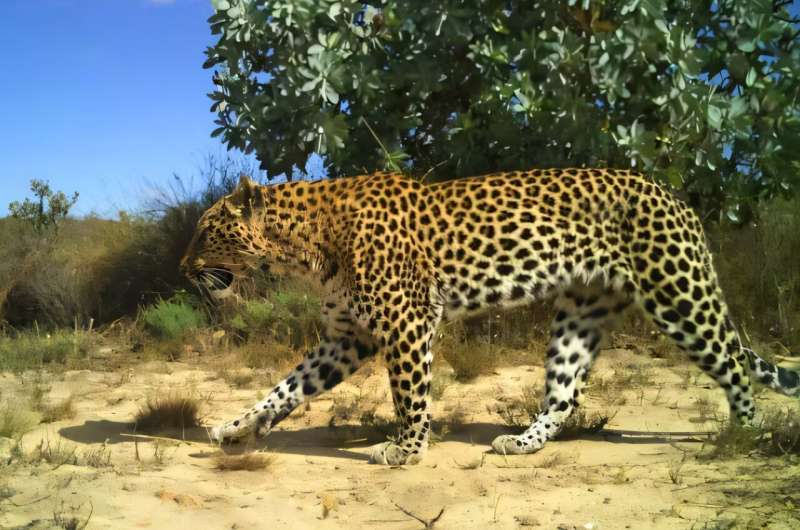
Researchers studying fewer than 1,000 leopards in South Africa's Cape Floristic Region discovered something remarkable. These cats are genetically different from every other African leopard on the continent, shaped by 20,000 years of isolation and adaptation to their unique mountain home.
The Cape leopards are unusually small, sometimes weighing only half as much as their cousins elsewhere in Africa. For decades, conservationists wondered if these differences were just coincidence or something deeper.
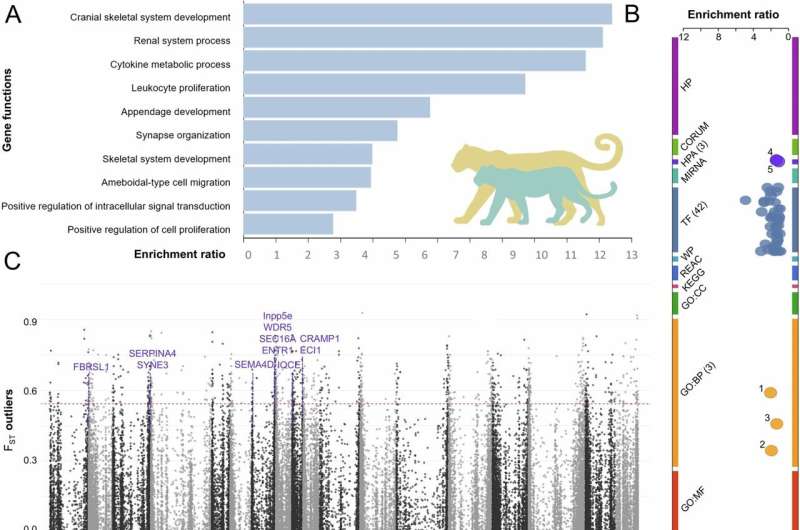
A team of leopard experts and evolutionary biologists decided to find out by analyzing the full DNA sequence of Cape leopards, all 2.57 billion base pairs. They compared tissue samples from Cape leopards with genomes from leopards across Africa.
The results were clear. Cape leopards split from other African populations during the Last Glacial Maximum about 20,000 to 24,000 years ago, when southern Africa became cooler and drier. The changing climate made it harder for animals to move between regions, trapping the Cape leopards in their mountain refuge along the Cape Fold Belt.
These mountains became both sanctuary and boundary. Leopards moved freely within the mountain chain but rarely crossed into the dry semi-desert to the north or the heavily populated Eastern Cape to the east.
The isolation allowed the leopards to adapt perfectly to their environment. Their smaller size likely helps them thrive in the Cape's unique landscape, rich with plants found nowhere else on Earth.
The Cape Leopard Trust Their story almost ended in the 1800s and 1900s when hunting, habitat loss, and bounty systems nearly wiped them out. Farmers were paid to kill leopards, and populations crashed.
But 1968 brought a turning point. South Africa ended the leopard bounty, and conservation efforts began rebuilding the population.
Why This Inspires
The Cape leopards prove that evolution happens right under our noses, not just in ancient history. These cats adapted so successfully to their mountain home that they became genetically distinct from all other African leopards.
Their recovery from near extinction shows what's possible when we choose conservation over destruction. From hundreds of years of human persecution to a thriving, unique population, these leopards represent hope for wildlife everywhere.
The research, published in the journal Heredity, gives conservationists crucial information for protecting this one-of-a-kind population. Understanding that Cape leopards are genetically unique means protection efforts can focus on preserving their specific habitat and preventing mixing with other populations that could dilute their special adaptations.
These small cats survived an ice age, centuries of hunting, and habitat loss to become their own evolutionary success story.
More Images


Based on reporting by Phys.org
This story was written by BrightWire based on verified news reports.
Spread the positivity!
Share this good news with someone who needs it
%2Ffile%2Fauthors%2F8112874701415423629.jpg)