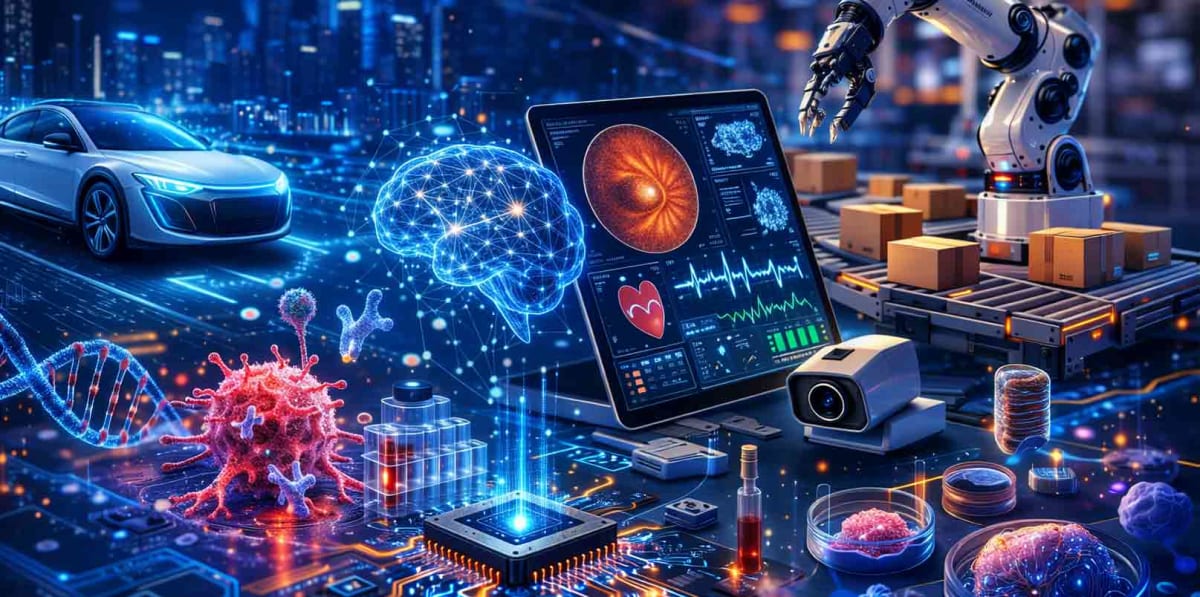
South Korea Bets Big on Robots That Work in Real World
South Korean investors just poured over $100 million into startups building AI that operates in the physical world, from self-driving cars to barista robots. The shift signals a major move beyond software-only innovation toward technologies that interact with real environments.
South Korea's venture capital scene is making a bold bet that the future of AI isn't just on screens but in the real world around us.
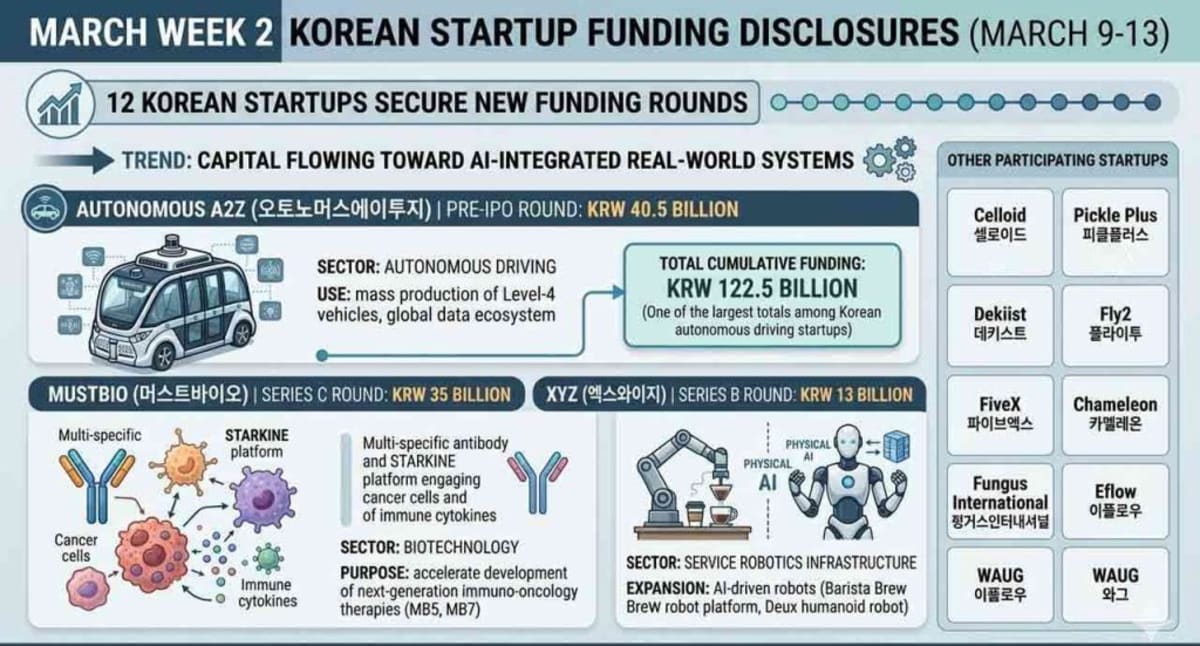
In just one week this March, twelve Korean startups raised significant funding to build technologies that combine artificial intelligence with physical systems. The largest deals went to companies developing autonomous vehicles, service robots, and advanced biotechnology, showing investors are ready to back AI that can drive cars, serve coffee, and even fight cancer.
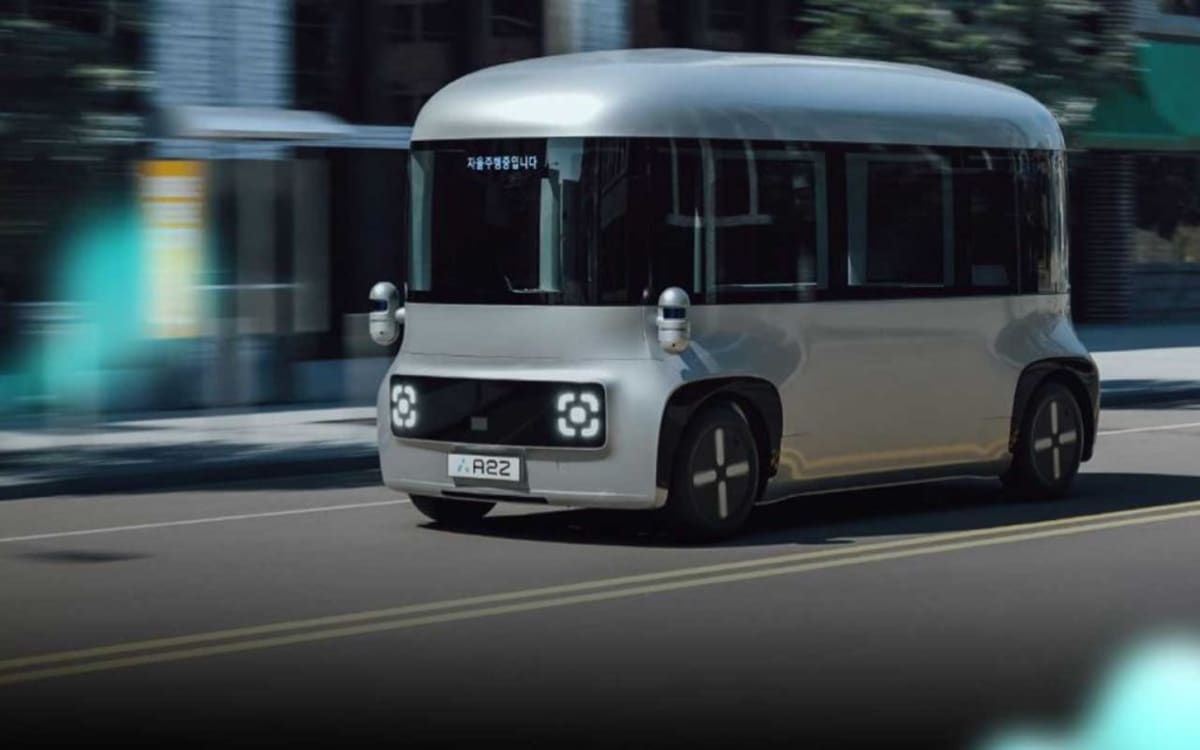
Autonomous A2Z, a self-driving technology company, secured $29 million in pre-IPO funding, bringing its total raised to over $88 million. The company is building hybrid autonomous driving systems designed for Level 4 fully driverless vehicles and plans to go public later this year.
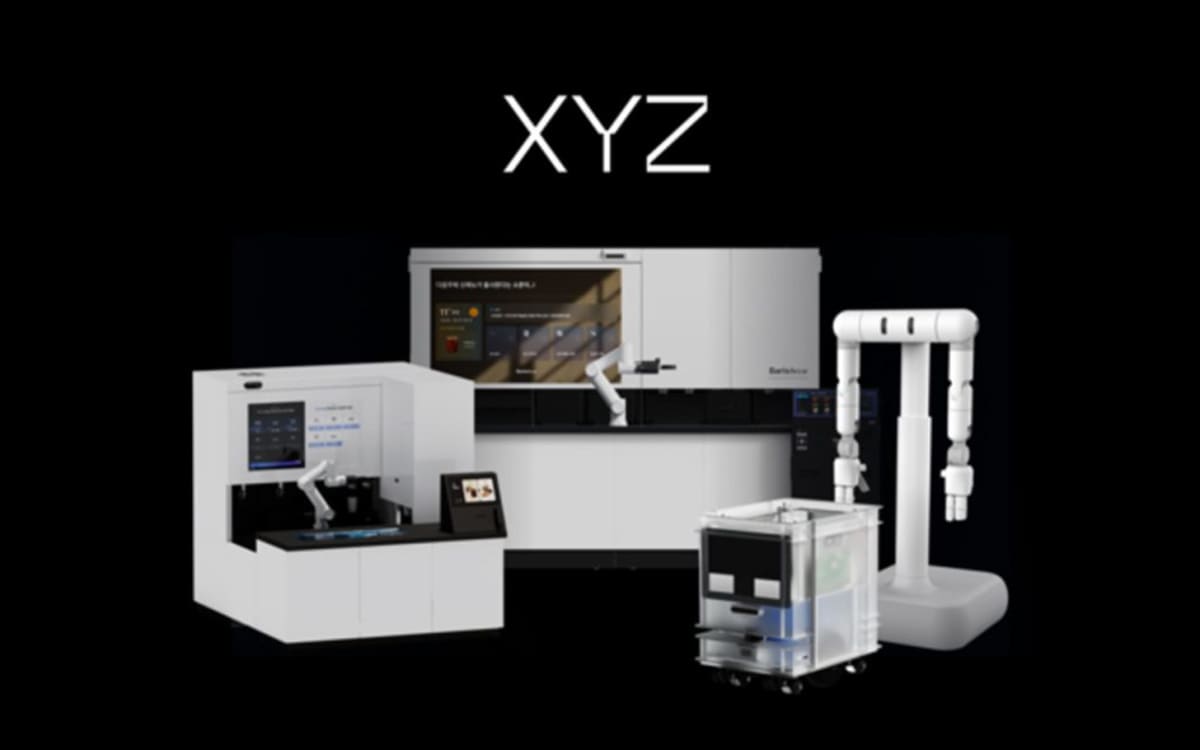
Robotics startup XYZ raised $9.3 million to expand its AI-powered robots, including a barista bot and a dual-arm humanoid robot built for real retail environments. The company created its own infrastructure to collect real-world interaction data through actual retail locations, then uses that information to train smarter robotic systems through digital simulations.
Even the components that power robots attracted attention. Motor technology company Eflow received investment from a major automotive supplier for its compact motors that generate 250 percent more torque than conventional designs while taking up only one-third the space, perfect for humanoid robots and industrial applications.
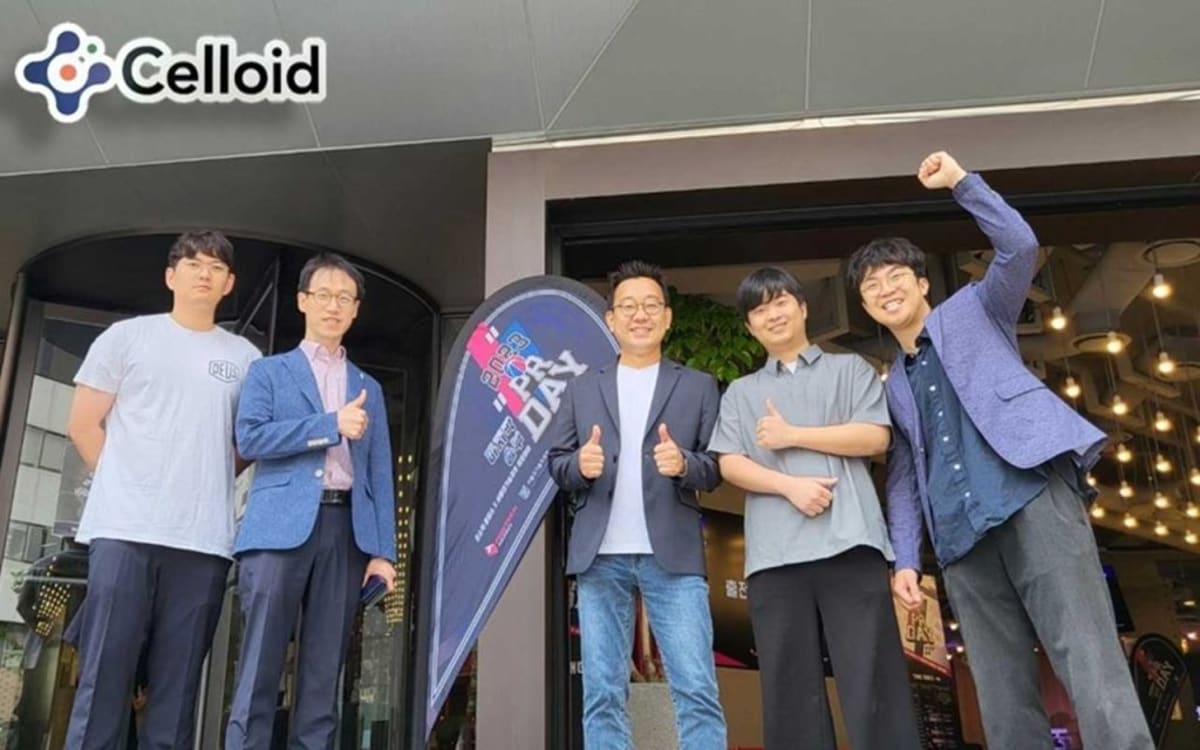
Biotechnology companies also scored major wins. MustBio raised $25 million for next-generation cancer immunotherapy, while POSTECH spinoff Celloid secured $6.4 million for its automated 3D cell culture platform that could enable more stable growth of organ models for medical research.
The Ripple Effect
This funding wave represents more than just capital changing hands. Korea's venture ecosystem is evolving from backing pure software startups to supporting technologies that must navigate the messy complexity of the real world, where robots need to grip different objects, autonomous cars must handle unpredictable traffic, and medical treatments must work inside actual human bodies.
The shift could accelerate commercialization of technologies that have long been promised but slow to arrive. When investors fund deployment-ready systems rather than early research, it suggests confidence that these innovations are moving from labs to everyday life.
Other platform startups also attracted funding, including Pickle Plus, which operates a shared-subscription service that has grown to over 800,000 members by letting users collectively subscribe to streaming services and software.
The Korean funding activity mirrors a global trend toward "physical AI" systems that interact with the material world, a technically harder challenge than software alone but one with potentially greater impact on daily life.
Tomorrow's coffee might just be made by a robot trained on thousands of real customer interactions.
More Images
Based on reporting by Regional: south korea technology (KR)
This story was written by BrightWire based on verified news reports.
Spread the positivity!
Share this good news with someone who needs it