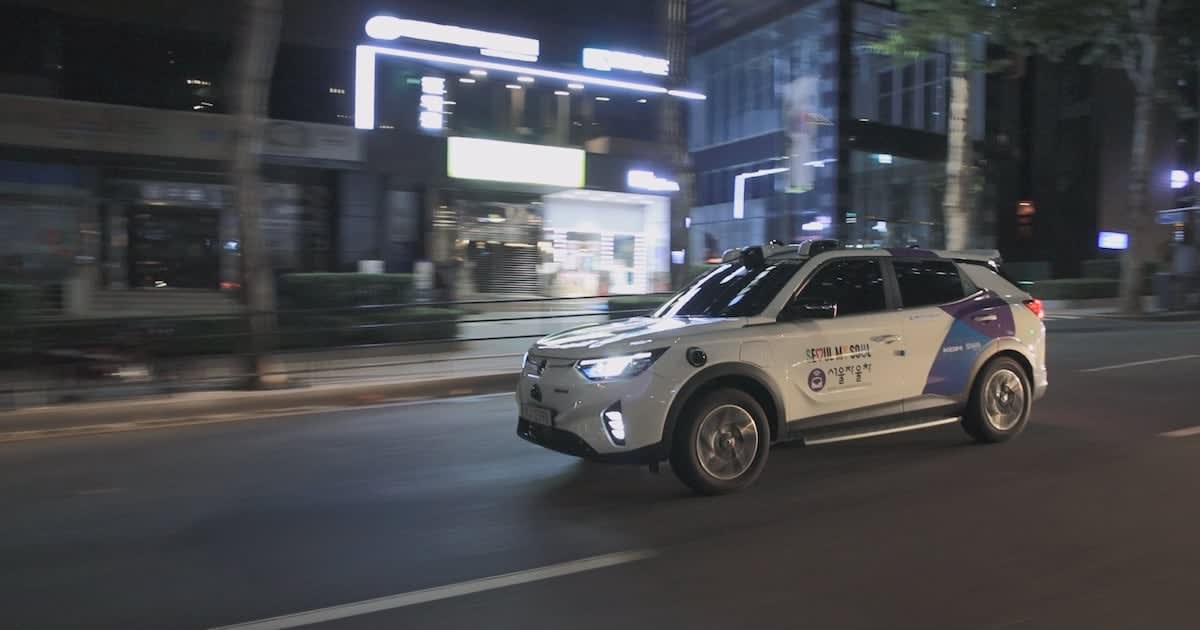
South Korea Gets 200 Self-Driving Taxis by 2028
A partnership between Korean company FutureLink and Chinese tech leader Pony.ai will bring 200 autonomous taxis to South Korean streets, starting in Seoul. The move marks a major step toward making driverless rides a daily reality for millions of commuters.
Self-driving cars are moving from science fiction to Seoul sidewalks, and it's happening faster than anyone expected.
FutureLink, a Korean autonomous driving company, just signed a deal with Pony.ai to deploy 200 robotaxis across South Korea by 2028. The partnership brings Level 4 self-driving technology to Korean roads, meaning cars that can operate completely without human drivers.
The rollout starts small but scales quickly. Ten vehicles will arrive first for certification testing with Korea's Ministry of Land, Infrastructure and Transport. Once approved, 190 more will hit designated pilot zones in Seoul, with plans to cover the entire capital by 2028 before expanding nationwide.
Pony.ai brings serious credentials to the partnership. The Chinese company has logged over 110 million kilometers of autonomous driving and already operates driverless taxis in four cities including Beijing and Shanghai. It competes head-to-head with giants like Google's Waymo and Tesla.
The seventh-generation robotaxis chosen for Korea stand out from competitors. Built on BAIC vehicle platforms designed specifically for autonomous driving, they feature backup systems for braking, steering and power. If one sensor fails, others take over to safely stop the vehicle.
FutureLink already knows these cars work in challenging conditions. Over two years, the company tested Pony.ai's previous generation technology on Hyundai Konas, driving 80,000 kilometers through congested Gangnam streets without a single accident. That track record gave CEO Cha Du-won confidence to move forward with full commercialization.
The Ripple Effect
This partnership could reshape how Koreans think about getting around cities. Once commercial service begins, riders will hail autonomous taxis through an app just like current ride services, but without the driver.
The collaboration also represents a broader shift in Korea's tech strategy. Rather than starting from scratch, FutureLink chose to partner with proven technology to build the market faster. Chairman Nam Kyung-pil compared it to how Apple's entry into Korea pushed Samsung to innovate and improve.
Safety and privacy concerns are being addressed upfront. All data collected by the robotaxis, including driving patterns and images of people or license plates, will be stored only in Korea and automatically blurred before storage.
The economic impact extends beyond convenient rides. Pony.ai reduced component costs by 70% compared to previous models, making autonomous vehicles more affordable to deploy at scale. The company plans to operate 4,000 robotaxis globally by year's end.
Korea joins a growing list of countries embracing autonomous mobility, proving that the future of transportation is arriving in the present.
More Images




Based on reporting by Regional: south korea technology (KR)
This story was written by BrightWire based on verified news reports.
Spread the positivity!
Share this good news with someone who needs it