US and South Korea Team Up on AI Water Tech for Chips
Two water management leaders are joining forces to solve a critical challenge: keeping semiconductor factories running as climate change threatens water supplies. Their solution combines AI technology with water recycling to protect the tech industry's future.
The world's chip makers just got a lifeline in the race to secure enough clean water for their factories.
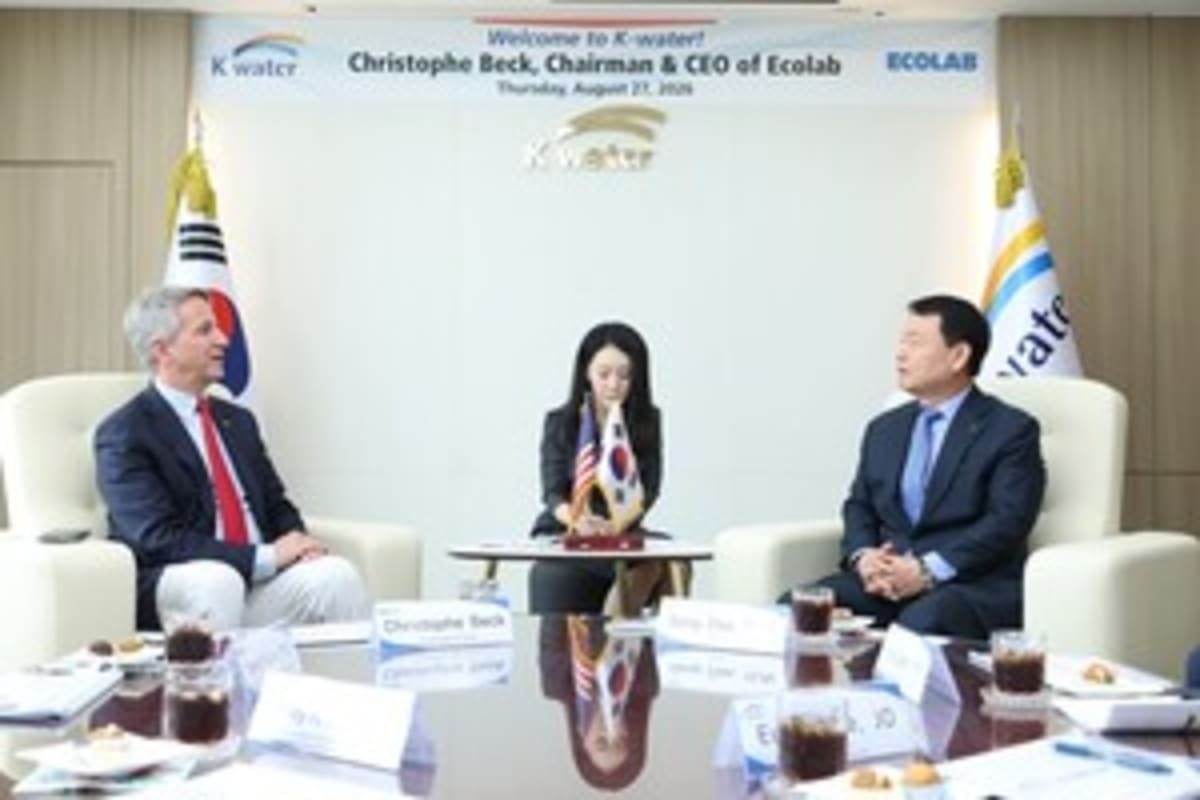
Korea Water Resources Corporation and Ecolab, a century-old US water treatment company, announced a partnership in late August to revolutionize how semiconductor plants manage their most essential resource. The collaboration tackles a growing crisis where climate change is squeezing water supplies just as chip factories and data centers need more than ever.
Ecolab CEO Christophe Beck traveled to South Korea specifically to see the country's cutting-edge water management technology in action. What he found impressed him: AI systems that predict water needs in real time, digital twins that simulate entire water networks, and smart purification plants that prevent shortages before they happen.
South Korea isn't just a random choice for this partnership. The country leads the world in semiconductor manufacturing, making it the perfect testing ground for water solutions that could spread globally. Beck chairs the Water Resilience Coalition, a United Nations group where companies like Microsoft and Starbucks work together on water security, giving this partnership serious global reach.
The two organizations are calling this moment "golden time" for water innovation. Their plan moves beyond traditional dams and rivers by mixing in recycled water and other alternative sources. For chip making, which demands ultra-pure water for delicate manufacturing processes, they're developing custom treatment systems that guarantee both quantity and quality.
The Ripple Effect
This partnership reaches far beyond two companies swapping ideas. Semiconductor factories use massive amounts of water, and a single plant shortage can disrupt the global tech supply chain. By securing water for chip production, this collaboration helps protect everything from smartphones to electric vehicles.
The environmental benefits multiply too. The companies plan to reduce carbon emissions through smarter water and energy use. As climate change makes droughts more common and intense, these AI-driven systems could become the blueprint for how industries worldwide protect themselves against water scarcity.
Both leaders emphasized they're thinking long term. Working teams from each organization will start with achievable projects and build from there, sharing research and testing new purification technologies together. They're pooling public sector resources from South Korea with private sector innovation from the United States.
The timing couldn't be better, as countries compete to build resilient semiconductor supply chains and tech companies scramble to meet sustainability goals while expanding operations.
This partnership proves that when water challenges seem overwhelming, innovation and collaboration can turn crisis into opportunity.
Based on reporting by Google News - South Korea Breakthrough
This story was written by BrightWire based on verified news reports.
Spread the positivity!
Share this good news with someone who needs it