South Korea Mandates 30% Cut in Truck Emissions by 2030
South Korea just became the first Asian nation to require manufacturers to cut commercial truck and bus emissions by 30% by 2030, starting with the heaviest vehicles in 2027. The new rules will fast-track electric and hydrogen trucks while finally making eco-friendly choices mandatory, not optional.
South Korea is putting its commercial vehicle industry on a greener path with new rules that could reshape how goods move across the country.
Starting in 2027, truck and bus manufacturers will face binding limits on greenhouse gas emissions for the first time. By 2030, the average emissions from medium and heavy commercial vehicles must drop 30% below 2021 levels.
The Ministry of Climate, Energy and Environment announced the plan after months of consultation with automakers, researchers, and community groups. A 60-day public comment period opened July 15, giving everyone from trucking companies to environmental advocates a chance to weigh in.
The rollout happens in stages. Heavy trucks and tractor units over 15 tonnes go first in 2027. Medium and large buses follow in 2028, with smaller trucks and dump vehicles joining by 2029.
Manufacturers who fall short will face financial penalties, though the government plans to start small and gradually increase fines after the system becomes fully mandatory in 2031. This gives companies time to adjust while making the deadline real.
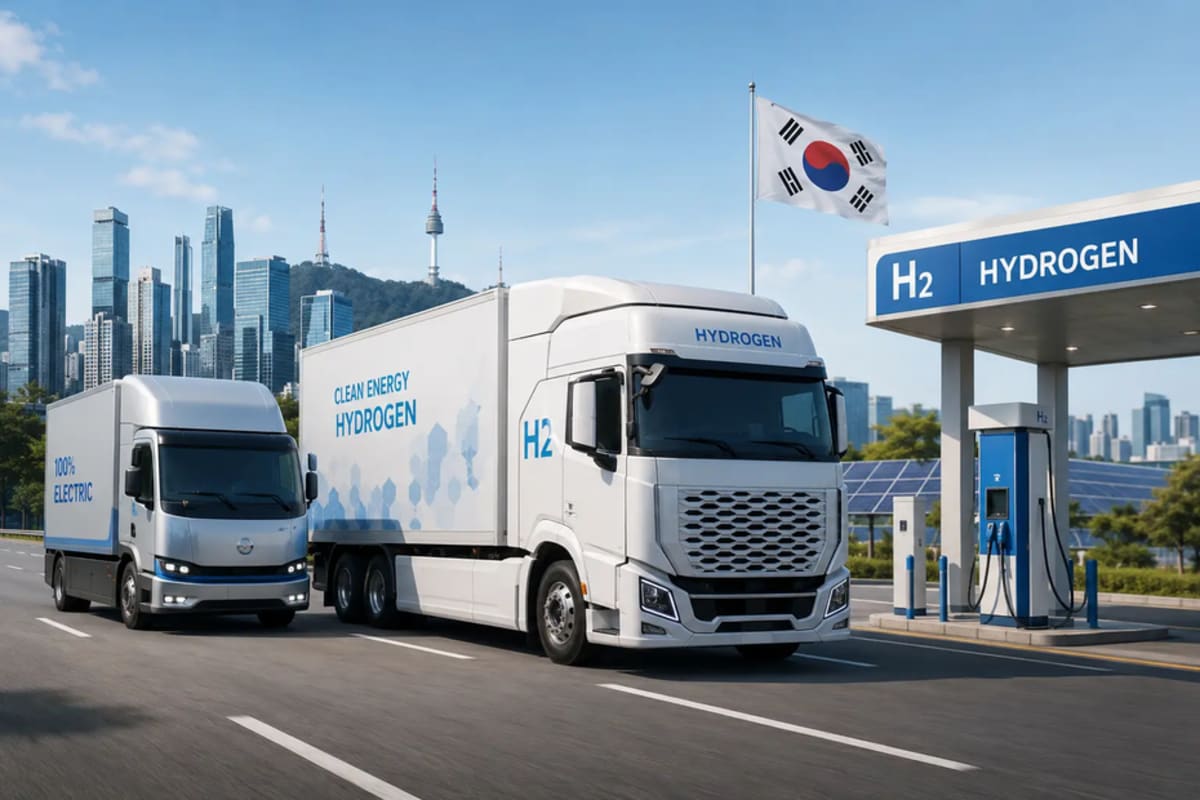
Here's what makes the plan work: battery-electric and hydrogen fuel cell trucks will earn "super credits" that count extra toward compliance. Even hydrogen combustion engines, which burn hydrogen like traditional fuel, will get credit for the first time.
The country is also tightening standards for passenger cars. The new 2030 target for regular cars drops from 70g CO₂ per kilometer to just 54g. Light trucks must hit 98g instead of the previous 146g target.
The Ripple Effect
Commercial vehicles create far more emissions per vehicle than cars, but they're harder to clean up. Trucks haul heavy loads across long distances and need quick refueling, making batteries and fuel cells a tougher sell.
By making reductions mandatory instead of voluntary, South Korea is giving manufacturers a concrete reason to invest in zero-emission technology. Companies with strong electric and hydrogen portfolios will have an easier time meeting targets without squeezing every last efficiency gain from diesel engines.
The rules could spark competition between Korean automakers and international brands racing to develop cleaner commercial fleets. That competition typically drives innovation faster and brings prices down quicker.
South Korea even added a creative twist: automakers can offset up to 5% of their obligations by using renewable electricity at their factories. Installing solar panels or buying green power won't replace the need for efficient vehicles, but it rewards companies that clean up their entire production chain.
The policy fits into South Korea's bigger climate goal of cutting transport emissions from 98 million tonnes in 2018 to 61 million tonnes by 2030. Kim Jin-sik, director general of the ministry's Air Environment Bureau, called the vehicle standards "a central pillar driving greenhouse gas reduction in the transportation sector."
The shift from encouraging to requiring cleaner trucks marks a turning point for a sector that's been hard to change, proving that even the heaviest vehicles can go green when policy and technology align.
More Images
Based on reporting by Google News - Emissions Reduction
This story was written by BrightWire based on verified news reports.
Spread the positivity!
Share this good news with someone who needs it