South Korea Verifies AI Chips That Work in Space Radiation
South Korean scientists successfully tested AI semiconductor technology that can survive extreme radiation in space, maintaining 92% accuracy after exposure equivalent to 20 years in orbit. This breakthrough could end the country's 98% dependence on foreign suppliers for defense and space tech.
Scientists in South Korea just proved that AI chips can think clearly even while bombarded by radiation in space, a breakthrough that could transform satellite technology and national security.
Researchers at the Korea Atomic Energy Research Institute verified that next-generation nano semiconductors can perform artificial intelligence computations while exposed to the kind of intense radiation that satellites face every hour. In low Earth orbit, more than 100,000 high-energy particles strike every hour, powerful enough to crash entire systems.
The team tested two types of ultra-thin semiconductor materials, each just one or two atoms thick. After blasting them with 33 megaelectronvolt protons (equivalent to more than 20 years of satellite radiation exposure), the AI chips still recognized handwritten characters with 92.61% accuracy.
This matters because space radiation has caused 64% of all failures in small satellites. Modern chips are even more vulnerable than older ones because today's stacked architectures let a single particle tear through multiple layers at once, potentially destroying entire systems.
South Korea currently imports 98% of the semiconductors used in its defense and space programs because no domestic radiation-hardened chips exist yet. Meanwhile, American companies like BAE Systems and Texas Instruments already sell proven products, and the U.S. Department of Defense invested $170 million to secure dedicated production lines.
Principal researcher Kang Chang-gu presented the findings at a semiconductor conference in Gyeonggi, explaining that even after successful lab tests, technologies need at least two more years of orbital validation before deployment. KAERI is now planning to mount seven different radiation-hardened semiconductors on actual satellites in two phases.
The Ripple Effect
This isn't just about better satellites. Radiation-resistant AI chips could enable smarter missiles, more reliable fighter aircraft systems, and autonomous space exploration without constant communication delays from Earth.
The research team's approach using two-dimensional nanomaterials like molybdenum disulfide and indium gallium zinc oxide offers a fundamentally different path than current radiation-hardening techniques. Because the materials are so incredibly thin, radiation particles have less volume to damage.
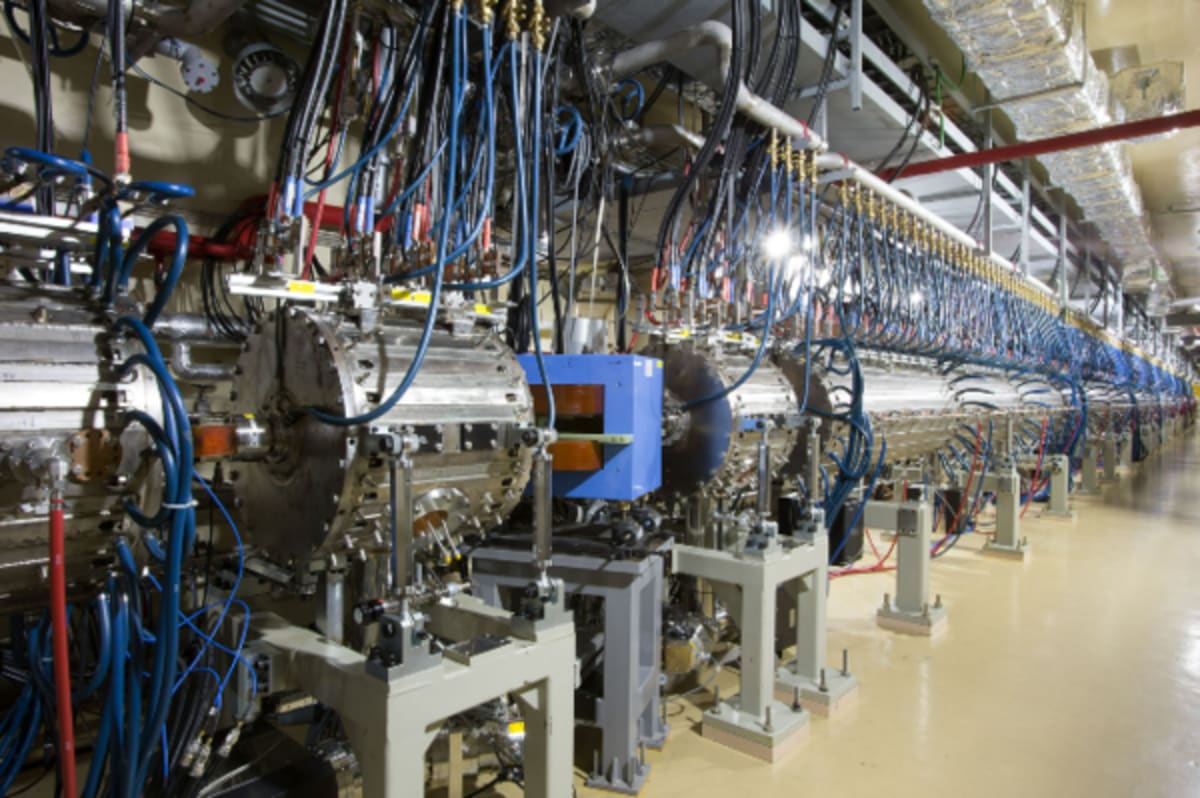
KAERI is backing up the science with serious infrastructure. Their 100-megaelectronvolt proton accelerator in Gyeongju just surpassed 40,000 hours of accident-free operation, and this year they'll open a testing chamber that simultaneously simulates both radiation and the extreme temperature swings of space.
The government launched preliminary research in April to upgrade the accelerator from 100 to 200 megaelectronvolt capacity, doubling its ability to replicate deep space conditions.
Within a few years, South Korean satellites could be powered by homegrown AI brains that laugh at radiation.
More Images
Based on reporting by Regional: south korea technology (KR)
This story was written by BrightWire based on verified news reports.
Spread the positivity!
Share this good news with someone who needs it