South Korean Startups Turn to Israel for Global Growth Tips
At Seoul's Try Everything 2026 festival, South Korean entrepreneurs learned why Israel's small-market success story offers better lessons for going global than Silicon Valley. The emerging partnership between the two tech powerhouses could reshape how companies break into international markets.
South Korean startups chasing global success are discovering an unexpected mentor: Israel's thriving tech scene.
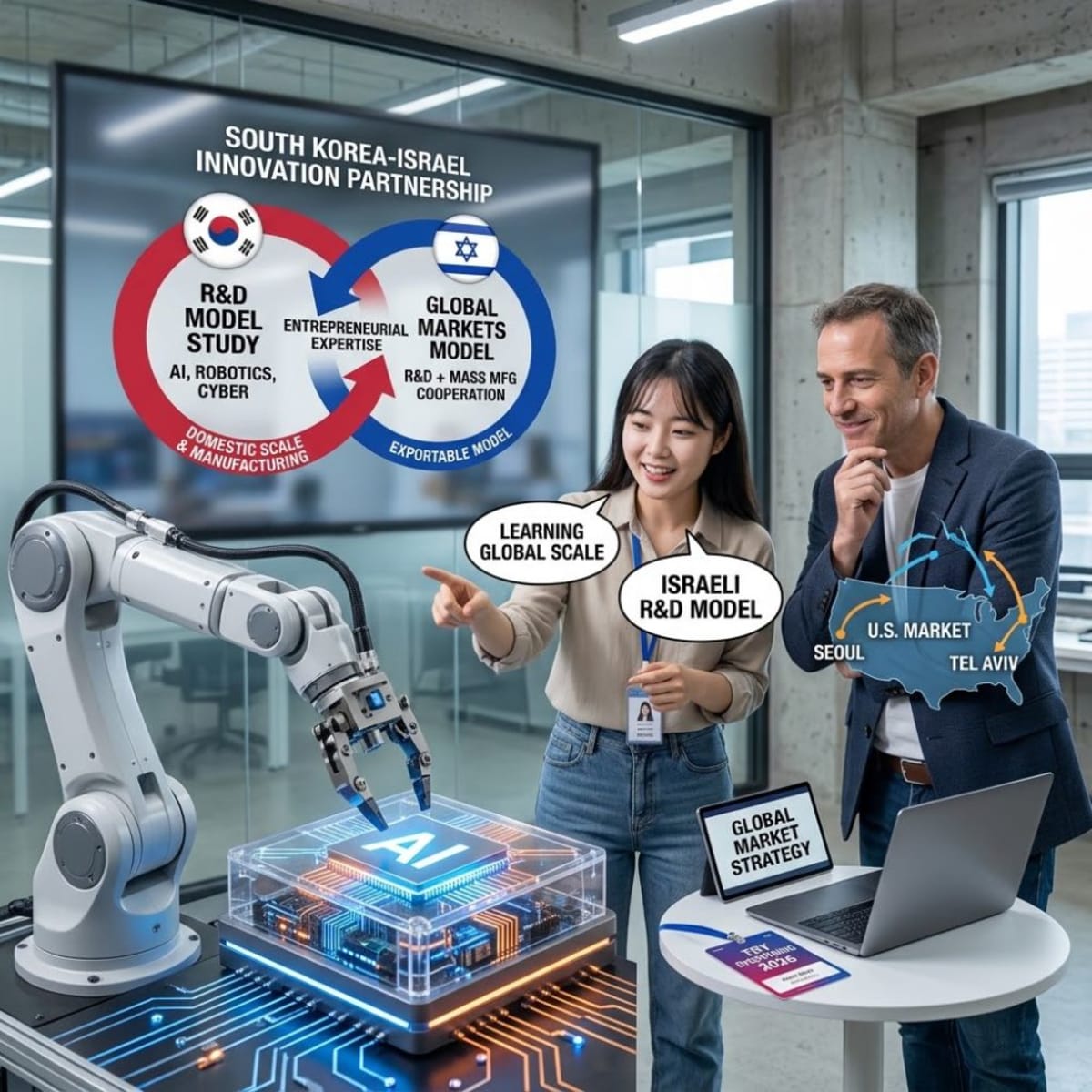
At Seoul's Try Everything 2026 festival this month, industry leaders from both countries made a compelling case for why Korean entrepreneurs should study Israeli companies instead of just copying Silicon Valley. The reason is surprisingly practical: Israeli startups have repeatedly cracked the massive U.S. market despite starting from a tiny home base, just like Korean companies need to do.
Israeli venture capital executive Aviram Jenik delivered the message directly. "Korean startups go to Silicon Valley to learn how to enter the U.S. market, but they should instead go to Israel," he told attendees at Dongdaemun Design Plaza on September 9.
His point wasn't about copying Israeli firms wholesale. Instead, he argued that Israeli companies offer a roadmap for how outsiders can compete in America without the natural advantages enjoyed by homegrown Silicon Valley giants.
Israel's secret weapon turned out to be its limitation. With only 9 million people, Israeli entrepreneurs can't rely on domestic growth, so they design products for global customers from day one. That mindset shift could help Korean founders rethink their traditional approach of conquering their home market first, then expanding abroad.
The Ripple Effect
The partnership between these two tech powerhouses goes beyond sharing business advice. South Korea brings world-class engineering, manufacturing muscle, and the ability to scale prototypes into mass production. Israel contributes rapid development speed, cutting-edge AI and cybersecurity expertise, and battle-tested experience selling to international customers.
Together, they're eyeing some of the most exciting emerging fields. Physical AI, which combines machine learning with robots and sensors that interact with the real world, offers a natural fit. South Korea already dominates in automobiles, electronics, and industrial automation, while Israel leads in computer vision, autonomous systems, and defense technology.
A Hyundai Motor executive at the festival praised Israeli companies for their speed and technological edge. The automaker has already opened an innovation hub in Tel Aviv to build deeper relationships with Israeli startups and bridge cultural differences that can complicate business deals.
The collaboration could create something more valuable than simple introductions. Joint research projects, integrated supply chains, and actual co-development of new products could unlock opportunities neither country could achieve alone, especially in hardware-intensive industries where Israeli tech meets Korean manufacturing scale.
The festival's message resonated beyond business strategy: thinking globally from the start isn't just smart, it's essential for companies from smaller markets ready to compete on the world stage.
More Images



Based on reporting by Google News - Israel Technology
This story was written by BrightWire based on verified news reports.
Spread the positivity!
Share this good news with someone who needs it