Space 'Internet' Goes Live with Laser-Linked Satellites
A Canadian company just launched the first working network of satellites that talk to each other using lasers, turning space into a real-time data highway. Firefighters could soon track wildfires as they spread, second by second, from orbit.
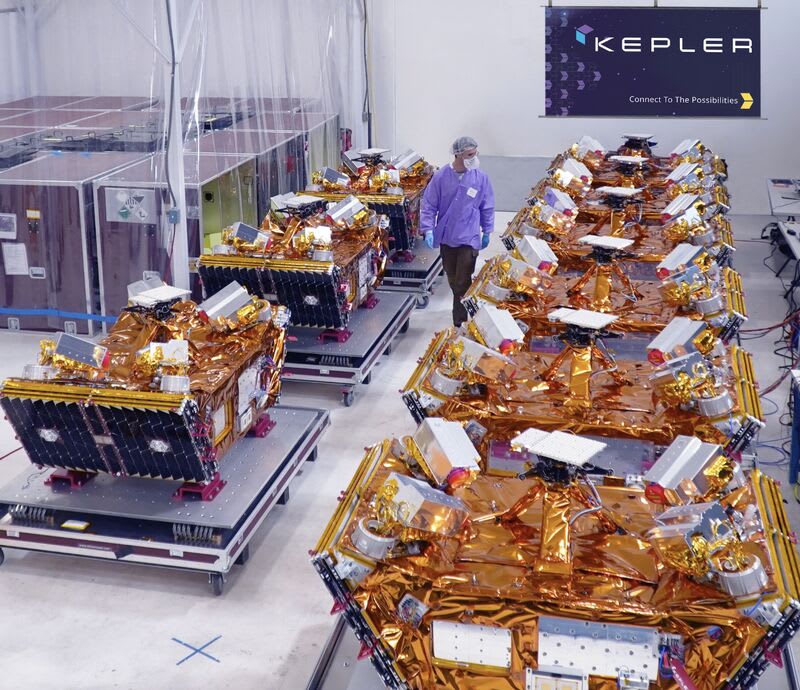
Imagine being able to livestream video from space the same way you watch your favorite show. That future just got closer as Kepler Communications launched 10 satellites that use laser beams to relay information across orbit in real time.
The Canadian company calls it an "internet for space," and the technology could transform how we respond to disasters on Earth. Instead of waiting hours for satellites to pass over ground stations, data now flows continuously through a network in the sky.
The first customer putting this to the test is OroraTech, a German company that uses thermal sensors to spot wildfires from space. Once connected to Kepler's laser network, their satellites will stream heat signatures back to Earth with zero delay.
"Being able to accurately detect and characterize wildfires in real time from space is a completely novel capability," said Beau Jarvis, Kepler's chief revenue officer, speaking at the SmallSat Symposium in California. For first responders racing against spreading flames, that instant information could save lives and property.
The satellites do more than just bounce signals around. They carry computing power on board, processing data in orbit instead of dumping everything to ground stations. That means less bandwidth wasted on raw numbers and more useful information reaching people who need it.
Other satellite companies are watching closely. While laser communication technology has existed for years, most operators haven't integrated it into their systems yet. Kepler's network proves the concept works in practice, not just on paper.
The Ripple Effect
This space data layer isn't just about faster downloads. It represents a fundamental shift in how satellites operate, moving from isolated scouts that check in occasionally to a connected network that never stops watching.
Emergency managers tracking hurricanes, scientists monitoring ocean temperatures, or farmers checking crop health could all tap into continuous updates instead of outdated snapshots. The technology turns space from a place we visit for information into a platform that works alongside us.
As more satellites join the network and more sensors plug in, the possibilities multiply. What starts as wildfire detection could expand to tracking ships, monitoring infrastructure, or coordinating disaster relief anywhere on Earth.
The laser links prove that space is finally ready to deliver on its promise: bringing a planetary perspective to problems that need immediate attention.
More Images


Based on reporting by SpaceNews
This story was written by BrightWire based on verified news reports.
Spread the positivity!
Share this good news with someone who needs it