Space Startup Raises $10M to Solve Chip Cooling Problem
A new space company just figured out how to keep powerful computers cool in orbit without bulky equipment. Their solar sail design could unlock massive data processing in space by 2028.
Sophia Space just raised $10 million to prove that thin, flexible solar panels can keep high-powered computer chips cool in the vacuum of space.
It sounds simple, but it's actually a huge challenge. Space is freezing cold, but without air, heat has nowhere to go. Even Nvidia's CEO recently called out cooling as the biggest problem facing space-based data centers.
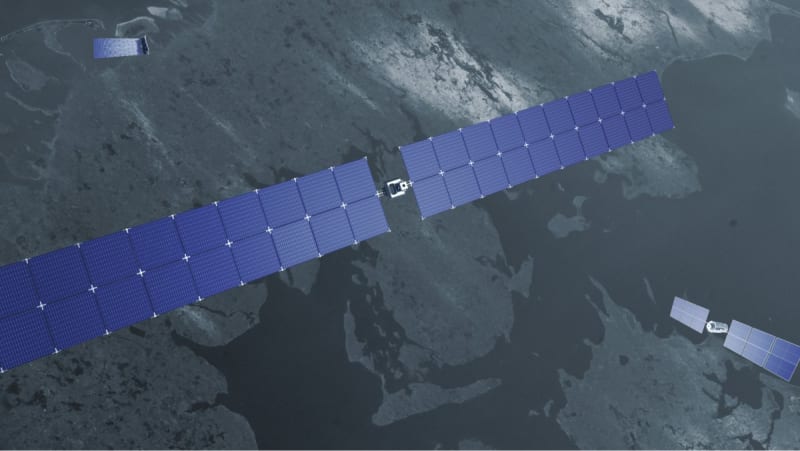
The solution came from an unexpected place. Sophia Space's founders worked on a $100 million Caltech project designed to beam solar power down to Earth. They developed sail-like structures that were thin and flexible, unlike traditional boxy satellites.
Co-founder Leon Alkalai realized this design could solve the cooling problem. If processors sit flat against a thin surface, heat spreads out naturally without fans or pumps.
The company designed modular server racks called TILES, each about three feet square and just a few centimeters thick. Solar panels wrap around the processors, and 92% of the power goes straight to computing. That's a massive improvement over traditional satellite designs that waste energy on active cooling systems.
First, Sophia plans to test the technology on Earth, then launch a demonstration satellite by late 2027 or early 2028. They're partnering with Apex Space to build the satellite bus.
Early customers could include Earth observation satellites and Pentagon missile tracking systems. Right now, these satellites collect huge amounts of data but have to throw most of it away because they can't process it fast enough in orbit or send it back to Earth quickly enough.
The Ripple Effect
By the 2030s, Sophia envisions building structures the size of half a football field in space, delivering one megawatt of computing power. That could transform everything from climate monitoring to communications networks.
Instead of launching hundreds of satellites linked by lasers, one large structure could handle enormous processing tasks more efficiently and economically. Military systems tracking threats, scientists studying weather patterns, and companies managing global communications could all process data instantly instead of waiting for round trips to ground stations.
The technology makes space computing practical for the first time, opening doors that seemed permanently closed by physics.
Space just became a more powerful place to think.
More Images


Based on reporting by TechCrunch
This story was written by BrightWire based on verified news reports.
Spread the positivity!
Share this good news with someone who needs it