Space Station Partners Set to Cure Blindness in Orbit
Four biomedical companies just signed on to use future commercial space stations to manufacture artificial retinas, stem cells, and life-saving drugs that can only be made in zero gravity. When the International Space Station retires in 2030, these labs will keep flying.
The race to build the next generation of space stations just got a powerful boost from an unexpected source: companies trying to cure blindness and cancer.
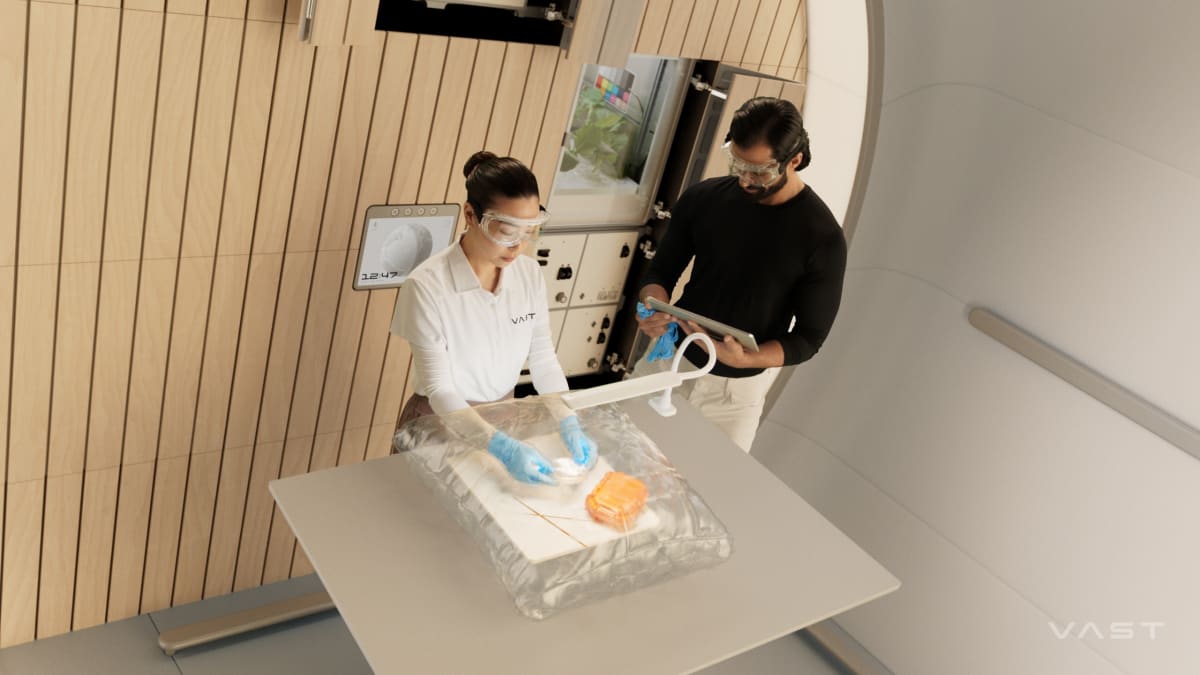
Commercial space station company Vast announced partnerships with four biomedical research organizations on June 24. The companies will use Vast's planned Haven stations to continue groundbreaking work currently happening on the International Space Station.
The partnerships solve a looming crisis in space medicine. The ISS will retire at the end of this decade, but researchers have only begun unlocking what microgravity can do for human health.
LambdaVision has already flown nine missions to the ISS testing artificial retinas made in space. The company raised $7 million last year and is moving toward trials that could restore sight to patients with advanced retinitis pigmentosa, a disease that causes blindness. Making these retinas in zero gravity produces better results than any Earth-based lab can achieve.
Auxilium BioTechnologies successfully 3D printed implantable medical devices on the ISS last year. The company's bioprinter creates complex biological systems impossible to manufacture under Earth's gravity.
BioOrbit is scaling up production of protein-based drugs in space. Their BOX system has already flown on the ISS, and Haven stations will give them the repeat access needed to move from demonstration to actual production.
The Sanford Stem Cell Institute at UC San Diego studies how space radiation and microgravity speed up cell aging. This lets researchers model cancer and disease progression in weeks instead of years, dramatically accelerating potential cures.
The Ripple Effect
These partnerships represent more than just continued research. They mark the moment space manufacturing moves from experiment to industry.
Meghan Everett, Vast's principal scientist and former deputy chief scientist for the ISS, said the Haven stations will "accelerate commercial scientific discovery" by bringing together leaders who share a vision of advancing discoveries that benefit life on Earth and humanity's future in space.
The companies aren't putting all their hopes in one station. LambdaVision also booked space on the planned Starlab commercial space station, showing how multiple private platforms will create a robust space economy focused on improving lives back home.
Nicole Wagner, LambdaVision's CEO, called commercial space stations "an important next step in the evolution of space-based manufacturing." Her company envisions a sustainable platform that could benefit patients with retinal diseases and expand into other biotechnology applications.
The work happening in orbit today is building tomorrow's medical breakthroughs, and now that work has a home beyond 2030.
More Images


Based on reporting by SpaceNews
This story was written by BrightWire based on verified news reports.
Spread the positivity!
Share this good news with someone who needs it