Space Viruses May Hold Key to Beating Superbugs on Earth
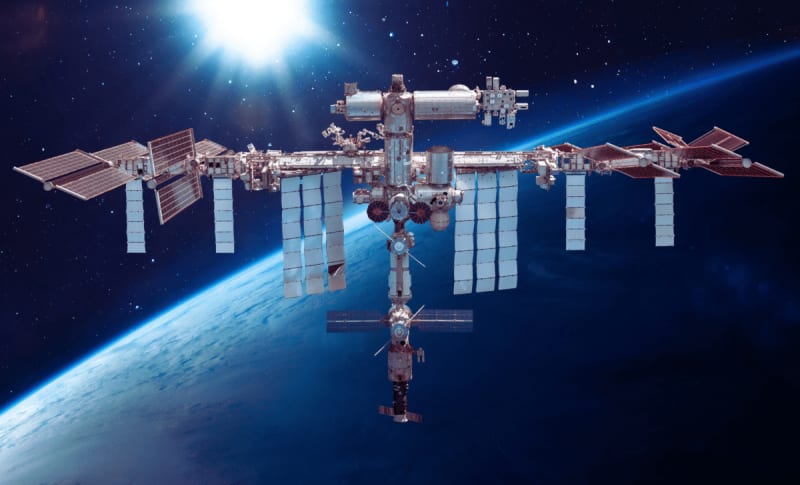
Scientists sent bacteria and viruses to the International Space Station and discovered they evolve completely differently in microgravity. These unexpected mutations could help engineers design better treatments for antibiotic-resistant infections threatening lives back on Earth.
When researchers launched viruses and bacteria to the International Space Station, they witnessed something remarkable: life rewrites its own rules when gravity disappears.
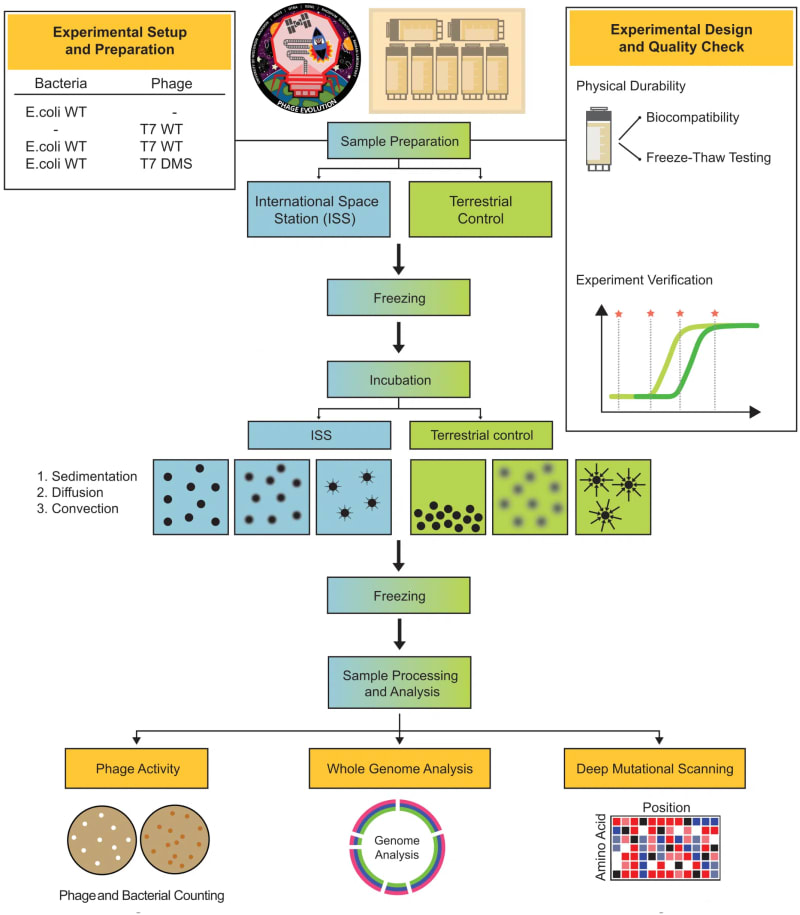
In a groundbreaking experiment published in PLOS Biology, scientists sent bacteriophages (viruses that hunt bacteria) alongside E. coli bacteria to orbit Earth. They kept identical samples on the ground for comparison and discovered something stunning.
On Earth, the viruses attacked bacteria within hours, multiplying rapidly while bacterial numbers crashed. In space, almost nothing happened for weeks. The infection eventually occurred, but in slow motion, forcing both organisms to adapt in completely new ways.
"Space fundamentally changes how phages and bacteria interact," the researchers explained. The near-weightless environment slowed everything down because gravity normally drives mixing and movement. Without it, microbes drift sluggishly, creating an entirely different evolutionary arena.
Both organisms developed new mutations in space, but not the same ones they'd develop on Earth. Bacteria may have grown thicker protective coatings or changed their surfaces, while viruses adapted new infection strategies to match. This slow-motion battle revealed hidden traits that scientists never would have discovered in traditional labs.
The Ripple Effect
The space-born insights are already making waves in hospitals fighting antibiotic-resistant superbugs. By studying how viruses evolved in microgravity, researchers engineered new phages with superior ability to destroy drug-resistant bacteria back on Earth.
This matters because antibiotic resistance has become one of humanity's most urgent medical crises. Traditional drugs are losing effectiveness against evolving bacteria, but phage therapy (using viruses as precision weapons against harmful microbes) offers new hope. Space acted as an evolutionary filter, accelerating the discovery of viral traits that make these treatments more powerful.
For astronauts heading to the Moon or Mars, understanding microbial evolution in space is also critical for safety. Spacecraft are closed ecosystems where bacteria and humans share every surface. If microbes behave differently in orbit, crews need to know how to manage them during long-duration missions.
The experiment reveals something profound: sometimes solving Earth's toughest challenges requires leaving the planet. The mutations discovered 250 miles above our heads could shape the future of infectious disease treatment for generations, turning the space station into an unlikely medical laboratory that saves lives on the ground.
More Images

Based on reporting by Google News - Science
This story was written by BrightWire based on verified news reports.
Spread the positivity!
Share this good news with someone who needs it