SpaceX Rocket Flies 33rd Mission, Sets Reuse Record
A SpaceX rocket just completed its 33rd flight, breaking the company's own reusability record and proving that spacecraft can be flown dozens of times. The milestone came during a double launch day that added 53 new internet satellites to orbit.
SpaceX just proved that rockets really can be workhorses, with one of its Falcon 9 boosters completing a record-breaking 33rd trip to space and back on Saturday.
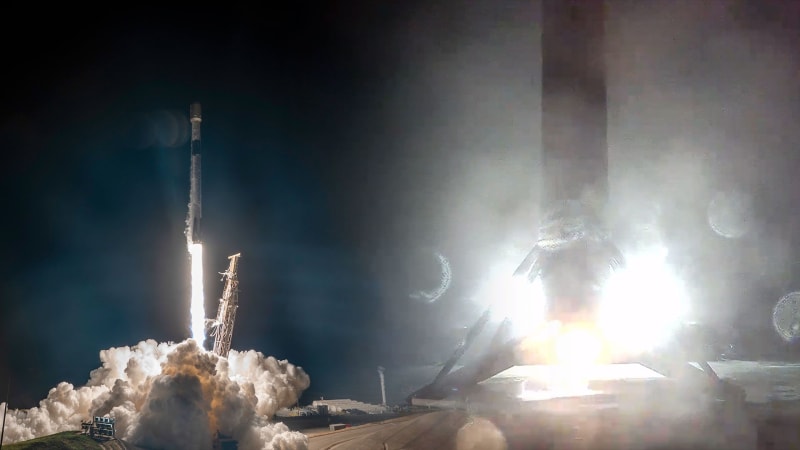
The company launched two separate missions in a single day, sending 53 Starlink internet satellites into orbit from both coasts. The first rocket lifted off from California at 4:04 a.m. EST on its 31st flight, while the second launched from Florida at 10:47 p.m. EST on its history-making 33rd mission.
Both first-stage boosters landed successfully on drone ships in the ocean, ready to fly again. The California rocket touched down on "Of Course I Still Love You" in the Pacific, while the Florida booster landed on "A Shortfall of Gravitas" in the Atlantic.
The record-setting booster, designated B1067, has flown an impressive variety of missions during its career. It has carried astronauts to the International Space Station twice, delivered cargo, and launched satellites for companies and governments around the world before transitioning to regular Starlink deployments.
Why This Inspires
Just a decade ago, rockets were thrown away after a single use, like discarding an airplane after one flight. Now SpaceX is routinely flying the same rocket dozens of times, slashing the cost of reaching space and making ambitious projects more affordable.
This reusability revolution means more scientific missions, more communication satellites connecting remote areas, and more possibilities for space exploration. When rockets become reusable vehicles instead of disposable ones, space becomes accessible to more people and organizations with important work to do.
The dual launches brought SpaceX's active Starlink constellation to more than 9,700 satellites providing broadband internet to underserved areas worldwide. These satellites help connect rural communities, ships at sea, and remote regions where traditional internet infrastructure doesn't reach.
With 22 Falcon 9 launches already completed in just the first two months of 2026, SpaceX continues pushing the boundaries of what's possible in spaceflight.
Every successful landing brings us closer to a future where traveling to space is as routine as air travel is today.
More Images



Based on reporting by Space.com
This story was written by BrightWire based on verified news reports.
Spread the positivity!
Share this good news with someone who needs it