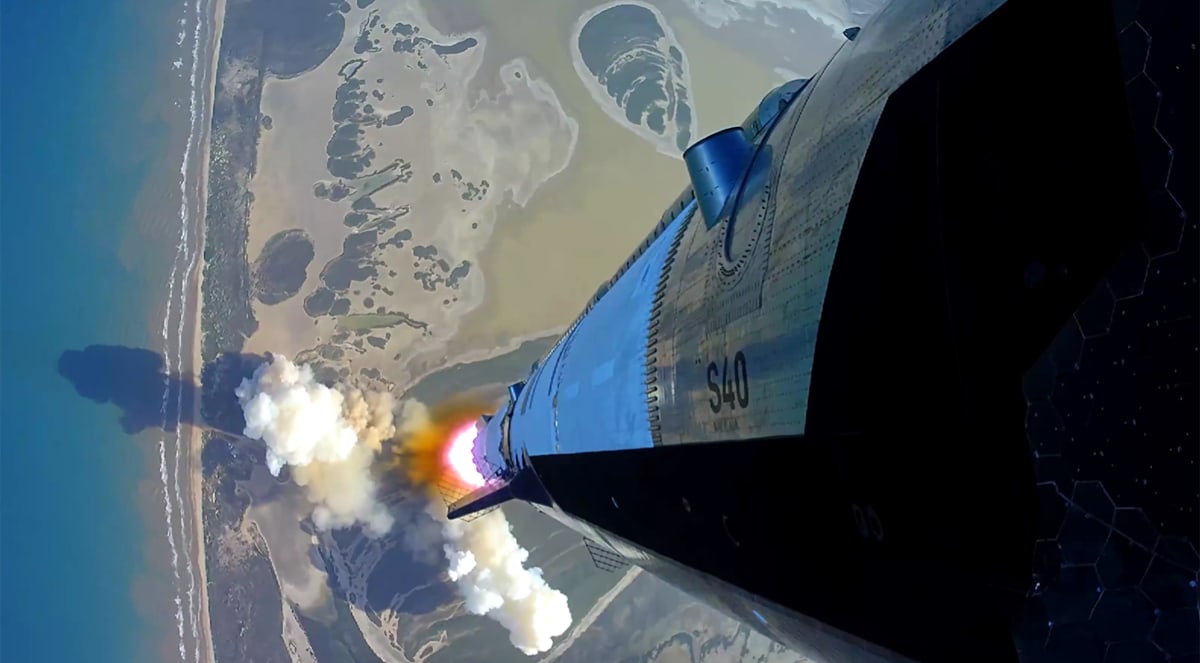
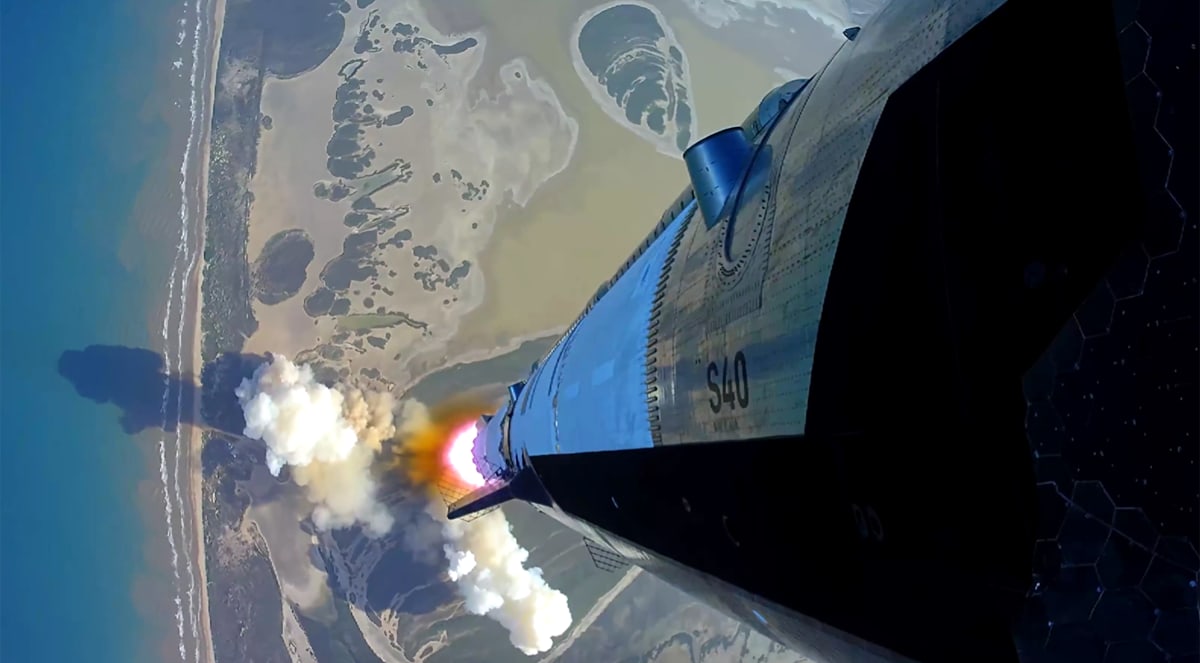
SpaceX Starship Floats Intact After Landing for First Time
SpaceX's massive Starship rocket made history by surviving an ocean landing completely intact, floating upright instead of exploding. The breakthrough brings the company closer to launching regular missions from Florida before year's end.
For the first time ever, SpaceX's giant Starship rocket survived an ocean landing without tipping over and bursting into flames.
The massive rocket launched Friday evening from the company's Texas facility at 6:51 p.m., marking its 13th test flight. After separating from its Super Heavy booster, the upper stage completed a journey halfway around the Earth before splashing down in the Indian Ocean off Australia's western coast.
What happened next shocked even SpaceX's own team. Instead of the usual explosive fireball, Starship floated calmly on the surface with its six engines still intact and cameras rolling.
"I'm losing my mind right now," said SpaceX commentator Dan Huot as live footage showed the rocket bobbing in the water. Recovery drones circled the spacecraft, capturing close-up images of its heat shield tiles while onboard cameras transmitted crystal-clear views of the ocean splashing behind the engines.
The company had attempted similar controlled landings before, but all previous tries ended with the rocket tipping over and exploding. This time, everything worked.
The successful landing came after a bumpy road. SpaceX had to delay the launch by one day because of Tropical Storm Bertha hitting the Texas coast. An earlier attempt on July 16 was aborted at the last second when sensors detected issues with some of the booster's 33 engines, forcing engineers to replace six of them.
Beyond the landing, the flight accomplished several other firsts. SpaceX deployed 20 of its largest Starlink satellites, which are too big to fit on the company's smaller Falcon 9 rockets. All 20 satellites successfully extended their solar panels and connected to the existing Starlink network using lasers before safely reentering Earth's atmosphere.
The team also successfully restarted one of Starship's engines while in flight, a critical test for future missions. The Super Heavy booster made a more controlled water landing than previous attempts, though it still hit the Gulf faster than planned.
The Ripple Effect
This breakthrough solves a puzzle SpaceX has been working on for years. Having an intact rocket to study means engineers can examine the heat shield up close instead of piecing together data from charred wreckage.
The Federal Aviation Administration had grounded Starship after its 12th flight in May showed control problems during booster landing. SpaceX made hardware and software changes to fix the timing issues that caused the booster to flip 90 degrees off course.
SpaceX founder Elon Musk aims to start operational Starship missions from Florida before the end of 2026. Each successful test brings that goal closer to reality, potentially opening up new possibilities for satellite deployment and eventually human spaceflight.
The floating Starship represents more than just a technical win for one company. It's a major step toward making space more accessible and proving that massive reusable rockets can work reliably.
More Images



Based on reporting by Google: SpaceX launch success
This story was written by BrightWire based on verified news reports.
Spread the positivity!
Share this good news with someone who needs it