%2Fhttps%3A%2F%2Ftf-cmsv2-smithsonianmag-media.s3.amazonaws.com%2Ffiler_public%2F2f%2F95%2F2f95c9c9-9c5d-472d-836e-3ded41e64388%2Fscreenshot_2026-03-27_at_41323pm.png)
Sperm Whales Form Birth Team to Help Newborn Breathe
Researchers captured the first-ever video of sperm whales working together like midwives to deliver a calf and teach it to breathe. The footage reveals a type of cooperation never seen before outside of primates.
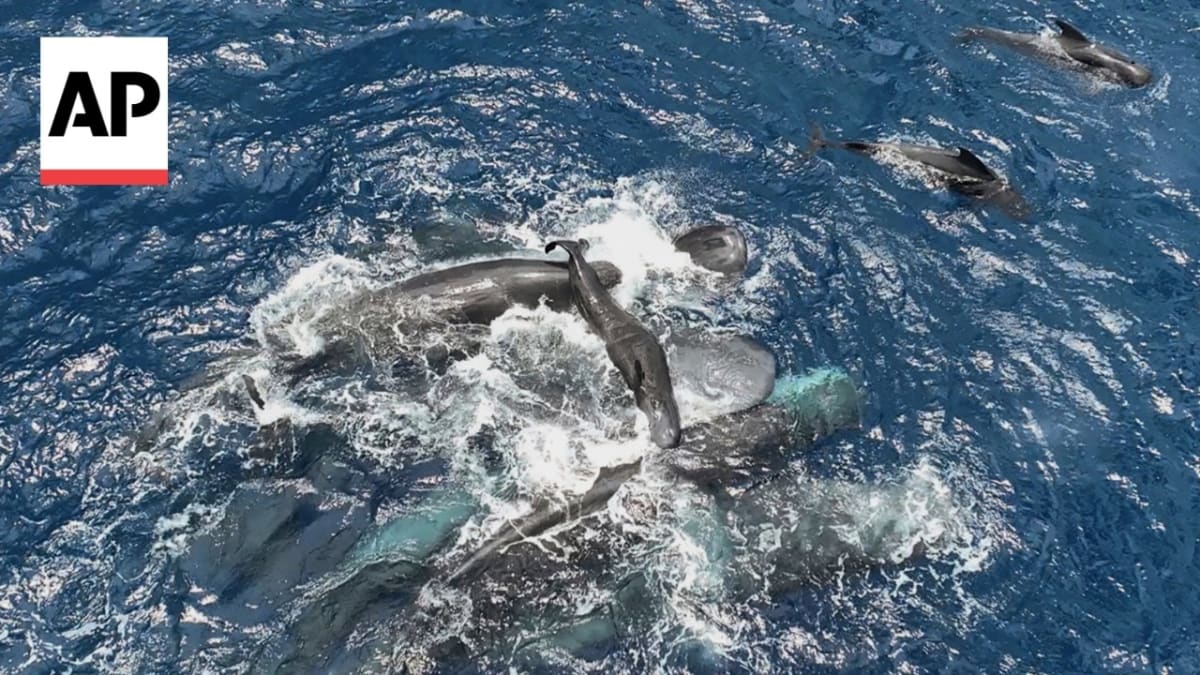
Off the coast of Dominica in July 2023, marine biologist Shane Gero spotted something unusual: eleven sperm whales clustered tightly at the water's surface instead of spacing out to hunt for food.
The massive creatures surrounded one female named Rounder. Then the researchers saw blood in the water and feared an attack, until a tiny tail appeared.
The team was witnessing something extraordinary. They were about to film the first complete video documentation of a sperm whale birth, capturing behavior that would change what we know about these ocean giants.
Two drones recorded the entire event as female whales, many unrelated to the mother, worked together like a coordinated birth team. The most active helpers were the calf's mother, its aunt, and a juvenile female from a completely different family group.
For three hours after the birth, the whales took turns gently lifting the newborn to the surface so it could breathe until it learned to swim on its own. This cross-family cooperation went far beyond simple curiosity or coincidence.
The researchers published their findings in Science this March. They used machine learning to analyze every whale's movements and identify their specific roles during the birth.
"We needed a village of scientists to be able to make sense out of this event," says study co-author David Gruber, president of Project CETI, a nonprofit working to understand whale communication.
The discovery matters because this level of cooperative caregiving has only been documented in primates until now. Two separate whale families came together, suggesting their social bonds run deeper than just blood relations.
The Ripple Effect
The same research team is now working to match the birth footage with audio recordings of whale vocalizations from that day. Their goal is to decode what specific sounds might mean, potentially unlocking whale language itself.
Just weeks after publishing this study, the team released another paper documenting the first known video of sperm whales headbutting, a behavior that inspired Moby-Dick but was never confirmed until now. These back-to-back discoveries show how new drone technology is revealing an entirely hidden world beneath the waves.
Understanding how whales communicate and cooperate could reshape marine conservation efforts worldwide. It proves these creatures have complex social structures that deserve protection.
The footage captures something profound: intelligence, empathy, and teamwork happening in a species fundamentally different from our own, reminding us we share this planet with beings whose lives are richer than we ever imagined.
More Images
%2Fhttps%3A%2F%2Ftf-cmsv2-smithsonianmag-media.s3.amazonaws.com%2Ffiler_public%2F2f%2F95%2F2f95c9c9-9c5d-472d-836e-3ded41e64388%2Fscreenshot_2026-03-27_at_41323pm.png)
%3Afocal(808x585%3A809x586)%2Fhttps%3A%2F%2Ftf-cmsv2-smithsonianmag-media.s3.amazonaws.com%2Ffiler_public%2F2f%2F95%2F2f95c9c9-9c5d-472d-836e-3ded41e64388%2Fscreenshot_2026-03-27_at_41323pm.png)
%2Fhttps%3A%2F%2Ftf-cmsv2-smithsonianmag-media.s3.amazonaws.com%2Faccounts%2Fheadshot%2FSara_-_Headshot_thumbnail.png)
Based on reporting by Smithsonian
This story was written by BrightWire based on verified news reports.
Spread the positivity!
Share this good news with someone who needs it