Stanford Professor Wins Nobel for Light-Controlled Brain Tech
A Stanford scientist just won the Nobel Prize for inventing a way to control individual brain cells with light, opening new paths to treat mental illness and neurological disorders. The breakthrough lets researchers flip neurons on and off like light switches in a living brain.
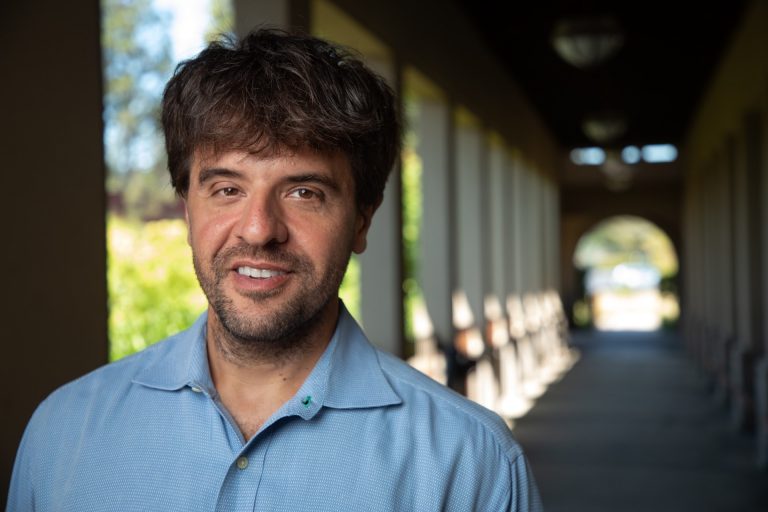
Karl Deisseroth couldn't speak for 30 seconds when the Nobel committee called at 12:27 a.m. to tell him he'd won the 2026 Nobel Prize in Medicine. The Stanford professor had just been recognized for creating optogenetics, a technology that uses light to control individual brain cells in living organisms.
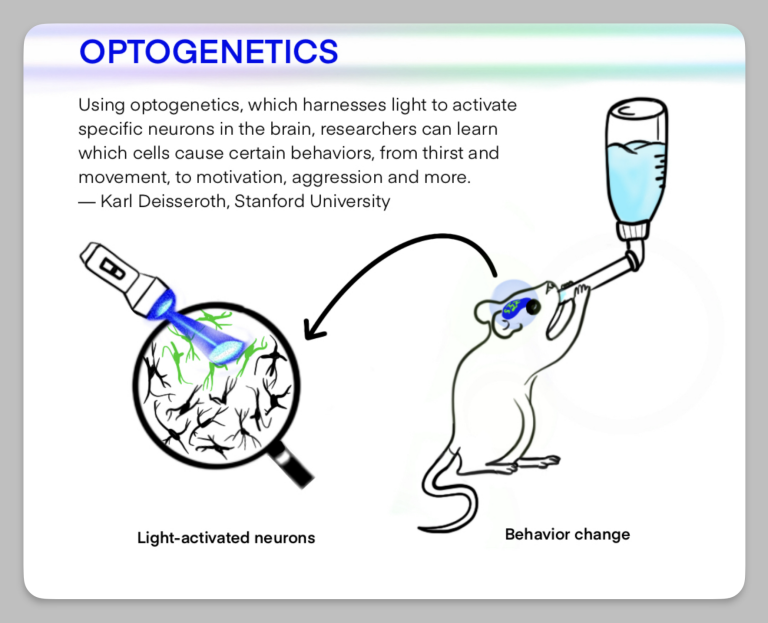
The achievement solves a problem that stumped neuroscientists for generations. Before optogenetics, researchers had only two crude tools: electrical stimulation that affected too many cells at once, and drugs that spread widely and worked too slowly. Neither could precisely turn specific neurons on or off to study how they work.
Deisseroth and his co-winners, Peter Hegemann and Georg Nagel from Germany, changed everything by inserting light-sensitive proteins from algae into brain cells. Now scientists can shine light on specific neurons and watch what happens, like installing traffic lights in the brain's circuits.
When his wife Michelle answered the Nobel committee's second call, their five children were still sleeping down the hall. She wasn't surprised by the news. "He's really transformed the field of neuroscience and actually several other fields," she said.
The technology has already revolutionized how scientists understand the brain. Researchers can now identify exactly which cells cause specific symptoms or behaviors, then search for ways to correct problems. The precision opens new possibilities for treating depression, schizophrenia, Parkinson's disease, and other conditions that affect millions.
Deisseroth's path to the Nobel started with an unexpected turn. Though both his parents were scientists, his first love was writing. He planned to become a neurosurgeon until his psychiatry rotation at Stanford, where he encountered patients experiencing entirely different realities.
The Ripple Effect
The impact reaches far beyond neuroscience labs. Other fields have adopted optogenetics to study how cells work in real time. Scientists can now ask questions that were impossible before: Which exact neurons trigger anxiety? What cells create addiction? How does the brain process complex emotions?
Stanford's president Jonathan Levin called Deisseroth "a defining figure in modern neuroscience" who has "unlocked new understanding of how the brain works and created new possibilities for treating neurological and psychiatric disorders."
The three laureates span the complete journey of discovery, from early algae studies to advanced brain experiments. Deisseroth describes optogenetics as "an engine for discovery" that lets scientists probe complex systems while staying grounded at the cellular level.
As dawn broke over his book-lined living room, Deisseroth fielded reporter calls while sipping coffee from a Game of Thrones mug that read, "I drink and I know things." His wife was quick to clarify: yes to coffee, and definitely yes to knowing things.
More Images


Based on reporting by Innovation Desk
This story was written by BrightWire based on verified news reports.
Building Something New? Try the BrightWire Tech Stack Advisor
Compare modern frameworks, cloud hosting, and AI tools tailored to your project budget and scale.
Spread the positivity!
Share this good news with someone who needs it