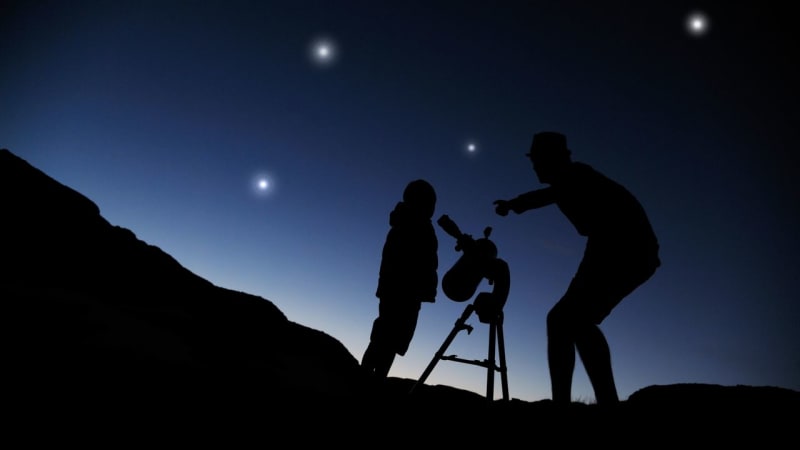
Stargazing Success: Insider Tips to Transform Your Telescope Experience
Transform your telescope experience from frustrating to fantastic with expert tips that reveal the true magic of stargazing. Learn how preparation, realistic expectations, and understanding your equipment can unlock the wonders of the night sky.
Imagine peering through a telescope, expecting to see breathtaking cosmic landscapes, only to encounter blurry, underwhelming views. Many aspiring astronomers experience this frustration, but expert stargazers know that successful telescope observation requires more than just pointing and looking.
First-time telescope users often make critical mistakes that can turn a potentially magical experience into a disappointing evening. Understanding these common pitfalls can dramatically improve your astronomical adventures, transforming your backyard into a personal observatory filled with wonder and discovery.
Planning is the cornerstone of successful stargazing. Before venturing outside, savvy observers use free apps like Stellarium to check moon phases, local light pollution, and what celestial objects will be visible. This preparation isn't bureaucratic—it's the difference between randomly scanning the sky and targeting specific, fascinating astronomical features with precision and excitement.
One of the most significant misconceptions is expecting telescope views to match professionally captured, long-exposure space images. Real-time observations are subtler but no less magnificent. The moon's craters, Jupiter's distinct bands, and sparkling star clusters offer incredible visual experiences when viewed with realistic expectations. Professional astrophotography requires specialized equipment like spacecraft or massive observatories, while backyard telescopes provide intimate, natural views of the cosmos.
Telescope selection matters significantly. Different designs excel at different targets: wide aperture, low focal-ratio telescopes like Dobsonians gather more light for spotting faint deep-space objects, while longer focal-length scopes deliver crisp planetary and lunar details. Understanding your telescope's strengths helps you choose appropriate targets and maximize your observing experience.
Temperature management is a frequently overlooked but crucial aspect of telescope performance. Bringing a telescope directly from a warm interior to cold night air creates turbulent air currents that blur your view. Experts recommend allowing 20-40 minutes for your telescope to acclimate to outdoor temperatures, using this time to align equipment and plan observation targets.
Magnification isn't everything—pushing zoom too high results in dim, unstable images. Each telescope has an optimal magnification range, and understanding these limits prevents frustration. Smart astronomers experiment gradually, learning their equipment's nuanced capabilities and developing an appreciation for the delicate beauty of visual astronomical observation.
With patience, preparation, and the right approach, telescope observing becomes a gateway to incredible cosmic exploration. By avoiding common beginner mistakes and embracing a thoughtful, methodical approach, amateur astronomers can transform their backyard into a personal window to the universe, discovering breathtaking celestial wonders one careful observation at a time.
Based on reporting by Live Science
This story was written by BrightWire based on verified news reports.
More Good News
 🚀 Innovation
China's Groundbreaking Hypergravity Lab Unveils Revolutionary Scientific Research Capabilities
 🚀 Innovation
Discover Your Celestial Identity: A Cosmic Personality Journey
 🚀 Innovation