Stellar Stream Discovery Unlocks Dark Matter Secrets
Astronomers found the first trail of stars outside the Milky Way, giving scientists a powerful new tool to map the universe's mysterious dark matter. The discovery could reveal how galaxies form and evolve across the cosmos.
A faint ribbon of stars spotted in a distant galaxy is helping scientists crack one of the universe's biggest mysteries.
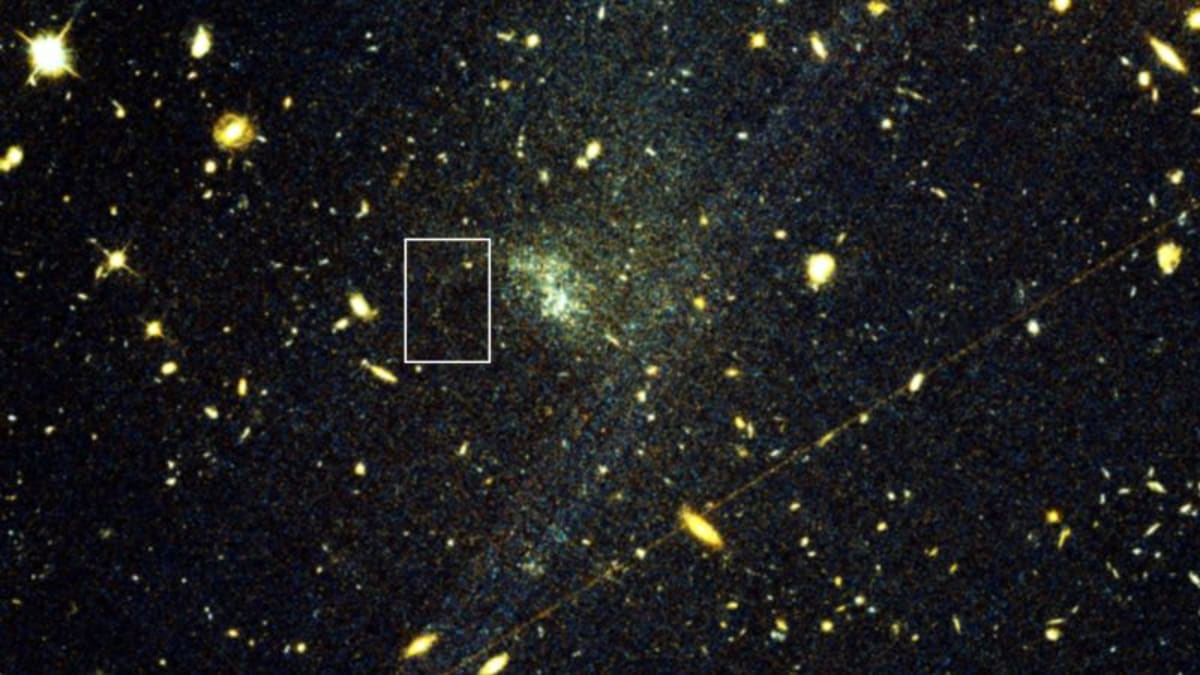
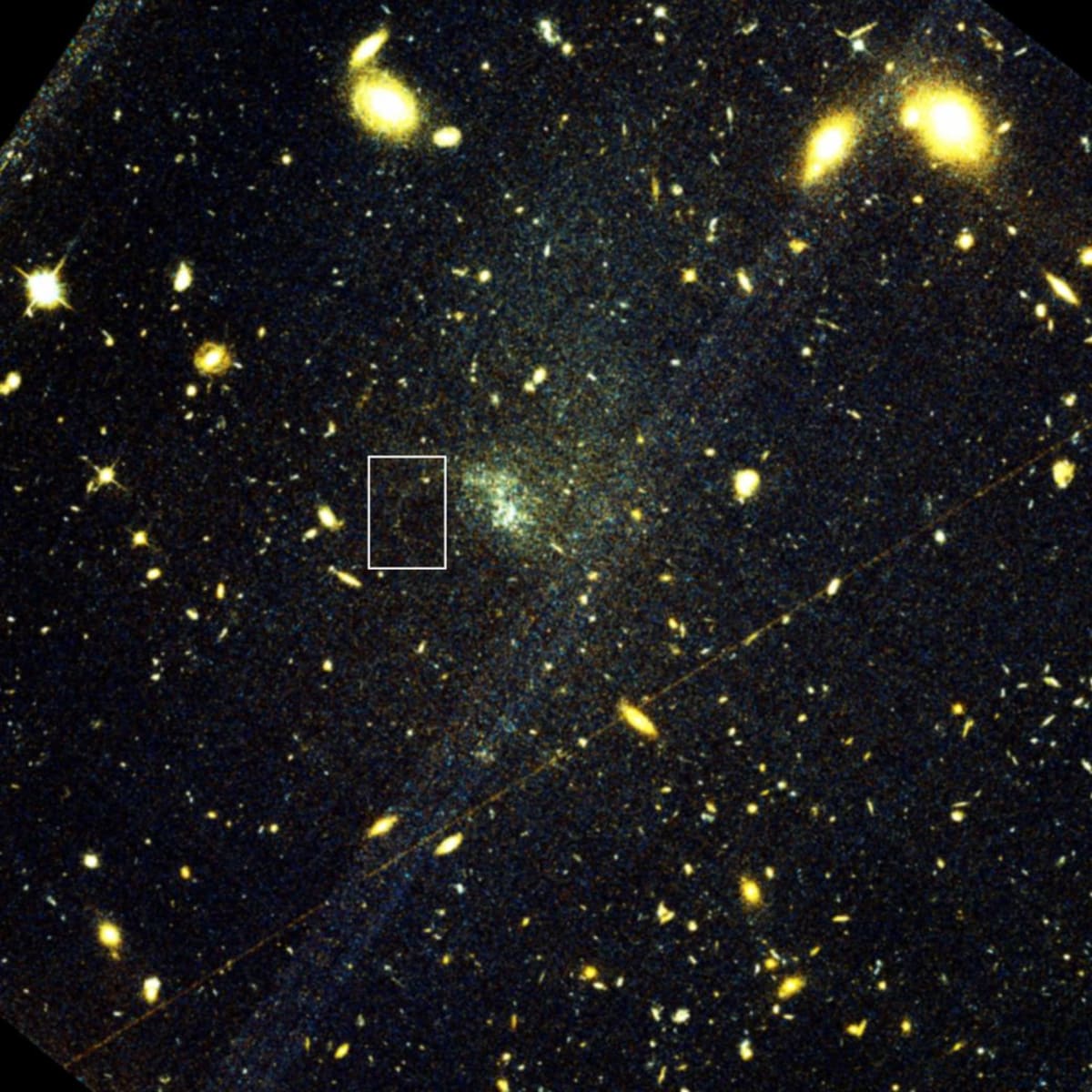
Researchers discovered the first stellar stream ever found beyond our Milky Way, hidden in old Hubble Space Telescope images. The trail of stars sits in a galaxy called UGC 9050-Dw1, located 115 million light-years from Earth.
Stellar streams form when gravity slowly tears apart dense clusters of stars, leaving behind a long, narrow trail. Scientists have found dozens of these cosmic breadcrumb trails in our own galaxy, but this marks the first time they've spotted one in another galaxy.
The discovery opens an exciting new window into understanding dark matter, the invisible substance that makes up about 80 to 85 percent of our universe. We can't see dark matter, but we can observe how its gravity shapes and moves stars and galaxies.
"It was very exciting," said Julie Kiel Holm, a doctoral fellow at the University of Copenhagen who helped lead the study published in Nature. "And then we sort of looked at each other and asked, 'Where do we go from here?'"
The research team used the stellar stream like a cosmic GPS to map the galaxy's gravitational field. By modeling how the stream moves and bends, they calculated the galaxy's total mass and figured out how much comes from visible stars versus invisible dark matter.
Finding the stream took a stroke of luck. It appeared in an ultra-diffuse galaxy, one that's extremely spread out and faint, which made the stellar trail easier to spot against the dim background.
The Ripple Effect
This breakthrough gives astronomers a powerful new method to study dark matter across the universe. The same techniques scientists use to map dark matter in our galaxy can now reveal the hidden structure of distant galaxies.
The discovery also shows that stellar streams aren't unique to the Milky Way. They likely exist throughout the universe, waiting to be found in telescope data.
Each new stream astronomers discover acts as another clue in the cosmic detective story. By studying how gravity pulls on these trails of stars in different galaxies, scientists can piece together a better understanding of how dark matter shapes the universe.
The tools already exist in telescope archives around the world. Researchers just need to look carefully through the data to find more of these faint stellar highways stretching across distant galaxies.
This single ribbon of stars is lighting the way toward understanding the invisible forces that hold our universe together.
More Images
Based on reporting by Google News - Science
This story was written by BrightWire based on verified news reports.
Spread the positivity!
Share this good news with someone who needs it