Storms Reveal 2,000-Year-Old Footprints on Scottish Beach
When fierce storms battered Scotland's coastline, they uncovered a rare archaeological treasure: 2,000-year-old human and animal footprints frozen in time. A team of archaeologists raced against wind, waves, and sand to preserve this fleeting glimpse into ancient life before the sea claimed it forever.
📺 Watch the full story above
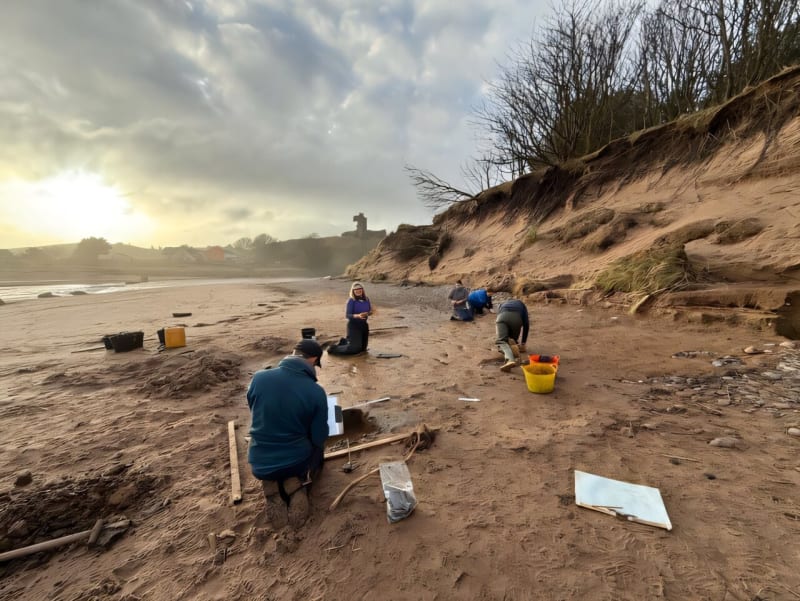
Dog walkers Ivor Campbell and Jenny Snedden spotted something extraordinary after recent storms stripped away sand at Lunan Bay in Angus, Scotland. Fresh clay had emerged from beneath the dunes, marked with distinct footprints that would prove to be 2,000 years old.
Ivor immediately called council archaeologist Bruce Mann, who recognized both the discovery's importance and the ticking clock. Mann contacted Professor Kate Britton at the University of Aberdeen, and she assembled an emergency response team that stopped at a craft store for supplies on their way to the beach.
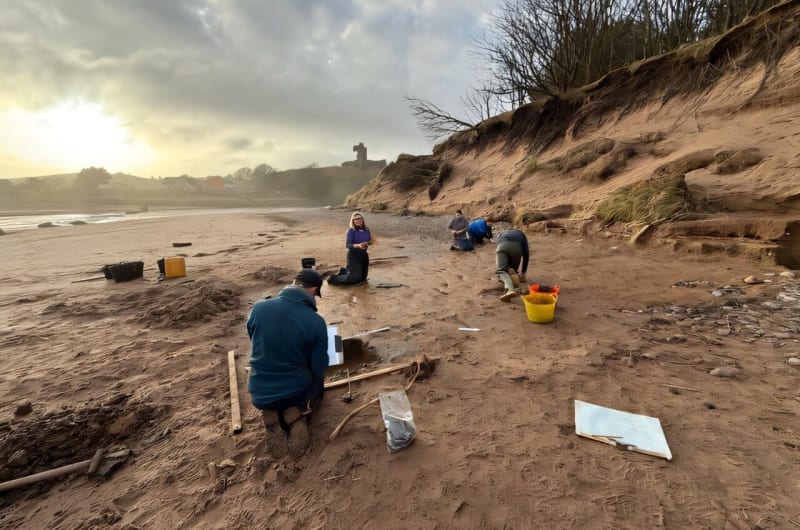
The archaeologists worked in brutal conditions, battling 55 mph winds and stinging sand while racing against incoming tides. Within 48 hours, they knew, the sea would reclaim what it had briefly revealed. The team cleaned, documented, and created 3D models and plaster casts of the footprints while being sandblasted by the elements.
Their efforts paid off. Radiocarbon dating of plant remains found beneath the prints confirmed they were made around 2,000 years ago, during the late Iron Age when Romans were invading Scotland and before the emergence of the Picts.
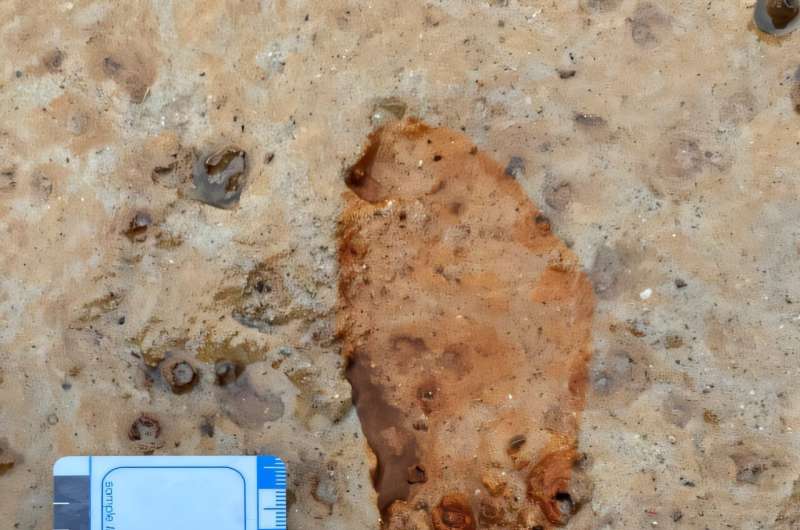
The preserved footprints include red deer, roe deer, other animals, and humans who walked barefoot across what was then a muddy estuary. This is only the fourth location in the entire United Kingdom where such ancient footprints have been discovered, and the first ever found in Scotland.
The Ripple Effect
Beyond preserving a single moment in time, this discovery highlights how local community members can protect irreplaceable history. Ivor and Jenny's quick thinking and the team's rapid response saved evidence that reveals how people lived, hunted, and gathered food along the ancient coastline.
The drone footage captured during brief calm moments now serves a dual purpose. It preserves the footprints digitally and establishes a baseline for measuring coastal erosion rates, helping protect other potential archaeological sites as sea levels rise and Scotland's coastline changes.
Dr. Elinor Graham emphasized that community vigilance matters more than ever as climate change accelerates coastal erosion. Any clays in the wider Montrose basin area could hold similar snapshots of ancient life, waiting to be discovered and preserved before they vanish.
These footprints offer something precious: a tangible connection to people who walked the same landscape two millennia ago, their simple journey across mud now a permanent record of human presence in an ever-changing world.
More Images

Based on reporting by Phys.org
This story was written by BrightWire based on verified news reports.
Spread the positivity!
Share this good news with someone who needs it