Striped Wind Turbines Could Save Millions of Birds
Scientists discovered that painting specific patterns on wind turbine blades could prevent deadly bird collisions by working with how birds naturally see motion. The breakthrough offers a win-win solution for renewable energy and wildlife protection.
Wind turbines are saving the planet from climate change, but their spinning blades have been silently killing birds for years. Now scientists think they've found an elegant solution: paint the blades with patterns that birds can actually see.
The problem isn't that birds are bad fliers. These animals navigate dense forests with incredible precision, but their eyes evolved for natural obstacles, not massive rotating structures. What looks obvious to us appears nearly invisible to them in flight.
Researchers publishing in the Journal of the Royal Society Interface approached the challenge differently. Instead of thinking like humans, they looked at the world through a bird's eye and discovered something fascinating about how these creatures process motion.
Birds see the world through specialized vision systems tuned for survival. Most species see four colors plus ultraviolet light, and their brains process motion through patterns called "optic flow." This helps them judge speed and distance while filtering out static backgrounds.
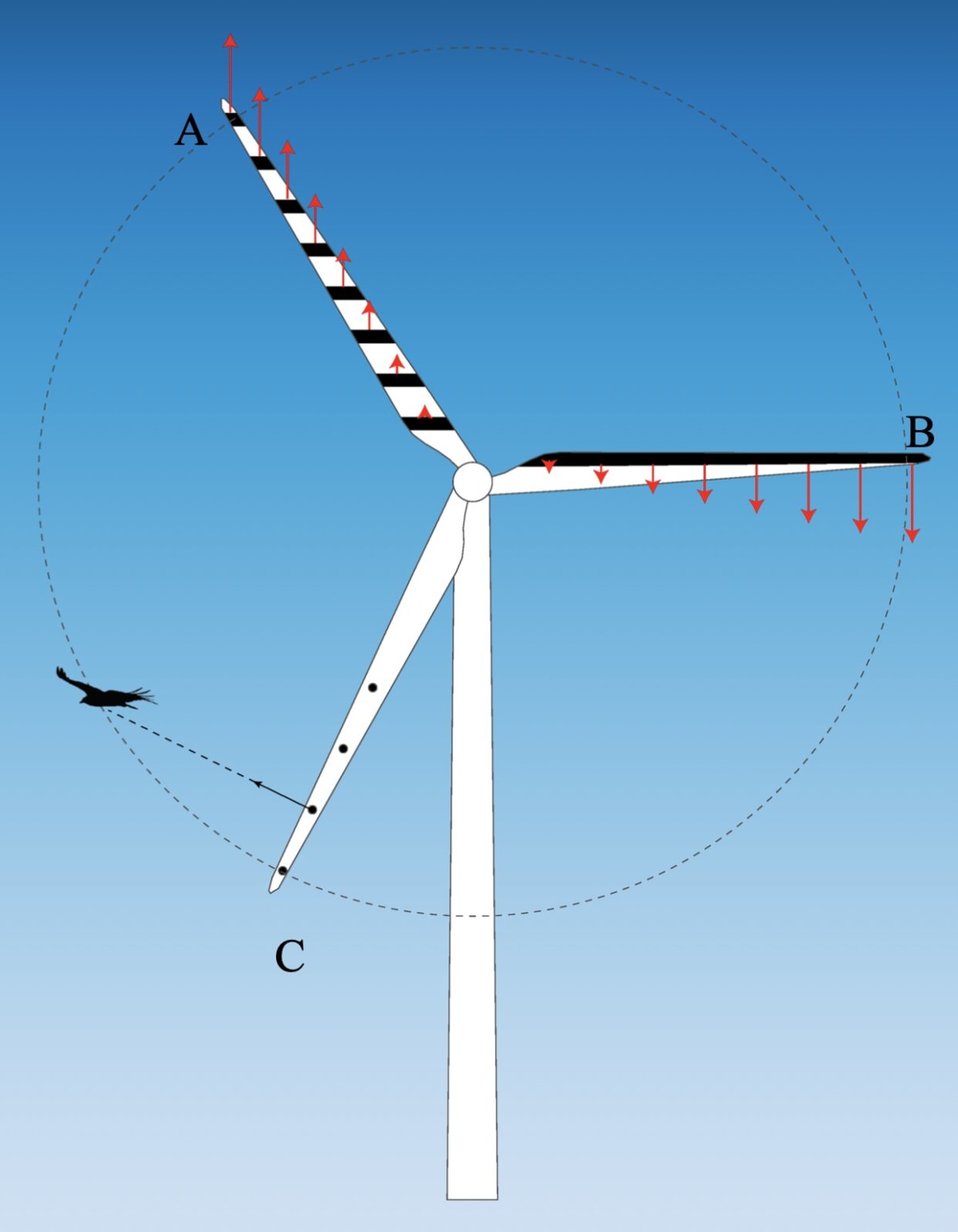
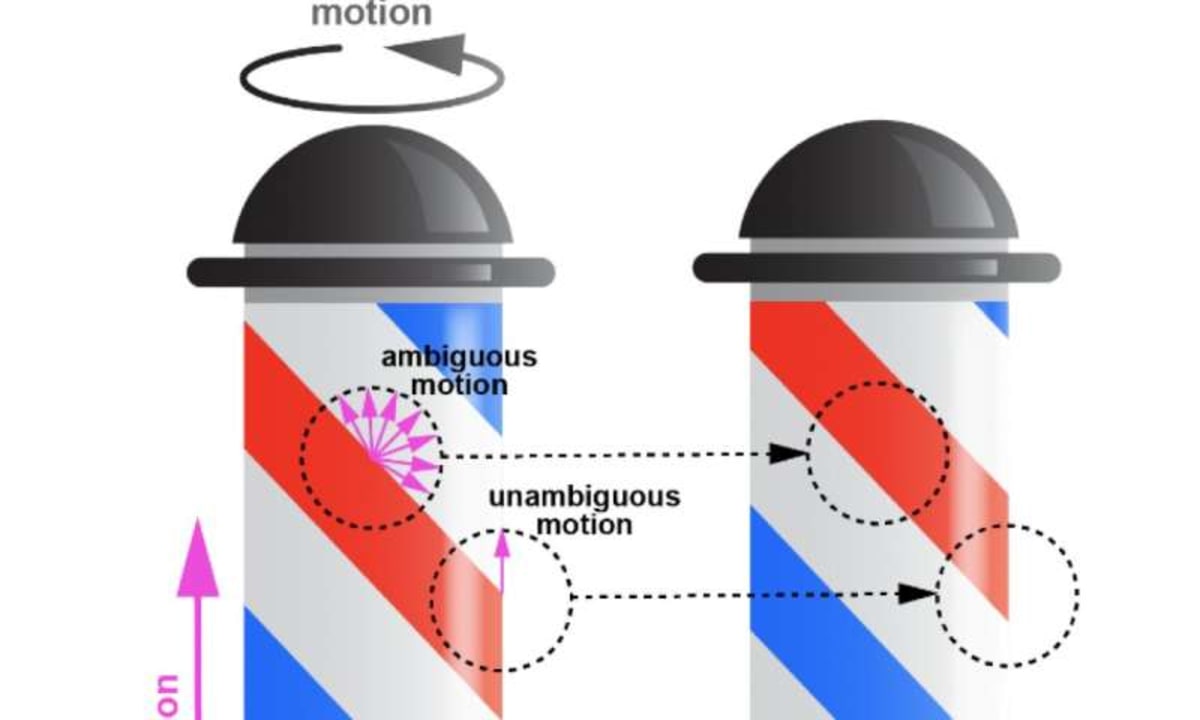
But here's the catch: pigeons and many other birds focus on local motion cues rather than whole patterns. They don't see a turbine blade spinning in circles. They see changing edges that their brains struggle to interpret as danger.
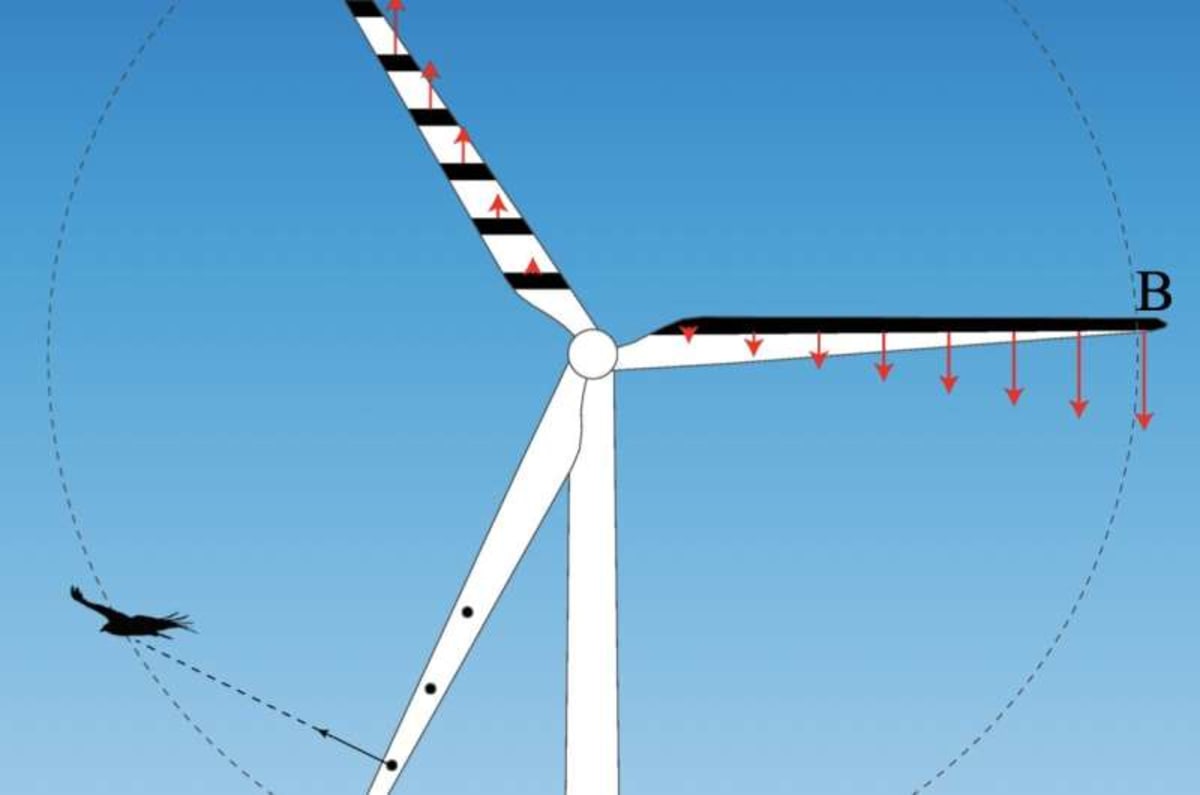
The solution involves painting stripes, bands, or markers on blades that create visual cues birds naturally recognize as threats. Lab tests with kestrels and red-tailed hawks showed that two wide black bands across white blades worked best. The patterns exploit how bird brains detect motion and trigger natural avoidance behaviors.
Early field results look promising. One study found that certain blade markings helped birds detect turbines earlier and steer clear. The key is matching the pattern to how different bird species process visual information while they're moving at speed.
The Bright Side: This breakthrough means we don't have to choose between clean energy and protecting wildlife. Wind power capacity is expanding rapidly worldwide, and these simple paint modifications could be applied to new turbines and existing ones at relatively low cost.
The research also opens doors for other applications. Understanding bird vision could help prevent collisions with buildings, power lines, and aircraft. Scientists are now testing different pattern combinations to find designs that work across multiple species and lighting conditions.
The technology still needs refinement through larger field trials. Most studies so far involved small sample sizes in controlled settings. But the principle is sound: work with nature's design instead of against it.
Researchers emphasize that the ultimate goal is making turbines visible to birds under various natural conditions, giving them enough time to change course. By blending sensory ecology with flight behavior, we're learning to build infrastructure that respects how other species navigate the world.
Wind energy doesn't have to mean dead birds, and this elegant solution proves that sometimes the best innovations come from simply paying attention to how nature already works.
More Images


Based on reporting by Google News - Wind Energy
This story was written by BrightWire based on verified news reports.
Spread the positivity!
Share this good news with someone who needs it