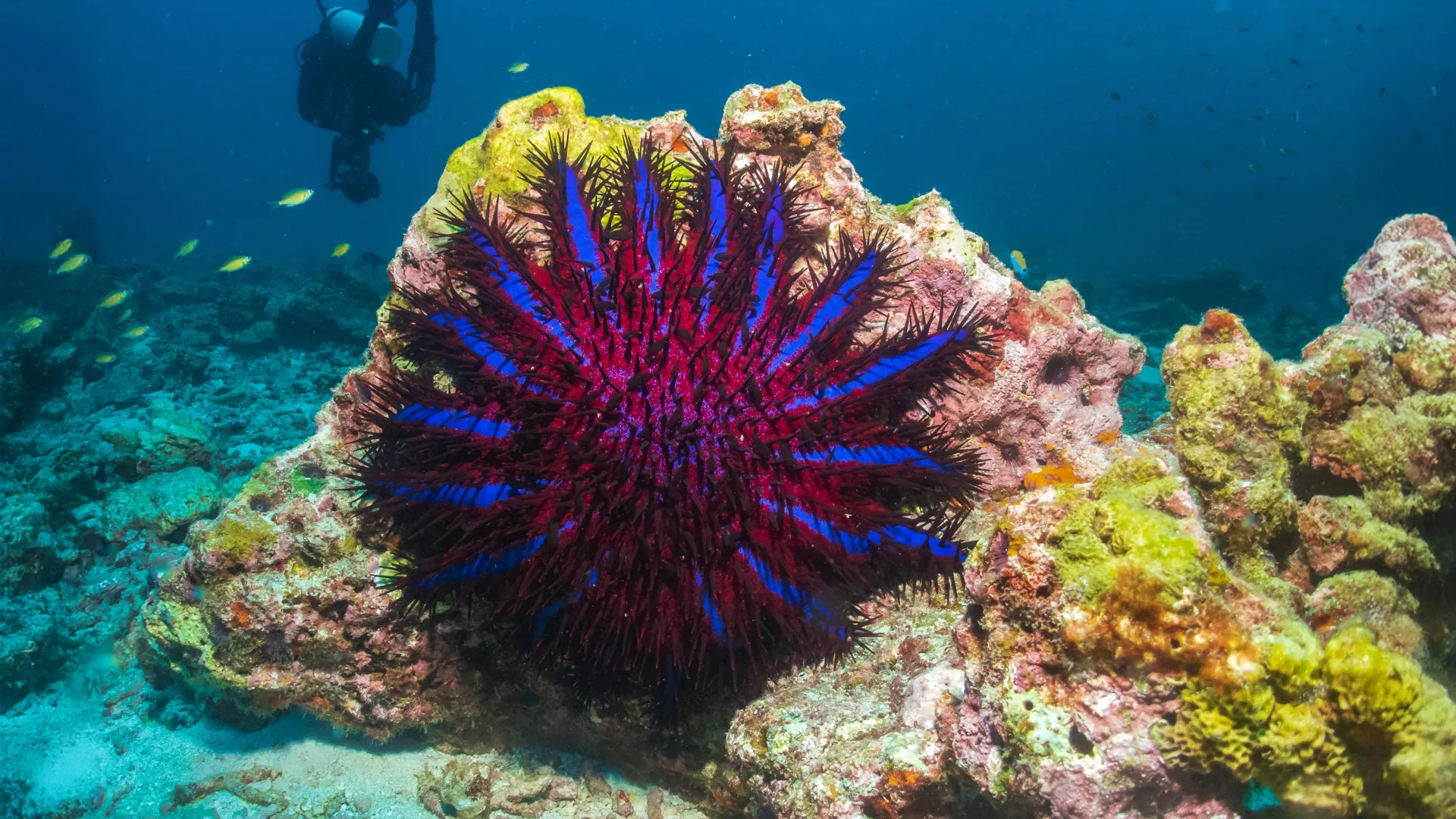
Study: Great Barrier Reef Starfish Boost Coral Diversity
The Great Barrier Reef's most feared predator might actually be an unsung guardian of marine life. New research reveals crown-of-thorns starfish help rare corals flourish by pruning fast-growing species when kept in balance.
Nature has a delightful way of turning our greatest worries into quiet wonders. Scientists studying Australia's Great Barrier Reef just discovered that one of the ocean's most feared coral predators actually helps reefs flourish.
For decades, marine biologists viewed the venomous crown-of-thorns starfish purely as an aquatic villain. These spiny creatures earned an infamous reputation for devouring vast stretches of living reef during population spikes.
Massive outbreaks since the 1960s prompted divers to spend countless hours hunting and culling the animals. Conservationists understandably feared that any feeding starfish meant total destruction for vulnerable coral structures.
A groundbreaking study led by Dr. Shawna Foo from the University of Sydney reveals an unexpected twist. When starfish populations remain at natural, balanced levels, their feeding habits actively protect the ocean's delicate tapestry.
Researchers spent months observing starfish behavior in marine sanctuaries around the One Tree Island Research Station. To their amazement, living coral tissue survived nearly 75 percent of all observed feeding sessions.
Instead of demolishing entire colonies, the starfish consumed small, measured patches before quietly drifting elsewhere. This grazing pattern allowed the remaining coral tissue to heal and thrive.
The team also observed that the starfish showed a distinct appetite for fast-growing Acropora corals. These aggressive branching corals expand rapidly across sunny shallows, frequently crowding out slower species.
By grazing on dominant species, the starfish clear valuable real estate for resilient varieties like Porites to establish strong footholds. This natural pruning process preserves rich underwater diversity that might otherwise disappear.
The Bright Side
This discovery offers marine conservationists an optimistic and practical new roadmap for protecting coastal ecosystems. Rather than striving to wipe out every single starfish, managers can celebrate their role as natural reef gardeners.
Healthy fish populations and native sea snails keep starfish numbers at healthy, modest thresholds. When these natural checks stay intact, the starfish create dynamic underwater neighborhoods where diverse species can flourish together.
Ecologists point out that moderate disturbances prevent single species from dominating, making the whole reef stronger against future climate shifts. Ocean teams can now combine targeted management with habitat protection to let nature balance itself.
Every creature holds an essential place in our living world, proving that genuine harmony often blooms from the most surprising partnerships.
Based on reporting by Science Daily
This story was written by BrightWire based on verified news reports.
Play Today’s BrightWire Positive Mini Crossword & Word Game
Keep your mind sharp with our free 5-minute uplifting daily crossword and positivity word puzzle.
Spread the positivity!
Share this good news with someone who needs it