Study Shows How Airlines Could Cut Emissions by 75%
A groundbreaking study of 27 million flights reveals that reconfiguring planes to economy-only seating could slash aviation emissions by up to 57%. Combined with fuller flights and efficient aircraft, the industry could cut its carbon footprint by three-quarters without waiting for expensive sustainable fuels.
Air travel just got a roadmap to dramatically shrink its climate impact, and the solution doesn't require futuristic technology or decades of waiting.
Researchers analyzing over 27 million commercial flights in 2023 discovered that three practical changes could reduce global aviation emissions by 50 to 75 percent. The findings, published in Nature Communications Earth & Environment, offer airlines concrete steps they can take now.
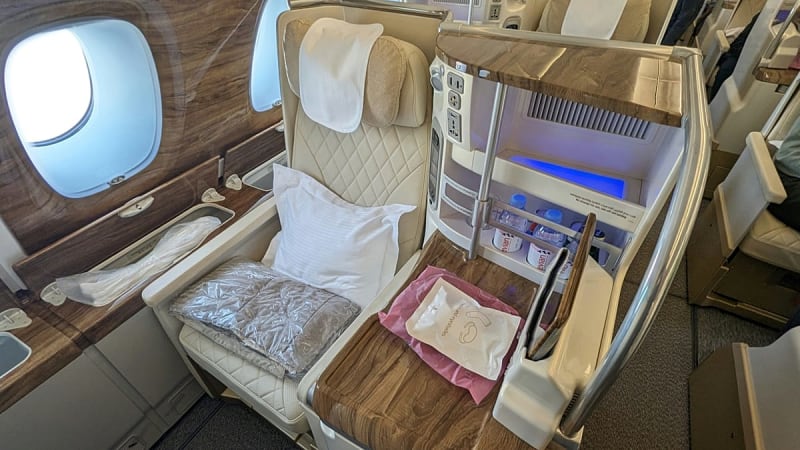
The biggest opportunity lies in those spacious business and first-class seats. Because premium seating takes up so much space per passenger, it generates up to five times more carbon emissions than economy seats. Reconfiguring planes to fit more economy passengers would cut emissions between 22 and 57 percent.
The study examined nearly 3.5 billion passengers across 26,000 flight routes worldwide. What they found was striking variation: some flights produced just 30 grams of CO2 per passenger kilometer, while others emitted nearly 900 grams for the same distance.
Airlines could make an immediate 11 percent emissions reduction just by using their most efficient planes on routes where they already fly those aircraft. That change requires zero new investment or technology.
Filling empty seats would deliver another major win. In 2023, planes flew at an average of 79 percent capacity, with some as low as 20 percent. Boosting occupancy to 95 percent would cut emissions by an additional 16 percent.
Replacing older aircraft with newer, fuel-efficient models like the Boeing 787-9 and Airbus A321neo could reduce fuel use by 25 to 28 percent. Dr. Milan Klöwer from the University of Oxford, a study co-author, says this transition would take time but could be accelerated through smart policies.
The Bright Side
While aviation accounts for four percent of human-driven global emissions, this research proves the industry doesn't need to wait for expensive sustainable aviation fuels to make meaningful progress. The tools already exist.
The study offers governments clear policy options too: adjusting landing fees based on aircraft efficiency, introducing carbon intensity caps, and rewarding airlines that prioritize fuel-efficient fleets. These market-based incentives could speed the transition without mandating overnight changes.
Although air travel demand continues growing faster than efficiency improvements, this research demonstrates that dramatic emissions cuts are achievable with existing technology and business model adjustments.
The aviation industry now has a science-backed blueprint for cutting its climate impact by three-quarters while keeping people connected across the globe.
More Images


Based on reporting by Euronews
This story was written by BrightWire based on verified news reports.
Spread the positivity!
Share this good news with someone who needs it