Supercomputer Powers 500 Clean Energy Breakthroughs in 2025
A single supercomputer just helped scientists advance more than 500 clean energy projects in one year, from discovering battery alternatives to designing better bioreactors. The National Laboratory of the Rockies' Kestrel system is proving that artificial intelligence can speed up the race to solve our biggest energy challenges.
📺 Watch the full story above
Scientists just wrapped up a year where one supercomputer did the work of thousands of researchers, pushing forward more than 500 projects that could reshape how we power our lives.
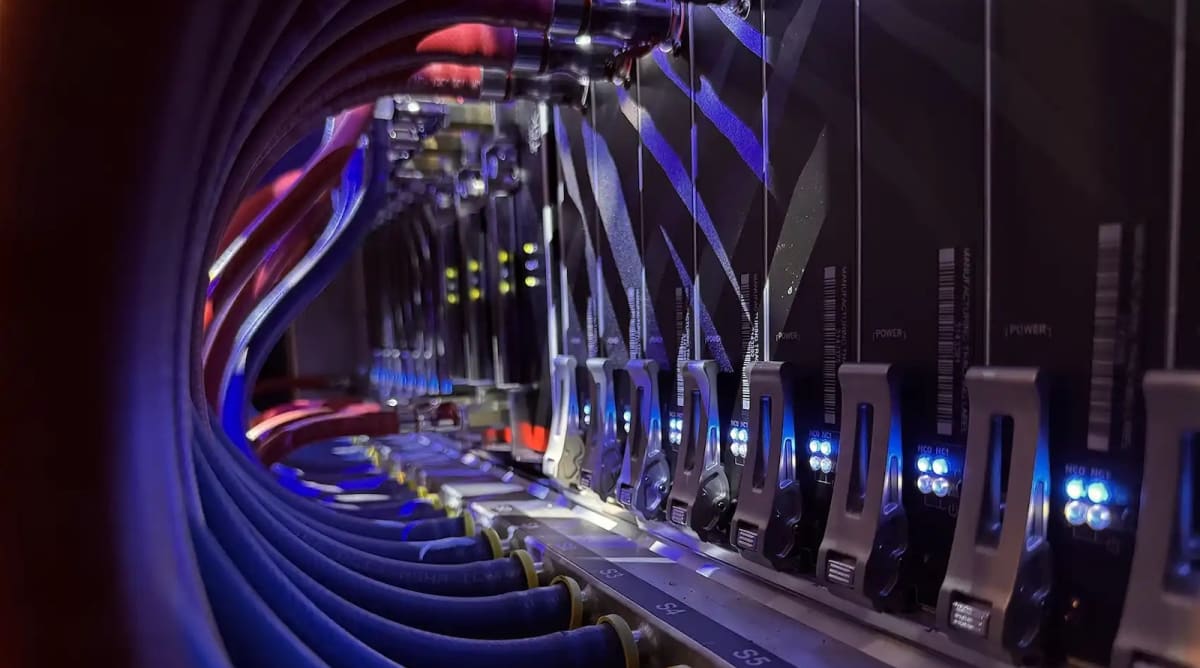
The National Laboratory of the Rockies' Kestrel supercomputer supported over 800 scientists in 2025, helping them publish 293 peer-reviewed papers and make major strides in battery technology, manufacturing, and energy system planning. The machine's 56 petaflops of computing power means it can process calculations in minutes that would take regular computers years to complete.
The lab upgraded Kestrel specifically to handle artificial intelligence and machine learning tasks, adding more memory and graphics processing power. These improvements let researchers analyze bigger datasets and test more complex energy systems than ever before.
One team is using Kestrel's AI capabilities to find alternatives to expensive metals used in batteries and energy storage. Instead of years of lab experiments testing materials one by one, the supercomputer can screen thousands of potential options in weeks, hunting for efficient and affordable replacements for scarce minerals.
Another project created a tool called BioReactorDesign that lets engineers test new bioreactor designs virtually before building physical prototypes. This approach cuts the massive costs and risks of traditional trial-and-error manufacturing, potentially making it cheaper to produce biofuels and other sustainable products at industrial scale.
A third team used Kestrel to model future electricity demand across the entire United States. Their work helps utility companies and grid operators plan for a future where more homes use electric vehicles and heating, ensuring the power grid can handle the load without blackouts or failures.
The Ripple Effect
The real power of Kestrel isn't just its speed but its accessibility. More than 800 researchers used the system in 2025, including early-career scientists who are building the next generation of energy solutions.
Every breakthrough these teams make brings us closer to cheaper batteries, more efficient manufacturing, and smarter power grids. When one supercomputer can accelerate 500 projects at once, the timeline for clean energy solutions shrinks from decades to years.
The upgrades mean Kestrel can now handle even bigger challenges, from discovering new materials to predicting how entire energy systems will behave under stress.
Computing power like this turns energy research from a slow march into a sprint, and the finish line keeps getting closer.
More Images
Based on reporting by CleanTechnica
This story was written by BrightWire based on verified news reports.
Spread the positivity!
Share this good news with someone who needs it