Superhot Geothermal: 6-Mile Wells Could Power Our Future
Engineers are drilling six miles deep into superhot rock to create clean power plants that could run 24/7 anywhere on Earth. The technology borrows from nuclear fusion research and could power civilization for thousands of years.
Imagine a power plant the size of a parking lot that runs day and night without emissions, built almost anywhere on the planet. That future just moved closer as companies crack the code on drilling six miles deep to tap superhot rock.
Traditional geothermal power only works in a few lucky spots where hot water and natural cracks in rock line up perfectly. That's why the entire world only produces about 16 gigawatts from geothermal today, mostly near volcanoes and hot springs.
Superhot geothermal changes everything. Instead of hunting for rare geology, engineers drill down to temperatures above 750°F and create their own underground reservoirs using techniques from oil and gas drilling. They pump cold water down, let the rock superheat it, and bring it back up to spin turbines.
The numbers are staggering. The upper six to twelve miles of Earth's crust holds more energy than all known fossil fuel reserves combined. At superhot temperatures above 572°F, a single well can deliver ten times more power than conventional geothermal wells.
The catch has always been cost. Drilling that deep into hard crystalline rock wears out equipment fast, forcing crews to pull everything up repeatedly to swap bits and tools. Each trip costs time and money, making projects economically impossible.
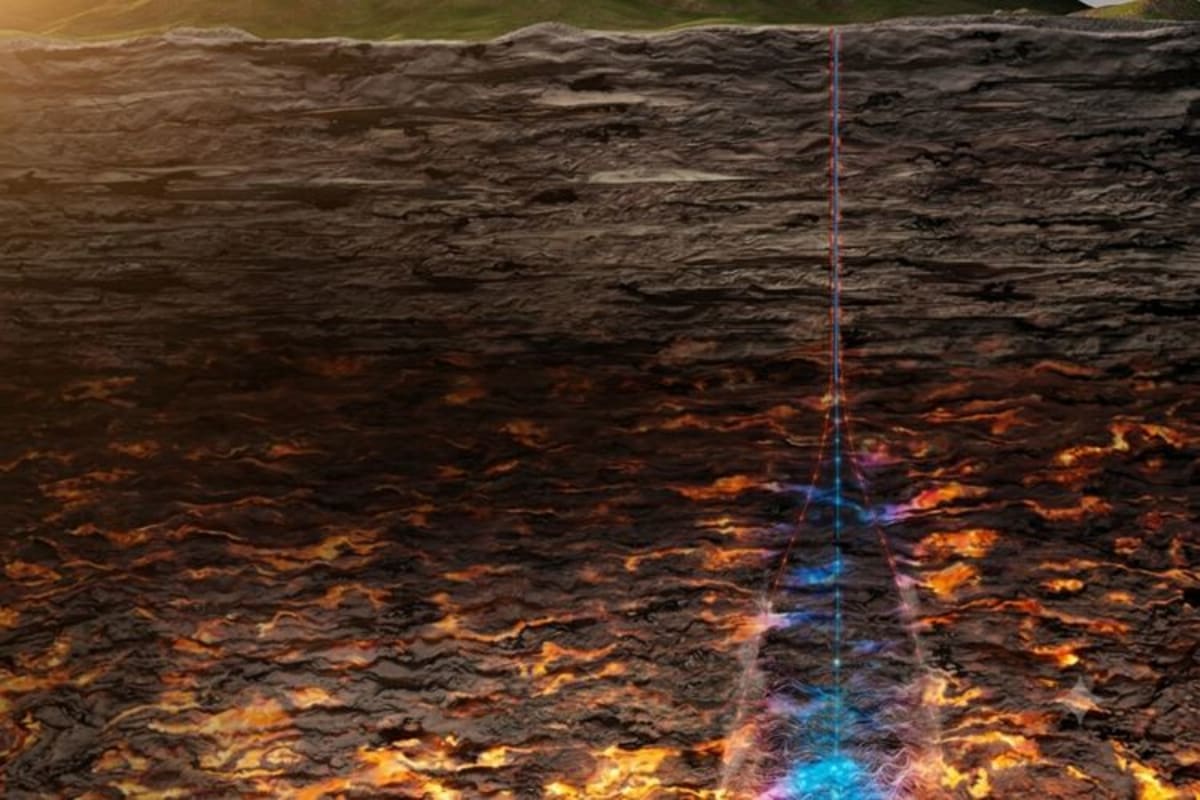
Quaise Energy thinks they've solved it with millimeter-wave drilling, technology adapted from nuclear fusion research at MIT. Instead of grinding through rock, a gyrotron at the surface generates powerful microwave beams that travel down the well. The energy cracks, melts, or vaporizes the rock into fine particles that gas sweeps back to the surface.
Because nothing touches the rock face, equipment lasts longer and performance stays steady even at extreme depths. The safety profile resembles an industrial microwave oven with proper safeguards.
The company just raised $134 million to prove it works at their first site on Oregon's Newberry Volcano, where superhot conditions start at just two to three miles deep. Roads are built, permits are moving, and drilling begins soon.
Each well pad occupies about four acres and targets 20 to 40 megawatts of output, enough to compete directly with natural gas plants. The power runs 24/7 regardless of weather, filling the gap that solar and wind can't.
The Ripple Effect
If superhot geothermal scales as planned, energy maps get rewritten. Landlocked states and countries far from coasts or volcanoes could host baseload clean power. Data centers gulping electricity could drill their own wells instead of straining grids.
The technology taps oil and gas talent directly since the drilling, fracturing, and reservoir engineering mirror shale gas operations. Workers transition without retraining, and communities built around drilling keep their skills relevant.
Quaise estimates that once the extracted energy repays the drilling investment in months, these wells could produce carbon-free power for decades. Other companies worldwide are racing toward similar goals, each betting that the heat beneath our feet is too valuable to leave untapped.
The planet has been storing thermal energy since it formed. We're finally learning how to withdraw it.
Based on reporting by Renewable Energy World
This story was written by BrightWire based on verified news reports.
Spread the positivity!
Share this good news with someone who needs it