Surgeon-Controlled Robots Complete First Live Surgeries
Humanoid robots operated by human surgeons successfully removed gallbladders from live pigs, opening doors for affordable remote surgery in rural areas. The $67,000 robots cost a fraction of traditional surgical systems that run into millions.
📺 Watch the full story above
A team of surgeons just completed a world first by remotely controlling humanoid robots to perform surgery on living animals, proving that affordable robotic healthcare might soon reach communities that need it most.
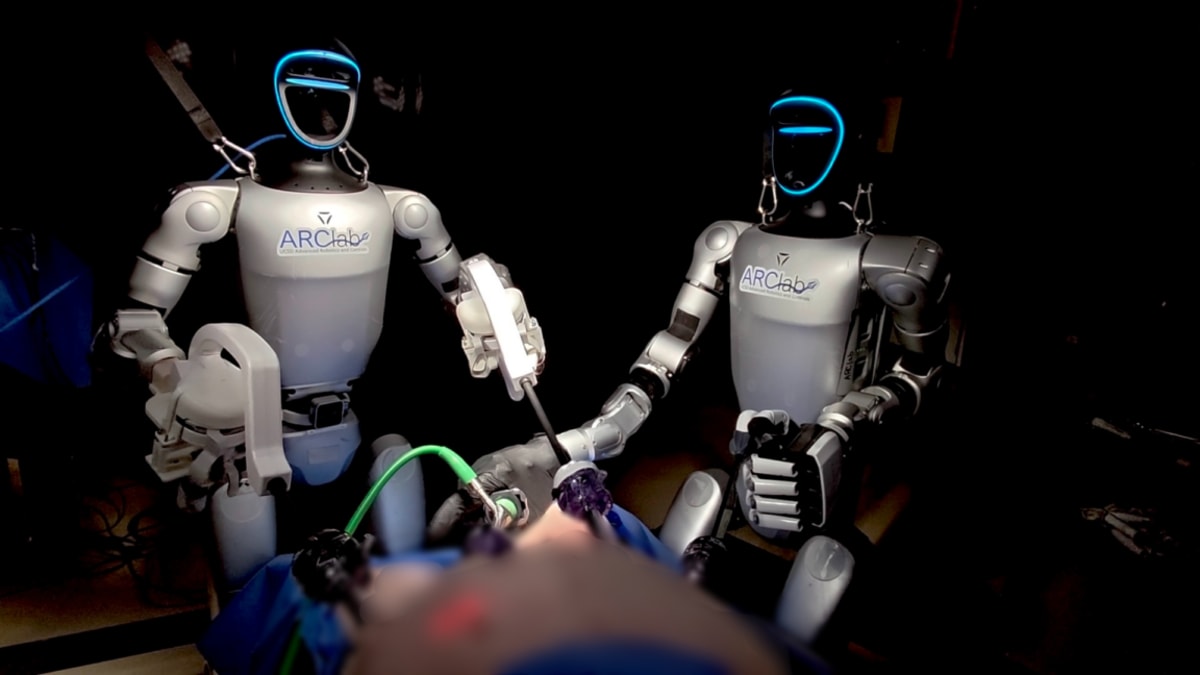
Researchers at UC San Diego used a Unitree G1 humanoid robot, nicknamed "Surgie," to successfully remove gallbladders from two live pigs. The surgeons controlled the 5-foot-tall, 60-pound robots from a console while wearing a stereo headset, guiding every movement with their own hands.
The breakthrough isn't about replacing doctors with machines. Instead, it's about giving skilled surgeons the power to reach patients anywhere, even in small rural hospitals, remote battlefields, or someday in space.
The cost difference makes this possible. Traditional surgical robots like the da Vinci system can cost between half a million and several million dollars and weigh 1,800 pounds. The humanoid robots, even with upgrades for dexterous hands, max out around $67,000 and take up a fraction of the operating room space.
"It's a fraction of the cost and it takes a fraction of the space in an operating room," said Shanglei Liu, an assistant professor of surgery at UC San Diego. "So it's easy to deploy, anywhere from rural areas, to the battlefield, and even to space."
The first surgery included a human assistant standing by the robot, while the second featured two robots working together as a team. Both procedures succeeded, though the technology still needs refinement before it's ready for human patients.
The Ripple Effect
This technology could transform healthcare access for millions. Small clinics that can't afford million-dollar surgical systems might soon offer specialized procedures through remote expert surgeons.
The current challenges are real. The robots needed frequent recalibration during surgery, adding minutes of pause time. Their shorter arm span compared to humans limited their reach, and slight delays between the surgeon's hand movements and the robot's response need improvement.
But the research team is already working on solutions. Michael Yip, a professor of electrical and computing engineering at UC San Diego, envisions future "autonomous surgical assistants" that could fetch tools and help with basic tasks while human surgeons focus on the complex work.
The vision goes beyond remote surgery. These robots could address the healthcare crisis affecting underserved communities worldwide, bringing expert care to places where geography and economics currently make it impossible.
Human surgeons remain essential, but now they might finally have affordable tools to extend their healing hands across any distance.
More Images



Based on reporting by Ars Technica
This story was written by BrightWire based on verified news reports.
Spread the positivity!
Share this good news with someone who needs it