Sweden Cracks Superconductor Puzzle With Nano Surface Trick
Scientists in Sweden found a surprisingly simple way to make superconductors work at higher temperatures and resist magnetic fields. Instead of inventing new materials, they sculpted tiny patterns onto the surface beneath the superconductor.
Scientists just solved one of the biggest puzzles keeping ultra-efficient electronics out of our everyday lives, and the answer was hiding in plain sight.
Researchers at Chalmers University of Technology in Sweden discovered they could dramatically improve superconductors by carving microscopic patterns into the surface beneath them. The breakthrough could bring us closer to electronics that waste almost no energy, a game changer when our digital devices and data centers already consume up to 12 percent of global electricity.
Superconductors carry electrical current with zero energy loss. Unlike your laptop or phone that heats up and wastes energy, superconductors transmit electricity without resistance. That means power grids, computers, and quantum technologies could become hundreds of times more efficient.
But there's been a catch. Most superconductors only work at incredibly cold temperatures, around minus 200 degrees Celsius. They also fall apart when exposed to strong magnetic fields, which many advanced technologies rely on. For decades, scientists tried solving this by tweaking the superconductors themselves with limited success.
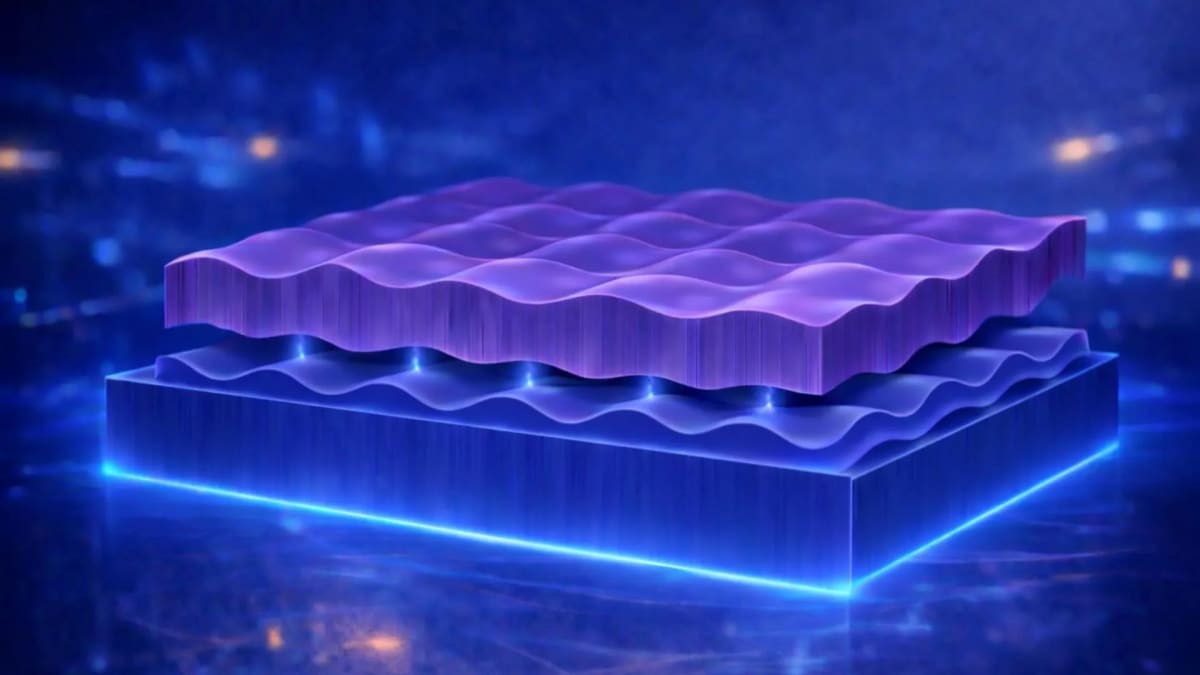
Professor Floriana Lombardi and her team tried something different. They worked with a material just a few nanometers thick, less than one millionth the thickness of a human hair. Before adding the superconducting layer, they heated the foundation it would rest on, creating an orderly pattern of tiny ridges and valleys across the surface.
Those microscopic features changed everything. The tiny hills and valleys guided how atoms in the superconducting layer settled, creating an electronic environment that kept superconductivity stable at higher temperatures and under strong magnetic fields.
"We could see how the electrons' properties began to have a preferential direction in this interfacial region and behave in a way that stabilized and strengthened the superconducting state," Lombardi explained.
The discovery introduces an entirely new strategy. Instead of hunting for miracle materials or complex chemical modifications, scientists can now improve performance by carefully sculpting the surfaces materials grow on.
Why This Inspires
This breakthrough shows how the biggest solutions sometimes come from thinking differently rather than working harder. For years, researchers assumed the answer lay in finding better superconducting materials. The Swedish team proved that sometimes the foundation matters more than what sits on top.
The approach could accelerate progress across multiple fields at once. Better superconductors mean more efficient power grids that waste less electricity, quantum computers that work more reliably, and medical imaging machines that perform better while using less energy.
What makes this especially exciting is how practical it could be. The team isn't proposing expensive new materials or complicated manufacturing processes. They're suggesting a design principle that could improve many existing superconductors simply by rethinking the surface they rest on.
As our world grows more digital and energy hungry, innovations that dramatically cut electricity waste aren't just convenient, they're essential. This Swedish discovery might have just opened a door that researchers have been pushing against for decades.
Based on reporting by Science Daily
This story was written by BrightWire based on verified news reports.
Spread the positivity!
Share this good news with someone who needs it