Sweden Invests $2.5M in Textbooks After Digital Reset
Sweden is bringing back printed textbooks after research showed screens may hurt young learners' concentration. The country that once led the digital classroom revolution is now spending millions on paper-based learning materials.
Sweden, once a global leader in digital education, is making a surprising comeback to printed textbooks after discovering that screens might not be the learning miracle everyone expected.
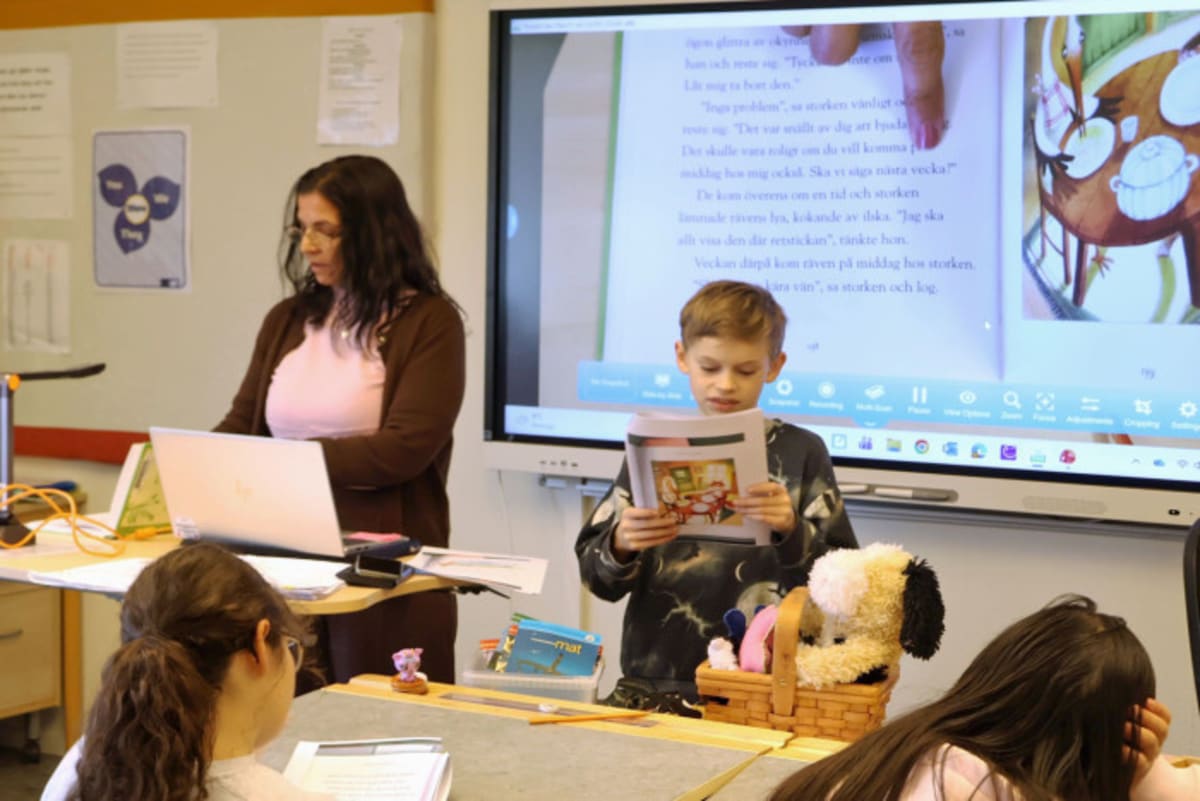
At Bandhagen school in Stockholm, fourth-grader Emilia speaks for countless students when she explains why she prefers paper. "When I read on devices, I usually get a headache," she says. "I can concentrate better when I read physical books."
Her experience isn't isolated. Sweden rapidly expanded digital devices in classrooms around 2010, but alarm bells started ringing when international test scores showed sharp declines in reading and math between 2018 and 2022.
The government commissioned neuroscientists and pediatric experts to investigate. Their conclusion was clear: heavy reliance on digital devices could impair attention and concentration in young learners whose brains are still developing.
Sweden responded decisively in 2023, changing course to encourage paper-based instruction for younger students. The government set aside 658 million to 755 million kronor (about $2.2 to $2.5 million) annually through 2025 for textbooks and printed teaching materials in preschools and compulsory schools.
"The decision was based on research suggesting that young children may be particularly vulnerable to the effects of digital devices," explains Joar Forssell, chair of the parliament's education committee.
The timing is particularly interesting. While Sweden returns to paper, other countries like Japan are moving in the opposite direction, recently enacting laws to introduce digital textbooks as formal teaching materials.
The Bright Side
This isn't about rejecting technology outright. Bandhagen's Principal Pia Nystrom sees it as finding the right balance between digital and traditional teaching methods rather than blaming technology alone.
Sweden's willingness to reverse course shows something powerful: governments can change direction when evidence demands it. The country isn't abandoning digital tools entirely but instead recognizing that different ages and learning stages may benefit from different approaches.
Other researchers point out that multiple factors affect student performance, including demographic changes and language challenges faced by immigrant families. The conversation has opened up a broader dialogue about what actually helps children learn best.
Sweden's bold experiment offers valuable lessons for countries worldwide grappling with similar questions about screen time and student achievement.
More Images


Based on reporting by Bangkok Post
This story was written by BrightWire based on verified news reports.
Spread the positivity!
Share this good news with someone who needs it