Swiss Scientist Found DNA in 1869, 84 Years Early
A Swiss doctor discovered DNA in pus-soaked bandages decades before Watson and Crick became famous for it. His forgotten breakthrough laid the groundwork for understanding all life on Earth.
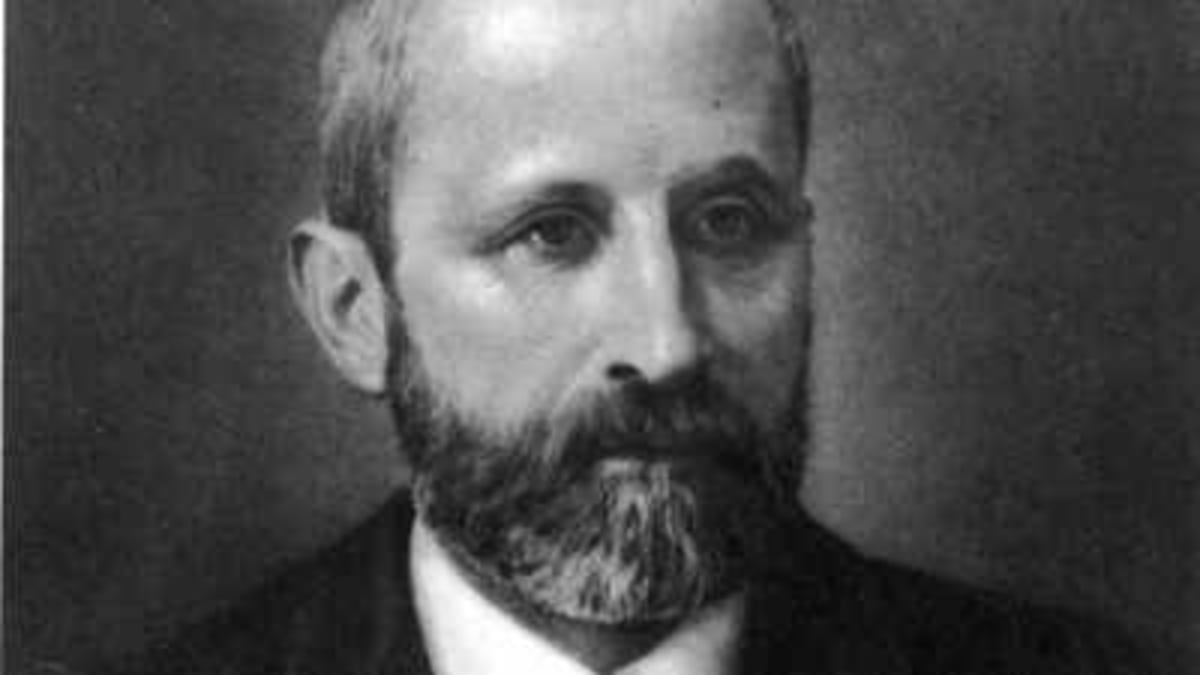
In 1869, a young Swiss scientist named Friedrich Miescher was scraping pus from used surgical bandages when he stumbled upon something that would change biology forever, though he'd never know it.
Miescher, working in a cramped laboratory in Tübingen, Germany, was analyzing white blood cells when he noticed something unusual. Among the usual suspects like proteins and fats sat a mysterious substance that resisted every test he threw at it. It wouldn't break down like protein, wouldn't react to iodine like carbohydrates, and ignored the solvents that dissolved fats.
He called it "nuclein" because it came from the nucleus of cells. At the time, nobody knew what the nucleus even did.
Born in Basel in 1844 into a family of doctors, Miescher had planned to practice medicine until childhood illnesses left him with hearing problems. His disability pushed him away from patient care and into the quiet precision of laboratory work. That detour became one of the most important career changes in scientific history.
His mentor, Dr. Felix Hoppe-Seyler, was skeptical of the findings and spent two years verifying them before allowing publication. When Miescher's paper finally appeared in 1871, it carried the unexciting title "On the Chemical Composition of Pus Cells." The actual discovery of nuclein was buried deep in technical details. Almost nobody noticed.
The scientific world wasn't ready for Miescher's discovery because it lacked the framework to understand it. Without knowledge of genetics or heredity's chemical basis, nuclein seemed like just another biological curiosity with no practical application.
Miescher died in 1895 at age 51, never knowing that his nuclein was the secret to all inheritance. He never saw how his work would blossom into the field of molecular genetics.
Why This Inspires
Decades after Miescher's death, other scientists picked up where he left off. In 1889, his student Richard Altmann renamed nuclein to "nucleic acid." By the early 1900s, researchers began connecting these acids to heredity.
Rosalind Franklin's X-ray images in the 1950s revealed the structure's shape, and Watson and Crick used her work to describe the famous double helix in 1953. They became household names. Miescher remained in the shadows.
Today, DNA testing solves crimes, reunites families, fights diseases, and traces human ancestry across continents. Every COVID vaccine, every personalized cancer treatment, every paternity test traces back to those pus-soaked bandages in a 19th-century German lab.
Miescher's story reminds us that groundbreaking discoveries don't always arrive with fanfare. Sometimes the most important breakthroughs sit quietly in technical papers for generations, waiting for the world to catch up and recognize their brilliance. His patience across time finally paid off.
More Images



Based on reporting by Google: scientific discovery
This story was written by BrightWire based on verified news reports.
Spread the positivity!
Share this good news with someone who needs it