Taiwan Clam Farms Generate Clean Energy While Growing Food
Scientists in Taiwan just proved you can grow seafood and harvest solar power in the same space. The system cools water, saves resources, and fights climate change all at once.
Imagine a clam farm that also powers homes with clean electricity while using 30% less water than traditional ponds. That future just became reality in coastal Taiwan.
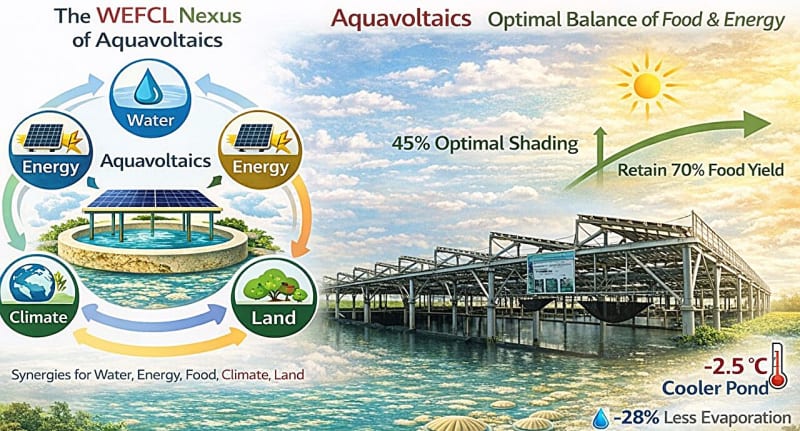
Researchers at National Taiwan University built an innovative system that places solar panels above clam ponds, creating what they call "aquavoltaics." The setup does double duty: panels generate renewable energy while their shade protects clams from dangerous heat waves.
The team studied real clam farms in Yunlin County, one of Taiwan's most important seafood regions. Coastal farmers there face a growing challenge as climate change brings hotter summers and more evaporation. Land for separate solar farms is scarce, and rising temperatures stress the clams.
Instead of guessing how much shade would work best, the scientists built a computer model powered by artificial intelligence. The digital twin simulated everything from water temperature to clam growth to solar output, letting them test different scenarios without disrupting actual farms.
The results reveal impressive climate benefits. Under 40% shading, water temperatures dropped by about 2.5°C during peak heat. The cooler conditions help clams survive extreme weather while dramatically reducing water loss through evaporation.
There's a trade off, though. Less sunlight means less phytoplankton, the tiny organisms clams eat. Production dropped by about 27% compared to traditional open ponds. But the solar panels generated enough electricity revenue to offset the lower harvest.
By testing shading levels from zero to 70%, researchers found the sweet spot around 45%. At that level, farms kept about 70% of their clam yield while maximizing clean energy generation.
The Ripple Effect
This approach solves multiple problems at once. Coastal communities get fresh seafood and renewable electricity from the same plot of land. Water stressed regions conserve a precious resource. And the system helps both food production and energy generation adapt to a warming climate.
The model works especially well in Asia's crowded coastal areas where farmland and space for solar installations are both limited. Countries facing similar pressures could replicate the approach, turning a land constraint into an advantage.
Lead researcher Fi-John Chang calls aquavoltaics a pathway beyond compromise toward true integration. His team proved that food security, clean energy, and climate adaptation don't have to compete for space or resources.
Coastal farmers now have a practical blueprint for thriving in a hotter world while powering the clean energy transition.
More Images



Based on reporting by Phys.org - Technology
This story was written by BrightWire based on verified news reports.
Spread the positivity!
Share this good news with someone who needs it