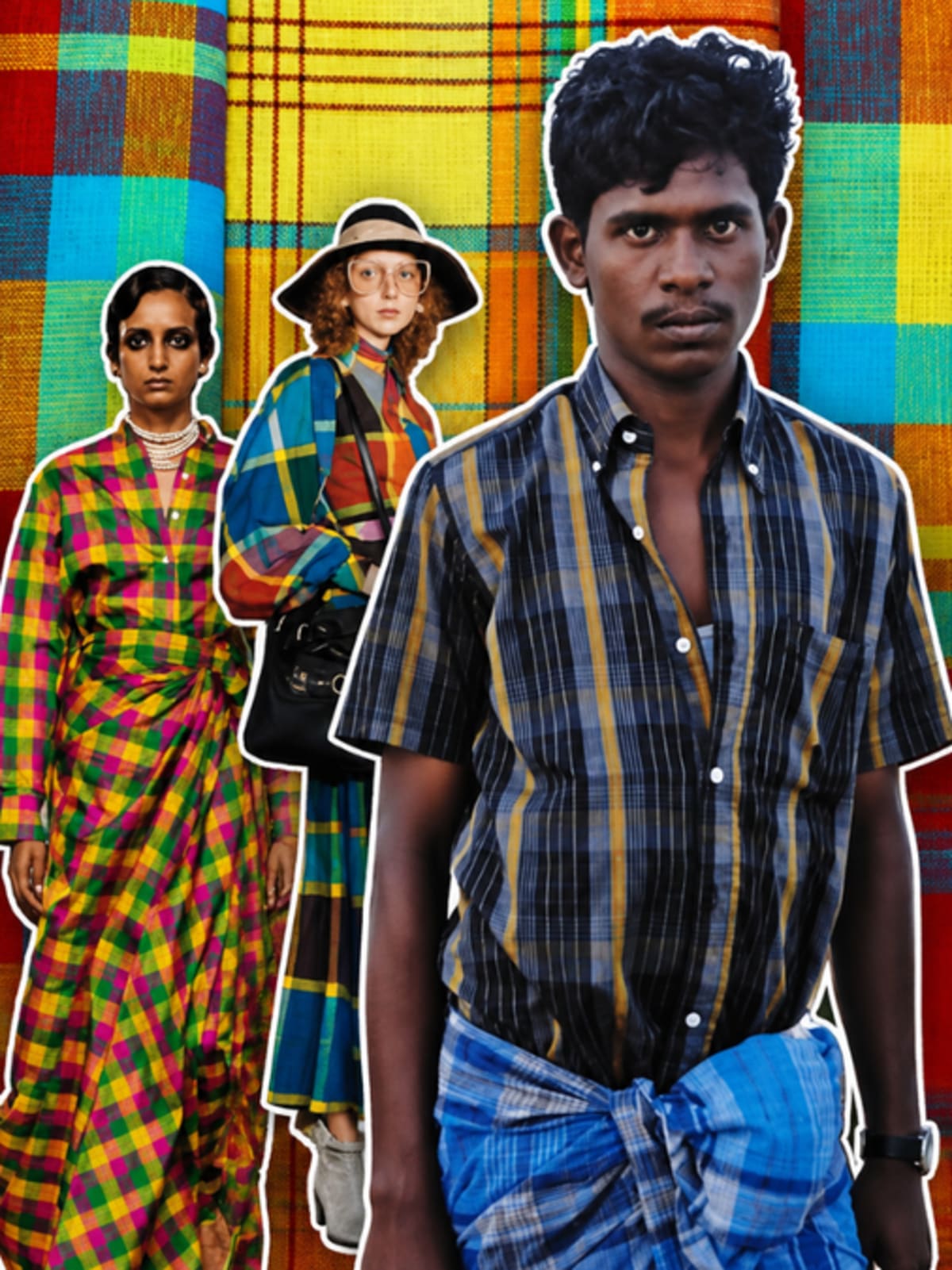
Tamil Fisherman's Lungi Became a Global Fashion Icon
The humble checked cloth worn by Tamil fishermen for centuries traveled from Indian shores to Nigerian ceremonies and Ivy League campuses, becoming the famous Bleeding Madras fabric. What started as everyday work wear became one of fashion's most unlikely global success stories.
For centuries, fishermen along Tamil Nadu's coast wrapped hand-woven checked cloth around their waists, never imagining their everyday work wear would one day define American preppy style. That simple lungi became Madras fabric, a global icon born from India's textile traditions.
Weavers created the distinctive pattern by block-printing fine muslin with vegetable dyes, producing vibrant checked squares that coastal workers wore daily. When Dutch traders arrived in 1610 and the British founded Fort St George in 1639, they spotted something special in these humble work clothes.
Portuguese and British merchants shipped the fabric to West Africa starting in the 1500s, where it found an unexpected new life. The Kalabari people of Nigeria loved it so much they renamed it Injiri, meaning real India, and wore it at their most important ceremonies including births, weddings and funerals.
Other Nigerian traders called it George cloth after Fort St George in Madras. They wrapped the eight-yard checks into skirts and fashioned smaller pieces into elaborate headscarves and turbans.
British exporters found a clever workaround for high taxes by labeling the fabric Real Madras Handkerchief, even though each piece measured nearly a meter across. The tax break for handkerchiefs made shipping the oversized squares far more profitable.
In 1958, American importer William Jacobson traveled to Chennai and discovered Krishnan Nair's Leela Scottish Lace mill. He bought thousands of yards of the vivid checked fabric, bringing it back to American shores.
The Bright Side
The fabric had what seemed like a fatal flaw. The vegetable dyes bled when washed, creating unpredictable color patterns with each cycle.
But smart marketers saw opportunity where others saw disaster. They rebranded the defect as Bleeding Madras, a feature rather than a bug, with Seventeen magazine calling it a miracle handwoven fabric from India.
By the 1960s, Bleeding Madras became the summer uniform for Ivy League students and vacationing Americans. College campuses across the country filled with shirts, shorts and blazers in those distinctive bleeding checks, each piece becoming more unique with every wash.
The journey from Tamil fisherman's lungi to Manhattan runway shows how everyday items can cross cultures and transform completely. A work cloth that kept the sun off laborers became a symbol of American summer leisure and Nigerian celebration, all while staying true to its handwoven roots.
Today's construction boots or farmer's overalls might be tomorrow's runway sensation.
Based on reporting by The Better India
This story was written by BrightWire based on verified news reports.
Spread the positivity!
Share this good news with someone who needs it
%2Fhttps%3A%2F%2Ftf-cmsv2-smithsonianmag-media.s3.amazonaws.com%2Ffiler_public%2F12%2F05%2F120524e1-9e51-48cf-8d22-2d033533e6ef%2Fodyssey-fragment.png)