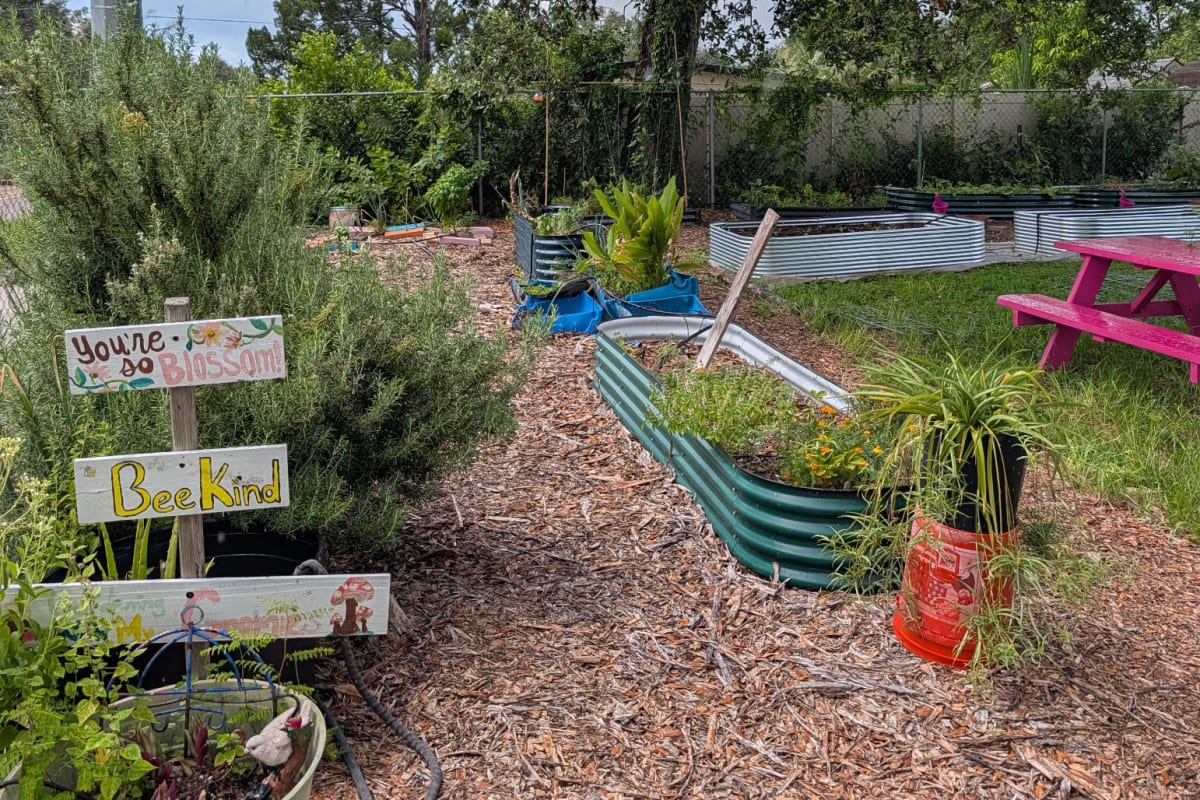
Tampa's 813 Hood Garden Feeds Thousands in Food Deserts
When Dee Morales couldn't get her son to eat vegetables, she planted a garden. Now her 813 Hood Garden network is feeding thousands across Tampa's underserved neighborhoods.
Dee Morales did the math and realized something powerful: In the 10 years her East Tampa neighborhood spent waiting for a supermarket, a community garden could have grown thousands of pounds of food.
So she stopped waiting and started growing. During the pandemic, Morales launched 813 Hood Garden after discovering her oldest son would only eat vegetables he grew himself. Adults who visited her garden had never seen a pepper growing on a plant.
Today, her network of growing spaces spans East Tampa, Sulphur Springs and Ybor City. Two gardens sit in federally classified food deserts, areas that are both low-income and far from grocery stores.
The timing couldn't be more critical. In Hillsborough County, more than 15 percent of residents face food insecurity. Across Florida, that number jumped from 10 percent in 2020 to 15.4 percent in 2024 as food prices surged after the pandemic.
Monica Petrella, the food systems coordinator at the University of Florida's Hillsborough County extension office, sees the real challenge clearly. Gardens need about 30 committed volunteers and $10,000 for beds, soil and water to get started. The missing ingredient isn't information about where hunger exists. It's people and money.
Why This Inspires
The success stories are growing. Between 2009 and 2011, six of 12 new community gardens in the Tampa Bay region failed within four years. But after the Coalition of Community Gardens formed to network and support them, not a single garden failed over the next six years.
That shift shows what's possible when communities support each other. Gardens thrive when neighbors invest time, knowledge and resources together. They transform food deserts one planted seed at a time.
Morales proves that one person with determination can spark change that feeds thousands. Her garden started with a single child who wouldn't eat his vegetables. Now it's a lifeline for entire neighborhoods that grocery chains deemed unprofitable.
The work continues as more Tampa residents discover what Morales already knows: you don't have to wait for someone else to bring fresh food to your neighborhood when you can grow it yourself.
Based on reporting by Inside Climate News
This story was written by BrightWire based on verified news reports.
Spread the positivity!
Share this good news with someone who needs it