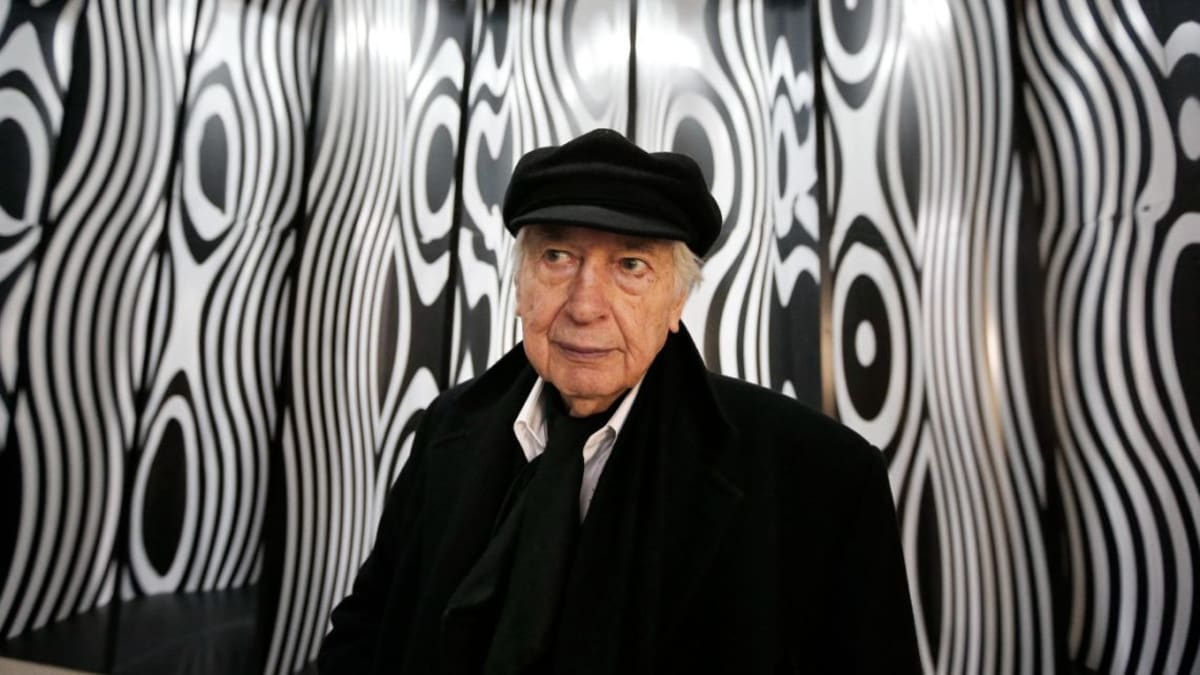
Tate Modern Opens Tribute to Light Artist Julio Le Parc
London's Tate Modern will honor Argentine kinetic art pioneer Julio Le Parc with a major retrospective just weeks after his death at 97. The exhibition showcases 75 works from the artist who revolutionized how we experience art through light, movement, and participation.
One of the world's most prestigious museums is celebrating an artist who spent decades teaching us that art doesn't just hang on walls—it moves, interacts, and welcomes us in.
Tate Modern in London opens "Julio Le Parc: Light. Colour. Action." on June 11, marking the first major British retrospective of the Argentine artist who passed away in early June. Le Parc lived to 97 and remained deeply involved in planning the exhibition until his final days, even attempting to book his Eurostar train ticket from Paris to attend the opening.
The show features 75 works spanning Le Parc's remarkable career, including one piece created specifically for this retrospective. Almost all the pieces come directly from his studio in Cachan, France, where he lived since settling in Paris in 1958.
"He was constantly sending us suggestions about the installation," said curator Val Ravaglia, who noted Le Parc's extraordinary dedication despite declining health. The artist even requested that a poem he wrote about the end of his life be included in the exhibition—a choice that now reads as a poignant farewell.
Born in Argentina's Mendoza Province in 1928, Le Parc became a giant of 20th-century kinetic and optical art. In 1960, he co-founded the Groupe de Recherche d'Art Visuel with five other artists who challenged traditional ideas about how art should work.
His vision was radical for its time: art that moved, reflected light in shifting patterns, and required viewers to participate rather than simply observe. What seemed experimental then laid the groundwork for the immersive and interactive exhibitions that fill museums today.
Why This Inspires
Le Parc's story reminds us that innovation often comes from questioning the rules we're told to follow. As a young artist, he refused to accept that art had to be static, distant, or intimidating.
His work opened doors for generations of artists exploring installation and participatory art. Today's popular immersive exhibitions owe a debt to pioneers like Le Parc who believed art should be a conversation, not a monologue.
Tate Modern recognized his importance early, acquiring his works in the 1970s when kinetic art was still finding its place in major institutions. This retrospective cements his legacy at one of the world's most influential contemporary art museums.
The exhibition stands as both celebration and farewell—a fitting tribute to an artist who spent seven decades proving that the best art invites us to step closer, look differently, and become part of the experience itself.
More Images

Based on reporting by Buenos Aires Times
This story was written by BrightWire based on verified news reports.
Spread the positivity!
Share this good news with someone who needs it