TB Meningitis Treatment Breakthrough Shows Promise in Trials
Scientists discovered common drugs, including semaglutide, work better than current treatments at protecting brains during deadly TB meningitis infections. The breakthrough could help survivors avoid lasting brain damage.
A deadly brain infection that kills one in four patients might finally have better treatment options, thanks to researchers who tested everyday drugs in a completely new way.
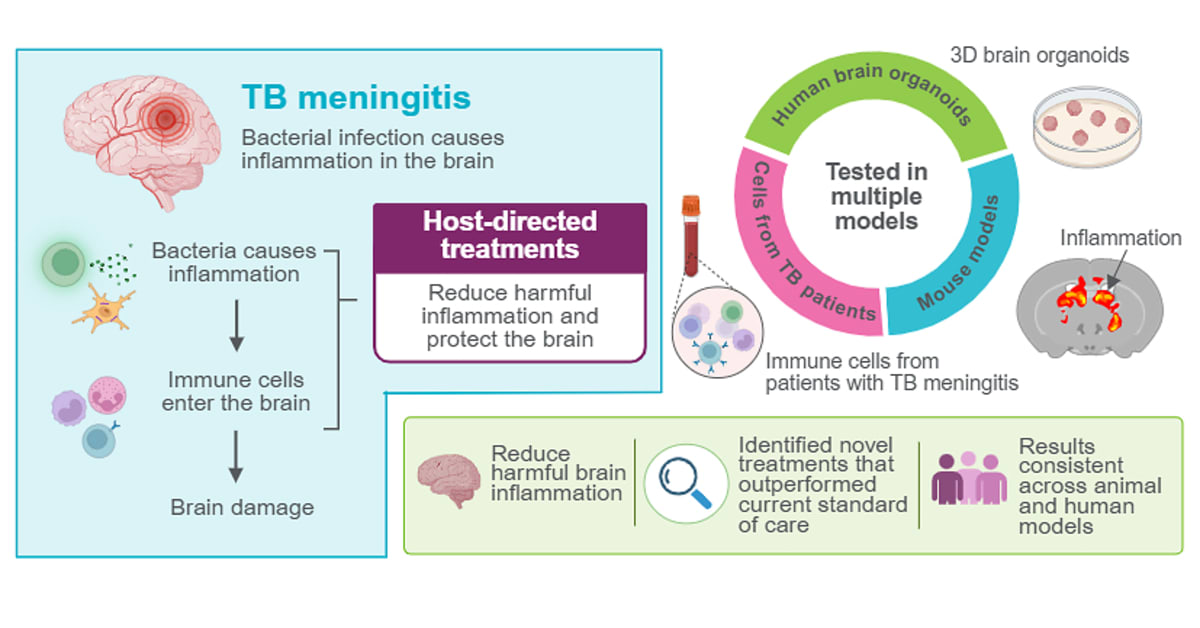
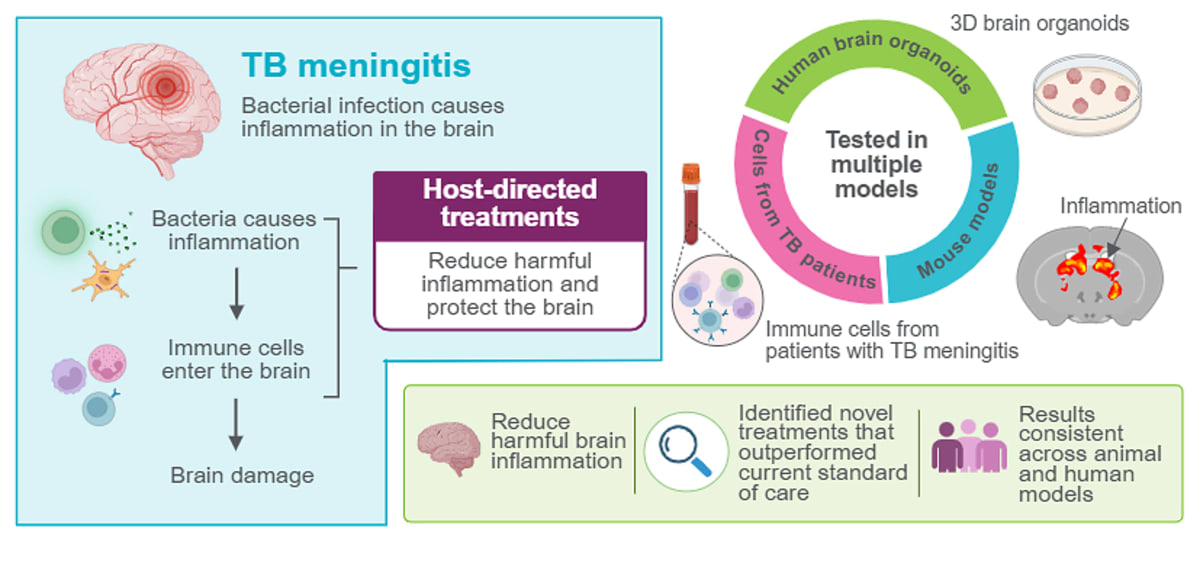
Tuberculous meningitis attacks the brain's protective layers and remains one of the hardest tuberculosis infections to treat. Even with antibiotics and steroids, survivors often face permanent brain damage because the real villain isn't just the bacteria. It's the body's own inflammatory response going into overdrive.
Scientists at Cincinnati Children's Hospital took a fresh approach to this decades-old problem. Instead of just targeting the infection, they looked for drugs that could calm the harmful inflammation while letting the body keep fighting TB. They tested several FDA-approved medications and found some clear winners, including semaglutide, the diabetes and weight loss drug many people already take.
The team didn't rely on just one type of testing. They used three different research methods together: mice with TB meningitis, lab-grown human brain tissue with immune cells, and actual immune cells from TB meningitis patients. Seeing the same positive results across all three systems gave them confidence these findings matter for real patients.
The results were striking. In mice, the new treatments reduced both deaths and brain damage without making antibiotics work any worse. Brain scans showed less inflammation, and the animals showed fewer neurological problems. The human brain tissue and patient cells told the same story: these drugs successfully dialed down the dangerous immune responses.
The Bright Side
What makes this discovery especially promising is speed. Because these drugs already have FDA approval for other conditions, they could move into clinical trials much faster than brand-new medications. Patients might see these options available years sooner than they would with experimental compounds.
Dr. Sanjay Jain, who led the research team, points out their testing approach itself represents progress. Using multiple complementary models helps scientists predict which treatments will actually work in humans, making medical research more efficient and relevant. That means fewer dead ends and faster paths to helping patients.
The findings appeared in Nature Communications this week, opening the door for clinical trials that could transform care for one of tuberculosis's deadliest forms. For the thousands of people who develop TB meningitis each year, better protection against brain damage could mean the difference between recovery and permanent disability.
This breakthrough shows how rethinking old problems with new tools can unlock solutions that were hiding in plain sight.
More Images


Based on reporting by Google News - New Treatment
This story was written by BrightWire based on verified news reports.
Spread the positivity!
Share this good news with someone who needs it