Teacher Finds First T. Rex Trackway Ever Discovered
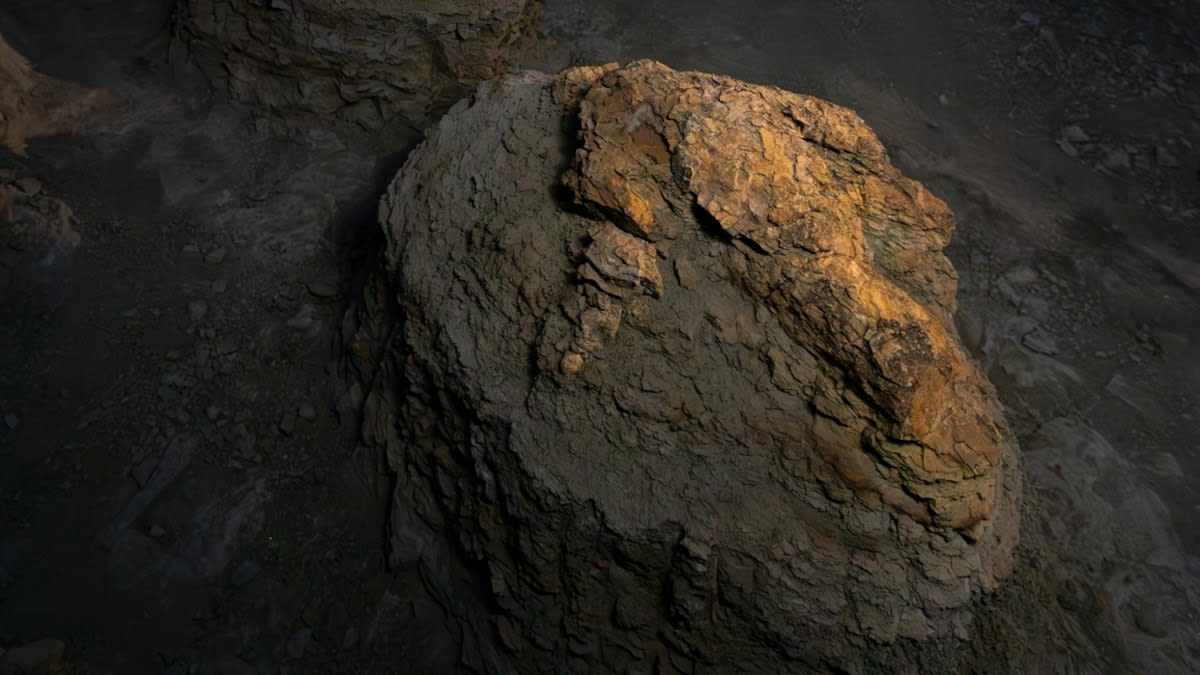
A high school science teacher in North Dakota stumbled upon four massive footprints that scientists confirmed as the first T. Rex trackway ever found. The 66.5 million-year-old discovery is changing how we understand how the dinosaur king actually moved.
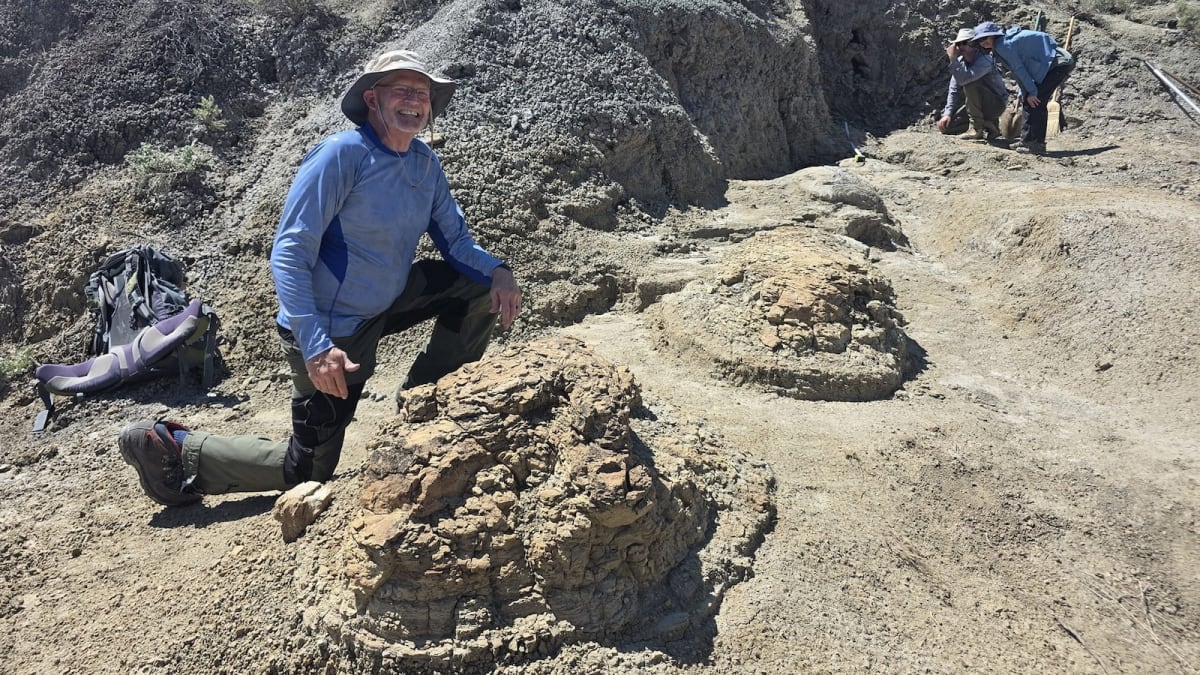
Kent Hups couldn't help but jump up and down when he spotted four giant three-toed prints stretching across a remote North Dakota hillside. The high school science teacher had just made paleontology history.
Hups discovered the first T. Rex trackway ever found by scientists. A trackway is a sequence of footprints that shows how an animal actually moved through its environment, and this one tells a story that's been hidden for 66.5 million years.
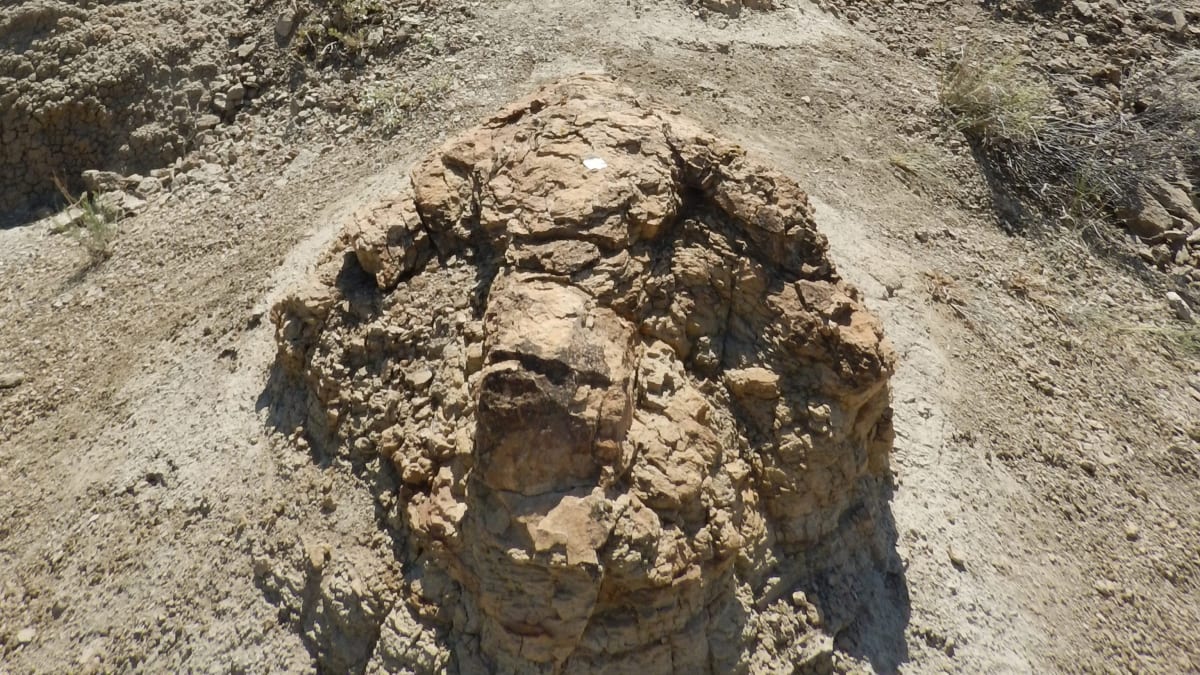
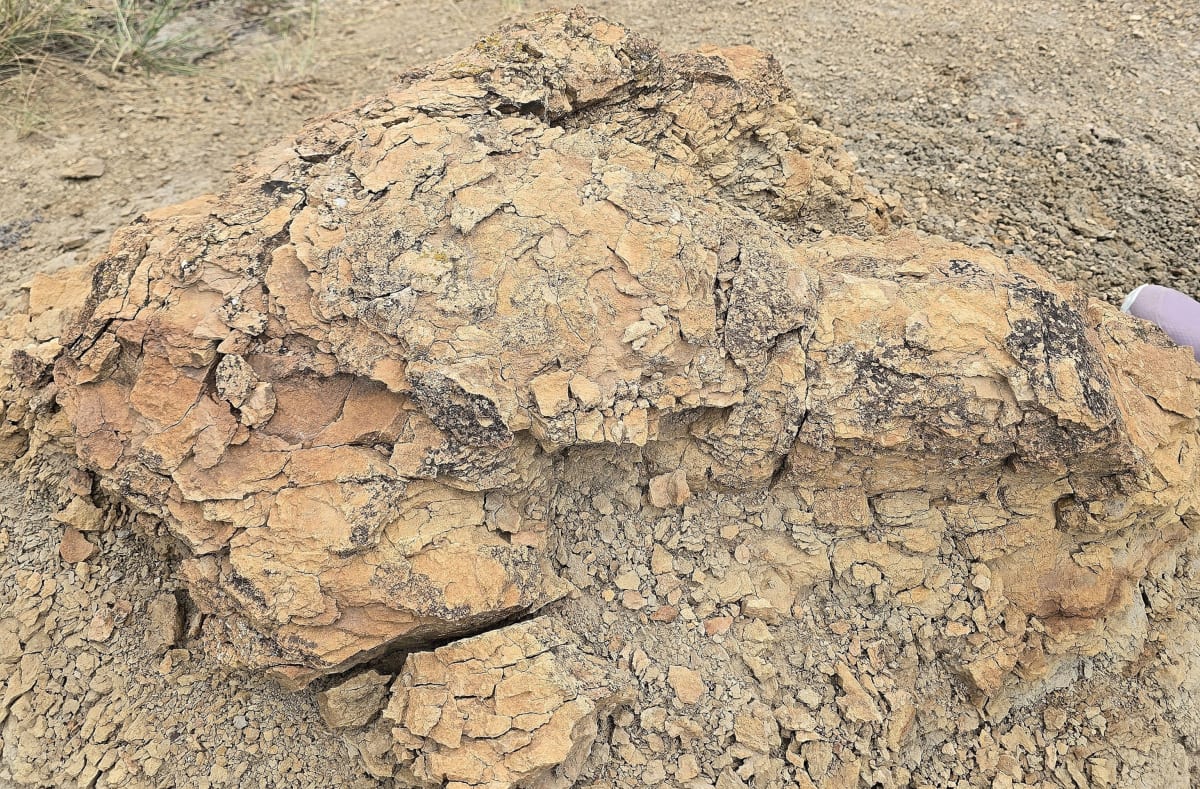
The four footprints, each about 3 feet long, stretched across 23 feet of ancient landscape in the Hell Creek Formation. Hups was "prospecting" through the rugged federal land when he descended from a steep area and found the tracks waiting below.
"I didn't sleep very much that night," Hups told ABC News. "It's going to be one of those days that I'll never forget."
Researchers at the Denver Museum of Nature & Science confirmed his find this month in the Journal of Vertebrate Paleontology. The prints were spaced about 13 feet apart, suggesting the T. Rex was moving at 3.5 to 4.5 miles per hour, roughly a brisk human walking pace.
Scientists identified a T. Rex as the trackmaker because of the prints' massive size, narrow toes, and the abundance of T. Rex fossils already found in the area. The museum used high-resolution 3D scanning to create exact replicas so researchers could study every detail.
Why This Inspires
This discovery proves that patience and curiosity still unlock secrets our planet has kept for millions of years. While dinosaur bones tell us what these creatures looked like, footprints capture something more precious: a single moment of behavior frozen in time.
Tyler Lyson, senior curator at the Denver Museum of Nature & Science, explained it perfectly. "With a trackway, we can actually follow an animal as it moved across the landscape," he said. "That is incredibly rare for T. rex."
Hups has been sharing his discovery with students in his geology classes and paleontology club, and they're loving every detail. His message to everyone echoes what makes science so thrilling: "You got to go out and look for stuff."
Sometimes the greatest discoveries are just waiting for someone willing to explore.
More Images


Based on reporting by Google News - Science
This story was written by BrightWire based on verified news reports.
Spread the positivity!
Share this good news with someone who needs it