Teacher Spots T. Rex Tracks 66.5 Million Years Old
A high school teacher volunteering on a fossil dig noticed an odd wedge-shaped rock with three toes, leading scientists to discover four complete T. rex footprints. The rare trackway reveals how the ancient predator actually walked, not just what its bones looked like.
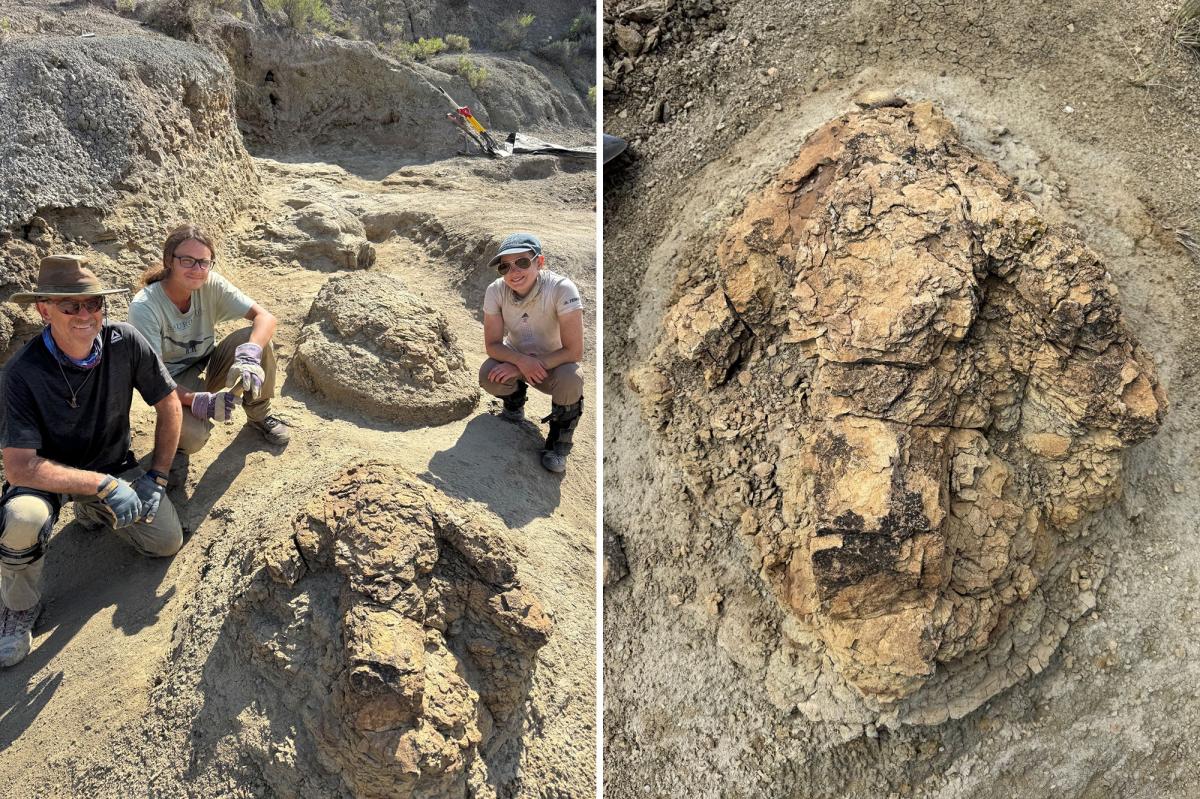
Kent Hups wasn't expecting to rewrite paleontology textbooks when he noticed a strange rock formation in North Dakota. The Colorado high school teacher, volunteering at a fossil dig in the Hell Creek Formation, spotted something that looked like three enormous toes pressed into ancient stone.
He immediately called over paleontologist Tyler Lyson, who was leading the excavation. Lyson wasn't convinced at first, a single odd shape proves little in fossil hunting.
But when the team returned the next day to dig deeper, they uncovered something extraordinary. Four three-toed footprints stretched across roughly 23 feet of rock, forming a complete trackway made by an adult Tyrannosaurus rex about 66.5 million years ago.
The discovery, published September 8, 2026 in the Journal of Vertebrate Paleontology, matters more than it might seem. Scientists have found isolated T. rex footprints before, but a trackway tells a completely different story.
Two left prints and two right prints preserved the dinosaur's actual stride. The spacing between each footprint allowed researchers to calculate something bones alone could never reveal: how fast this particular T. rex was walking when it crossed this ancient landscape.
The answer surprised them. Based on the stride pattern, the dinosaur was moving at roughly 3.4 to 4.5 miles per hour, closer to a brisk human walk than the terrifying sprint portrayed in movies.
The footprints formed in fine-grained sandstone that eventually hardened with calcium carbonate, making the tracks more resistant to erosion than surrounding rock. Time and pressure fractured the surfaces, so not every detail of the dinosaur's foot remains visible.
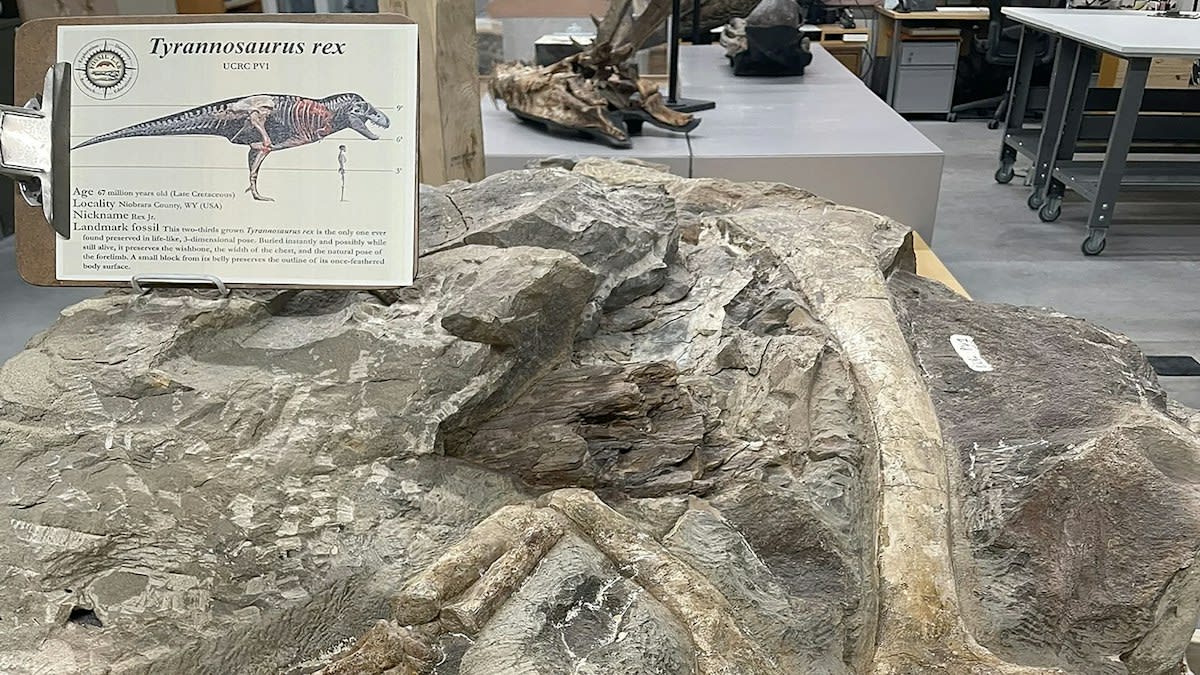
But the size, narrow three-toed shape, geological age, and location all point to an adult T. rex. Nearby T. rex fossils from the same formation strengthen the identification.
Why This Inspires
High-resolution 3D scans have digitally preserved the trackway forever, while three physical fossils will move to the Denver Museum of Nature & Science for further study. What started as one teacher's careful observation became a window into a moment frozen 66.5 million years ago.
Hups later reflected that he often tells his students at Northglenn High School that science begins with curiosity and paying attention. This time, that lesson was literally written in stone, waiting millions of years for someone curious enough to notice.
The discovery doesn't answer every question about how T. rex lived or moved. But it gives scientists something bones cannot: a physical record of an animal in motion, walking across a world that no longer exists, preserved by chance and revealed by someone who simply stopped to look closely.
More Images




Based on reporting by Google: fossil discovery
This story was written by BrightWire based on verified news reports.
Spread the positivity!
Share this good news with someone who needs it