Teen Builds AI to Predict Turbulence, Wins $100K
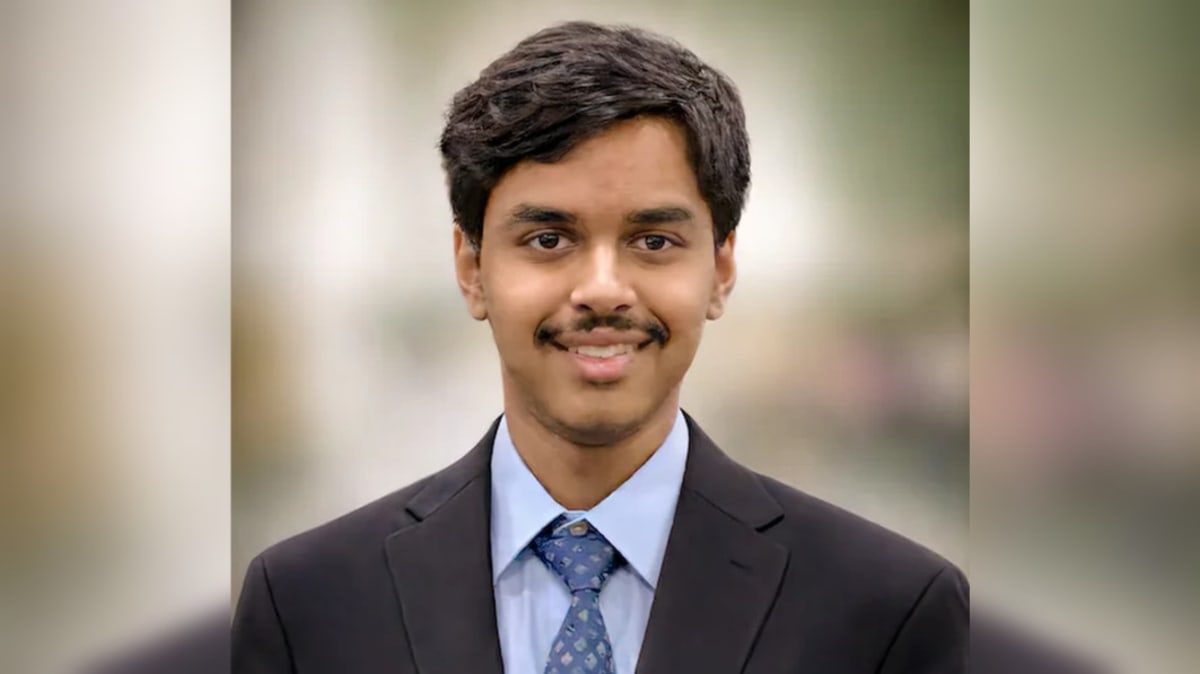
After a scary flight, 18-year-old Aditya Sengupta taught himself atmospheric science and built an AI system that predicts dangerous turbulence better than current tools. His invention just won him $100,000 and could make flying safer for millions.
Most teens recover from a frightening flight by catching their breath and moving on. Aditya Sengupta decided to solve the problem instead.
The 18-year-old experienced sudden turbulence on a plane and couldn't stop wondering why something so dangerous remains so unpredictable. That curiosity launched an independent research project that would earn him the Davidson Fellow Laureate title and a $100,000 scholarship.
Sengupta built ForeCAT, an AI system designed to predict clear-air turbulence, the invisible kind that strikes without warning clouds or weather patterns. Unlike regular turbulence, clear-air turbulence gives pilots no visual clues, making it especially hazardous for aircraft.
Working alone during secondary school, Sengupta taught himself atmospheric science, turbulence physics, and machine learning from scratch. He combined artificial intelligence with atmospheric physics, embedding physical laws directly into his neural network to identify where invisible air currents might form.
The results exceeded expectations. ForeCAT achieved 95% accuracy in classification tests, outperforming the industry-standard Graphical Turbulence Guidance algorithm currently used by airlines.
The system even passed a real-world test. When Sengupta ran his model on the Singapore Airlines flight that hit severe turbulence in May 2024, injuring passengers, ForeCAT retro-predicted the incident with 87% confidence.
The path to success wasn't smooth. Sengupta abandoned multiple early approaches and worked through imperfect data sets before finding a model that worked. "Research rarely follows a straight path and failed experiments can be just as valuable as successful ones," he said.
The Ripple Effect
ForeCAT could integrate with existing air-traffic-control systems and flight-planning software, giving pilots and controllers earlier warnings about dangerous air ahead. That extra time could allow route adjustments before planes reach turbulent zones, potentially preventing injuries and saving lives.
The timing matters more than ever. Scientists are studying how climate change affects atmospheric circulation, with early research suggesting clear-air turbulence may become more frequent as the planet warms.
Sengupta isn't just an AI prodigy. He's also competed in VEX Robotics, where his team finished first in the US and second globally at the World Championship. He's been recognized as a Regeneron Science Talent Search Scholar and a National Junior Science and Humanities Symposium finalist.
"Being named a Davidson Fellow is an incredible honour because it gives me the opportunity to join a community of young people who are curious, ambitious, and passionate about using their ideas to improve lives," Sengupta said.
He plans to study computing and natural sciences in college, continuing to develop engineering applications that blend physics with computer science. For now, his work stands as proof that breakthrough solutions can start with a simple question asked at the right moment.
One frightening flight turned into innovation that could protect millions of travelers for years to come.
More Images


Based on reporting by Google News - AI Breakthrough
This story was written by BrightWire based on verified news reports.
Spread the positivity!
Share this good news with someone who needs it