Teen Builds AI Tools After Paralysis at Age 14
Arnav Maharshi woke from a coma unable to move his right side. Three years later, the 17-year-old is testing AI rehabilitation tools with real patients.
When Arnav Maharshi woke from an 11-day coma in 2022, half his body wouldn't move. The 14-year-old had survived a devastating accident, but his dominant right hand was paralyzed, and he couldn't even sit up without help.
Recovery meant daily therapy sessions stretching from Mumbai to Aurangabad. Arnav slowly regained movement through physiotherapy and occupational therapy, eventually returning to school and even playing squash again.
But something bothered him during those long therapy sessions. Progress reports felt vague and subjective, based more on encouragement than evidence. He wanted numbers, not just reassurances that he was doing well.
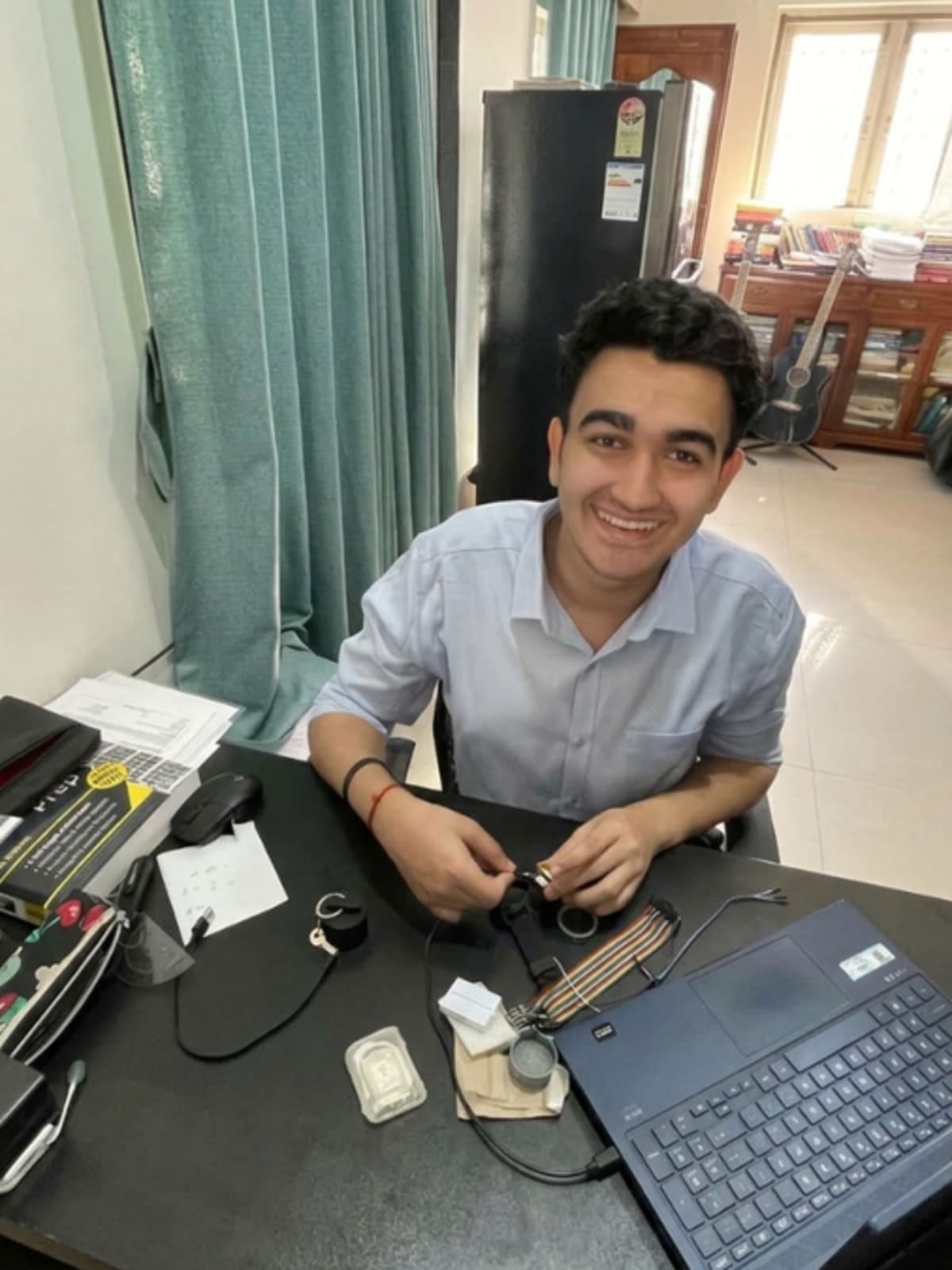
So he built his own solution. In 2023, Arnav created FAIR Chance, an AI app that tracks fine motor movements using any phone or laptop camera. The app uses computer vision and machine learning to measure precise finger actions like writing, eating, and buttoning shirts, turning recovery into visible data.
His second invention solved another frustration. Standard rehabilitation often restricts the stronger hand to force patients to use their weaker side, a method Arnav found uncomfortable and discouraging.
His Active Hand Wristband offers a gentler approach. Worn on the stronger hand, it detects movement and sends a soft vibration as a reminder, encouraging patients to consciously engage their weaker side instead of forcing it.
The Ripple Effect
Both tools are now in clinical trials. Thirty people are testing FAIR Chance while twenty patients use the Active Hand Wristband in real rehabilitation settings.
Arnav taught himself the technical skills through online courses, including Stanford's Machine Learning program and specialized courses in computer vision. He designed both tools to be simple and affordable, making them practical beyond well-equipped hospitals.
In 2025, the Indian government recognized his work with the Pradhan Mantri Rashtriya Bal Puraskar in Science and Technology. Now 17, Arnav continues expanding his tools, driven by a truth he learned in his hardest moments: the best innovations come from people who've lived the problem.
His journey from hospital bed to inventor proves that recovery isn't just about healing yourself.
Based on reporting by The Better India
This story was written by BrightWire based on verified news reports.
Spread the positivity!
Share this good news with someone who needs it